
Cancer & Tumors



Overview
What Are Cancer and Tumors?
Cancer is a disorder of cell regulation. In a healthy dog, cells divide when tissues need growth or repair, damaged DNA is corrected, and cells that cannot be fixed are removed through programmed cell death. Cancer begins when these safeguards fail. A clone of abnormal cells then gains the ability to keep dividing and to survive longer than it should. This process is called neoplasia.
A tumor (neoplasm) is a mass that forms when abnormal cells accumulate in one place. Tumors are one way cancer can appear, but they are not the only way. Some cancers arise in the blood, bone marrow, or lymphoid tissues and spread through the body without forming a single solid lump. These are hematologic cancers such as leukemia, lymphoma, and multiple myeloma. Lymph nodes may feel enlarged in lymphoma, yet the disease itself is body-wide rather than a single localized mass.
When a mass does form, it is classified as benign or malignant based on behavior. Benign tumors grow locally and do not metastasize. They can still cause problems if their size or position interferes with function. Malignant tumors are cancers. They tend to grow more quickly, infiltrate nearby tissues, and may spread to distant organs through lymphatic vessels or blood. Because appearance and feel cannot reliably distinguish these categories, sampling with fine-needle aspiration or biopsy is the appropriate way to classify any new or changing mass.
Examples in dogs help anchor the distinctions. A lipoma is a common benign tumor of fat under the skin. Most are soft, movable, and slow growing. An infiltrative lipoma is still benign but can extend into adjacent muscle or connective tissue, which complicates removal. A liposarcoma is different. It is a malignant cancer of fat and is managed as a cancer rather than as a routine lipoma.
Quick Terms Used in Diagnosis and Planning
- Cytology: Cells collected with a fine needle and examined under a microscope. Fast screening that often separates benign from malignant.
- Histopathology: A tissue sample from a biopsy. Shows architecture, confirms tumor type, and provides a grade when relevant.
- Grade vs. Stage: Grade describes how abnormal and fast-growing the cancer cells appear. Stage describes how far the cancer has spread in the body.
- Margins: The edges of a surgically removed tumor. “Clean” or “complete” margins mean no tumor cells are seen at the edges of the sample.
Benign and Malignant: Key Differences
| Feature | Benign Tumor | Malignant Tumor (Cancer) |
|---|---|---|
| Growth pattern | Often slower and organized | Often faster and disorganized |
| Local behavior | Grows in place; does not infiltrate | Invades and disrupts nearby tissues |
| Metastasis | Absent | Possible, sometimes likely |
| Typical management | Surgical removal often curative if complete | May require combinations of surgery, radiation, and drugs |
| Risk after removal | Lower if fully excised | Depends on type and stage; recurrence or spread possible |
| Examples in dogs | Lipoma, sebaceous adenoma, papilloma | Mast cell tumor, osteosarcoma, mammary carcinoma, lymphoma* |
*Lymphoma and some other hematologic cancers may not present as a single solid mass, yet they are malignant and treated as systemic disease.
Not All Cancers Present as a Mass
Not all cancers take the form of a tumor. Some begin in blood, bone marrow, or lymphoid tissues and move through the body as abnormal cells rather than gathering into a single mass. Lymphoma, leukemia, and multiple myeloma are examples. These diseases may appear as generalized lymph node enlargement, changes in blood cell counts, fever, weight loss, or enlargement of organs such as spleen and liver, rather than as a solitary lump. Because the process is body-wide from the outset, diagnosis relies on cytology, blood testing, imaging, and sometimes bone marrow evaluation, and treatment uses systemic therapies rather than surgery alone.
The practical takeaway is twofold: the absence of a lump does not rule out cancer, and the presence of a lump does not confirm it. New or changing masses should be sampled to classify them, and diffuse signs without a mass still warrant evaluation for cancers that do not form discrete tumors.
How Healthy Cell Growth Is Regulated
In a healthy dog, tissues grow and repair themselves through a tightly controlled cycle. Cells receive signals that tell them when to divide and when to stop. Several safeguards keep this process in balance:
- Checkpoints in the cell cycle pause division so damaged DNA can be repaired.
- DNA repair systems fix routine errors that occur during normal cell activity.
- Programmed cell death (apoptosis) or senescence removes cells that are too damaged to fix.
- Contact inhibition and tissue architecture discourage crowding and keep cells in their proper location.
- Immune surveillance identifies cells that look or act abnormally and removes them.
When one or more safeguards fail, abnormal cell populations can emerge. The outcome is not always the same:
- If abnormal cells stay in one place and grow as a lump, the result is a tumor. Tumors may be benign or malignant.
- If abnormal cells arise in blood, bone marrow, or lymphoid tissues, they may spread through the body without forming a single mass. These are cancers, even though there is no discrete tumor.
This distinction is important. All malignant tumors are cancers, but not all cancers form a solid tumor, and not all tumors are cancer.
How Cancers Behave in Dogs
Cancer behavior depends on the cell of origin, the degree of abnormality, and where the process begins. Two broad patterns help explain what veterinarians see and how they plan treatment.
Solid tumors start in organs or tissues such as skin, bone, or glands. They often create a lump that can be seen or felt. Common behaviors include:
- Local effects: infiltration into nearby tissues, pressure on nerves or vessels, blockage of ducts or hollow organs.
- Regional and distant spread: movement to lymph nodes or distant organs through lymphatic vessels or blood.
- Systemic effects: release of inflammatory or hormone-like signals that contribute to fatigue, weight loss, or appetite changes.
Blood and lymphoid cancers involve bone marrow, circulating blood, or lymphoid tissues. They may not form a discrete lump and are managed as systemic diseases from the outset. Common behaviors include:
- Widespread involvement: enlargement of multiple lymph nodes, changes in blood cell counts, or infiltration of organs like spleen and liver.
- Functional disruption: anemia, increased infection risk, bleeding tendencies, or metabolic disturbances caused by abnormal blood or immune cell activity.
A few additional principles guide interpretation:
- Grade describes how abnormal the cancer cells look and how quickly they tend to grow.
- Stage describes how far the cancer has spread.
- Location matters: a benign mass can still cause problems if it impairs function, while a small malignant cancer in a critical site can have outsized effects.
Understanding these patterns clarifies why some cancers are treated like localized problems and others require body-wide therapy, and why signs can range from a single new lump to changes that affect many systems at once.
Paraneoplastic Effects
Paraneoplastic effects are indirect problems caused by cancer, not by the tumor’s size or location. Tumor cells can release hormone-like substances or trigger immune reactions that disrupt normal physiology. These changes may appear before a tumor is found and often improve when the underlying cancer is treated.
Common examples
- Metabolic: high calcium or low blood sugar causing thirst, weakness, or wobbliness.
- Blood/clotting: anemia or abnormal clotting leading to fatigue, bruising, or bleeding.
- Neuromuscular: generalized weakness or nerve-like signs unrelated to a single lesion.
- Skin or hormonal: rashes, scaling, or appetite and weight changes from hormone-like signals.
Why this matters: These patterns are diagnostic clues. Veterinarians use history, lab work, and imaging to look for an underlying cancer, then monitor these effects as treatment progresses.
Recognizing Possible Signs
Cancer can look different from one dog to another, and many signs overlap with far more common problems like infection, allergy, injury, or arthritis. The goal is not to assume the worst, but to notice patterns that persist or change over time and have them checked.
Patterns to Watch For
- Lumps and skin changes: A new mass, or a known lump that grows, changes texture, ulcerates, or bleeds.
- General health changes: Unexplained weight loss, reduced appetite, low energy, or recurring fever.
- Breathing changes: A persistent cough or labored breathing at rest.
- Digestive changes: Repeated vomiting or diarrhea, abdominal swelling, or ongoing changes in stool.
- Urinary or reproductive changes: Straining, blood in urine, or new changes around mammary tissue or the perineal area.
- Mobility and limbs: Ongoing lameness or pain in one specific area of a limb, especially if that spot is tender or swollen.
- Neurologic changes: New seizures, imbalance, or progressive disorientation.
These signs are not specific to cancer and often have benign or treatable causes. What matters most is persistence, progression, or combination of signs.
When to Schedule a Veterinary Visit
- A new lump, or a known lump that changes over days to weeks
- Any sore that does not heal within two weeks
- Bleeding, discharge, or swelling that recurs or worsens
- Unexplained weight loss, loss of appetite, or low energy lasting more than a week
- Ongoing cough, breathing difficulty, vomiting, or diarrhea despite basic care
- Pain that interferes with normal activity
How Veterinarians Evaluate Cancer
The goal of evaluation is to answer four questions: what is it, where is it, how far has it spread, and how is the dog doing overall. Clear answers guide treatment choices and prognosis.
Core steps
- History and physical exam. The veterinarian maps any masses, checks lymph nodes, assesses pain and organ function, and notes changes in weight, appetite, breathing, or behavior.
- Sampling the cells.
- Fine-needle aspiration (FNA): A small needle collects cells for cytology. This is quick, usually done without sedation, and often distinguishes benign from malignant.
- Biopsy: A tissue piece is removed for histopathology when architecture matters, when FNA is inconclusive, or when surgical planning requires a grade and margin assessment.
- Imaging to see location and extent.
- Radiographs and ultrasound define size, position, and relationships to nearby structures.
- CT or MRI are used for surgical planning or when invasion is suspected, for example in nasal, brain, spinal, or pelvic tumors.
- Laboratory testing. A complete blood count, chemistry panel, and urinalysis evaluate overall health and can reveal indirect effects of cancer or treatment considerations. Selected cases use specialized tests, for example flow cytometry for some lymphoid cancers.
- Staging. Staging looks for spread to lymph nodes or distant organs. Common elements include chest imaging, abdominal ultrasound, and evaluation of regional lymph nodes. In hematologic cancers, assessment may include bone marrow sampling.
Evaluation is not one size fits all. A small benign mass in an older dog may need only FNA and monitoring, while a suspected aggressive cancer may need biopsy, advanced imaging, and full staging before a plan is set.
Treatment Options and Goals
Plans are individualized to tumor type, location, stage, and the dog’s overall condition. Goals typically fall into three categories: cure when possible, control when cure is unlikely, and comfort when disease is advanced. Many dogs do well with a combination of local treatment and systemic therapy, supported by careful home care.
Conventional treatments
- Surgery. First-line for many localized tumors. Curative intent relies on complete removal with clean margins. Debulking can relieve pressure or pain when cure is not possible.
- Radiation therapy. Used to control or shrink tumors that cannot be fully excised, to sterilize microscopic disease after surgery, or to relieve pain. Schedules vary from definitive courses to shorter palliative protocols.
- Chemotherapy. Systemic treatment for cancers that are likely to spread or are already body-wide, such as many lymphoid cancers. Protocols are tailored to diagnosis and tolerance.
- Targeted or immune-based therapies. Considered when a specific tumor type is known to respond. Availability depends on diagnosis and regional access.
- Palliative medicine. Pain control, anti-nausea care, and measures that preserve appetite, sleep, and mobility. Palliative care can be used alone or alongside disease-directed therapy.
Integrative co-support
These approaches do not replace medical treatment. They are used to maintain strength, comfort, and daily function, and should be coordinated with the veterinary team.
- Nutrition and body condition. Offer a complete, highly digestible diet with adequate protein and calories. Small, frequent meals and appetite support strategies help during therapy. Consult the veterinarian before adding supplements.
- Gut support during treatment. Hydration, diet adjustments, and veterinarian-guided use of probiotics or anti-nausea medications can reduce digestive upset.
- Pain and mobility support. Acupuncture, massage, and rehabilitative exercises may help with comfort and movement. Low-impact activity maintains muscle without excessive fatigue.
- Skin and mouth care. Gentle skin hygiene and routine oral care can reduce secondary problems in dogs receiving therapy.
- Stress reduction and routine. Predictable schedules, enrichment, and rest support recovery and quality of life.
- Medication and supplement safety. Always review herbs or supplements with the veterinarian to avoid interactions with chemotherapy, anesthesia, or other drugs.
Choosing a plan
Shared decision-making weighs diagnosis, stage, expected benefits, side effects, quality of life, and family goals. Rechecks are part of care. They allow early adjustment if the tumor changes, side effects appear, or the dog’s needs evolve. Success is measured not only by scans and lab results, but also by comfortable days, stable appetite, and the ability to enjoy normal routines.
Bringing It All Together
Understanding cancer as a breakdown of normal cellular control explains both its variety and its impact. Some tumors remain slow-growing and benign, while others behave as aggressive cancers that invade and spread. Many fall somewhere in between. Because of this spectrum, there is no single roadmap. Each diagnosis is interpreted in the context of the individual dog — their biology, age, and overall health — and treatment is chosen to balance disease control with quality of life.
Key takeaways
- Not all tumors are cancer, and not all cancers form a lump.
- The behavior of a tumor depends on its type, location, and how abnormal the cells have become.
- Diagnosis through sampling and staging is the only way to know what a mass represents.
- Treatment plans are tailored to each dog, blending direct cancer therapy with supportive care for the whole body.

Health Conditions
 Health conditions related to Cancer & Tumors
| Image & Title | At a Glance |
|---|---|

|
Lymphoma is a cancer of the lymphatic system that commonly affects the lymph nodes, spleen, and bone marrow. It’s one of the most treatable canine cancers with chemotherapy, though symptoms like swollen lymph nodes, weight loss, and lethargy can develop quickly. |
 Mast Cell Tumors (MCTs) Mast Cell Tumors (MCTs) |
Mast Cell Tumors (MCTs) are common skin tumors in dogs that can range from harmless lumps to aggressive cancers. Certain breeds, like Boxers and Pugs, are more prone. |

|
Hemangiosarcoma in dogs is an aggressive cancer of blood vessel cells that forms fragile, blood-filled tumors, most commonly in the spleen, liver, heart, or skin. It is one of the more common cancers seen in middle-aged to older dogs, especially in certain breeds. Internal tumors often grow without obvious signs and may first appear as sudden collapse due to bleeding, while skin forms can show up as dark or red masses. Even with treatment, prognosis is often measured in months rather than years, which is why how and when it is detected plays such a large role in outcomes. |

|
Lipomas in dogs are benign fatty tumors that usually form as soft, movable lumps beneath the skin. They are made of adipose tissue, the body’s fat-storing tissue, and are most common in middle-aged and senior dogs. Most lipomas grow slowly and do not spread, but any new lump should be checked by a veterinarian because different types of masses can look or feel similar. A lipoma becomes more important to monitor when it changes quickly, feels firm or fixed, causes discomfort, or interferes with movement. |
| Osteosarcoma |
Osteosarcoma is an aggressive bone cancer in dogs, most commonly affecting the long bones of large and giant breeds. It often presents as swelling and lameness, and it has a high risk of spreading to the lungs. Treatment typically involves limb amputation and chemotherapy, with pain management playing a crucial role in care. |

|
Histiocytic sarcoma is an aggressive and rare cancer that affects immune cells called histiocytes, often targeting the spleen, lungs, joints, or nervous system. It spreads quickly, with management typically involving chemotherapy and supportive care. |

Therapeutic Interventions
Therapeutic Interventions of Cancer & Tumors





Lifestyle Strategies
Lifestyle Strategies of Cancer & Tumors








Foods
Food sources of Cancer & Tumors

Food Components
Ingredient sources of Cancer & Tumors

Food Component Groups
Ingredient sources group of Cancer & Tumors

Nutrients
Nutrients Found in Cancer & Tumors

Nutrient Types
Nutrient Types of Cancer & Tumors

Nutrient Sub-Types
Nutrient Sub-Types of Cancer & Tumors

Follow the Research
Studies providing deeper insight into Cancer & Tumors
| Title | Information |
|---|---|
| Potential Adverse Effects of Omega-3 Fatty Acids in Dogs and Cats | At a Glance This 2013 review looks at the possible risks of omega-3 fatty acids in dogs and cats, especially EPA and DHA from fish oil. While omega-3s are commonly used to support skin, joint, heart, and kidney health, the authors explain that high amounts can sometimes cause issues like GI upset, changes in clotting, oxidative stress, immune shifts, or slower wound healing. The paper also stresses that plant-based ALA is not the same as EPA and DHA, so the source of omega-3s matters when considering both benefits and risks. Connecting the Dots |
| Roles of plant-based ingredients and phytonutrients in canine nutrition and health | At a Glance The 2021 review article by Tanprasertsuk et al. synthesizes existing research to provide a clear picture of how natural compounds found in fruits, vegetables, and herbs—like carotenoids, polyphenols, and phytosterols—may support dogs' overall well-being. Connecting the Dots |
| The vital roles of boron in animal health and production: A comprehensive review. | At a Glance This 2018 review, published in the Journal of Trace Elements in Medicine and Biology, examined how boron influences bone strength, mineral metabolism, immune balance, and inflammation across multiple animal species. While dogs were not directly studied, the findings suggest boron may play a similar role in supporting canine joint health and overall resilience, though more research is needed to confirm its effects. Connecting the Dots |
| Veterinary applications of pulsed electromagnetic field therapy | At a Glance This 2018 review explains how pulsed electromagnetic field (PEMF) therapy delivers carefully timed bursts of electromagnetic energy to stimulate tissue repair. Evidence supports its use in bone healing, osteoarthritis, wound healing, and post-operative pain and swelling. The paper emphasizes that different PEMF devices vary widely in waveform design, which determines whether they efficiently trigger biological cascades such as nitric oxide signaling. Veterinary studies are promising, but more controlled trials are needed to guide routine use. Connecting the Dots |
| Vitamin C in Health and Disease: A Companion Animal Focus | At a Glance This 2020 review article, published in Topics in Companion Animal Medicine, examined vitamin C in the health and disease of dogs and cats. The authors summarize evidence that while dogs and cats can produce their own vitamin C, levels fall during illness, raising interest in supplementation as a low-cost, low-risk therapy to support critically ill patients. Connecting the Dots |

Dig Deeper
Q/A's related to Cancer & Tumors

Blog Articles
Articles related to Cancer & Tumors
| Featured Image Link | Blog Title | Blog_URL_Link |
|---|---|---|
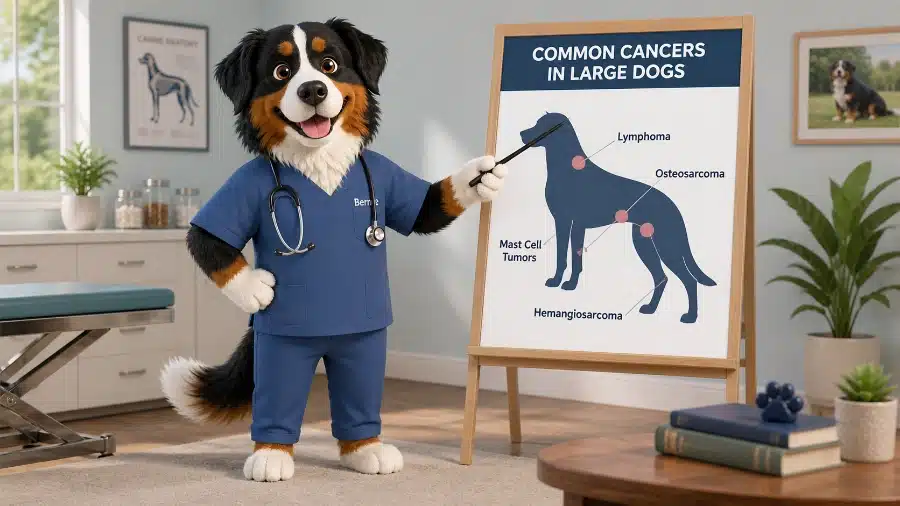 |
Life-Changing: Cancers Found In Big Dogs | https://www.bernies.com/blogs/bernies-blog/life-changing-cancers-found-in-big-dogs/ |
 |
Cancer In Dogs: Size Does Matter | https://www.bernies.com/blogs/bernies-blog/cancer-in-dogs-size-does-matter/ |
 |
How to Keep Your Dog as Healthy and Regular as Possible After Being Diagnosed with Cancer | https://www.bernies.com/how-to-keep-your-dog-as-healthy-and-regular-as-possible-after-being-diagnosed-with-cancer/ |
 |
Dog Cancer: Supporting The Whole Body | https://www.bernies.com/dog-cancer-supporting-the-rest-of-the-body/ |