
Dental Care & Oral Hygiene


Overview
Understanding Dog Dental Care
Dental care is a foundational component of canine health. The structures of the mouth influence not only comfort and function, but also digestion, immunity, and overall physiological stability. A dog’s oral cavity contains teeth, gums, periodontal ligaments, bone, salivary glands, and a complex microbiome. When these systems are in balance, they support efficient food processing, protect against infection, and maintain structural integrity throughout the body. When they become imbalanced, disease can develop gradually and often without obvious early signs.
Oral hygiene is not simply an aesthetic concern. It is closely tied to inflammation, microbial load, nutrient availability, and the dog’s daily quality of life. Understanding how oral disease begins, progresses, and can be prevented allows caregivers to intervene early and maintain long-term wellness.
Why Dental Health Matters for Overall Canine Wellness
Digestion begins in the mouth, long before food reaches the stomach or intestines. Mechanical breakdown by the teeth, lubrication by saliva, and microbial pre-processing all determine how efficiently nutrients can be extracted farther down the digestive tract. If the mouth is painful, inflamed, or dominated by pathogenic bacteria, the entire digestive process can be disrupted.
Imbalances in the oral microbiome can also allow opportunistic bacteria to enter the bloodstream through inflamed gum tissue. These bacteria may travel to the liver, kidneys, or heart, contributing to systemic inflammation or organ stress. For these reasons, veterinary medicine considers consistent dental care to be a core component of preventive health.
What Healthy Teeth and Gums Look Like
A healthy canine mouth displays clean enamel, intact gum tissue, and normal chewing behavior. Teeth should be white to off-white with a smooth surface free of visible deposits. Small variations in shade are normal and often related to age, diet, or natural enamel characteristics.
Gum color varies widely across breeds and individuals. Healthy gums may be pink, darkly pigmented, fully black, or spotted with patterns unique to the dog. The important indicators are tissue quality and symmetry: gums should be firm, uniform in contour, and tightly fitted around each tooth. They should not bleed when touched. Bleeding suggests inflammation or irritation within the gingival tissue. Mild odor after eating is normal, but persistent halitosis is commonly associated with bacterial imbalance.
Behavioral and structural clues can also reveal early oral discomfort. Dogs with healthy mouths chew evenly on both sides. Favoring a single side, dropping food unexpectedly, or preferring softer textures can signal pain in specific teeth or along one section of the gumline. Uneven tartar accumulation — heavier buildup on one side of the mouth — is another subtle indicator that a dog may be avoiding pressure on a painful tooth.
Some oral problems are not easily visible without close examination. Foreign material such as foxtails, splinters, or plant awns can lodge between teeth or beneath the gumline and cause localized inflammation, abscesses, or sudden sensitivity. These injuries often produce only subtle external signs but can progress quickly if not identified.
Noticing these changes, in addition to assessing visible features, helps detect early stages of dental disease and prevents small issues from becoming more complex problems.
Why Teeth and Gums May Bleed
Bleeding teeth or gums almost always signal inflammation. The most common cause is gingivitis resulting from plaque accumulation. As plaque matures and hardens, it irritates the gumline and provokes an immune response. In early stages, this may appear as slight redness or sensitivity; in later stages, bleeding may occur during eating or brushing.
Other causes include trauma from hard chewing items, small foreign bodies lodged near the gumline, or ulceration from infection. Dogs that chew aggressively on very hard materials can fracture teeth or bruise soft tissue, leading to bleeding independent of plaque accumulation. While less common, certain systemic conditions affecting clotting or immunity can also make gums more prone to bleeding and should be evaluated by a veterinarian if bleeding is recurrent or severe.
Plaque, Tartar, and the Pathway to Periodontal Disease
Plaque is a biofilm composed of bacteria, salivary proteins, and food particles. It forms naturally within hours of eating and adheres to the enamel surface. In its soft form, plaque can be removed through brushing or mechanical abrasion from chewing. If left undisturbed, minerals in the saliva begin to harden the plaque into tartar.
Tartar, also called calculus, adheres firmly to the tooth and often extends beneath the gumline. Once tartar forms, it cannot be removed through home care. Its rough, porous texture further encourages bacterial colonization and inflammation.
As bacteria proliferate below the gumline, the gingiva becomes inflamed, creating deeper pockets where oxygen levels decline and more aggressive bacterial species thrive. This progression marks the onset of periodontal disease. Over time, the supporting structures of the tooth, including ligaments and bone, deteriorate, eventually causing instability, pain, and tooth loss.
Because most of this damage occurs out of sight, many dogs show few obvious symptoms until disease is advanced. Regular assessment is essential to identify changes early.
Understanding Periodontal Disease
Periodontal disease is a chronic inflammatory condition targeting the tissues that support the teeth. It begins with gingivitis, where the gums respond to bacterial accumulation with redness, swelling, and mild discomfort. If plaque and tartar are not removed, inflammation spreads deeper into the periodontal ligament and alveolar bone.
At this stage, the body attempts to control infection through an immune response that, over time, also damages the dog’s own tissues. Bone resorption, ligament weakening, and gum recession follow. In advanced stages, teeth may loosen or become painful to touch.
Periodontal disease is staged based on the extent of tissue and bone loss. Veterinary examination, including dental radiographs, is required to identify the depth of pockets and the integrity of the tooth root structures. Even teeth that appear visually normal can have significant disease below the surface.
How Veterinarians Diagnose Oral Disease
Veterinary evaluation begins with a visual inspection of the mouth, assessing gum color, tartar accumulation, tooth integrity, and any signs of ulceration or swelling. However, true diagnosis requires a full examination under anesthesia. This allows for accurate measurement of periodontal pockets, thorough cleaning below the gumline, and detailed radiographic assessment of bone health.
Radiographs are critical because they reveal pathology that is invisible externally. Vertical bone loss, abscesses, resorptive lesions, and root fractures often go unnoticed without imaging. Information from these diagnostics determines the appropriate treatment plan, whether conservative cleaning or extraction of compromised teeth.
Professional Dental Cleanings
When tartar forms, professional cleaning under anesthesia is required. This procedure allows for scaling above and below the gumline, polishing the enamel to reduce future plaque adherence, and evaluating each tooth for hidden disease. Advanced cases may require extractions to eliminate sources of pain and infection.
Anesthetic dental cleanings are considered standard of care because they allow comprehensive treatment without causing stress or discomfort. Non-anesthetic cleanings remove only superficial debris and cannot address the underlying issues that cause periodontal disease.
Approaches to Maintaining Oral Hygiene at Home
Dogs maintain oral hygiene through a combination of natural chewing behaviors and caregiver-directed cleaning. In natural settings, tearing muscle and gnawing connective tissue provide friction that helps disrupt early plaque. In modern feeding environments, especially where diets leave more residue on the teeth, directed dental care becomes increasingly important.
Many dogs maintain acceptable oral health through a balanced diet and appropriate chewing alone. However, others—particularly small breeds, brachycephalic breeds, or individuals prone to plaque accumulation—may require regular brushing to prevent dental disease. Identifying which category a dog falls into depends on genetics, chewing habits, and diet composition.
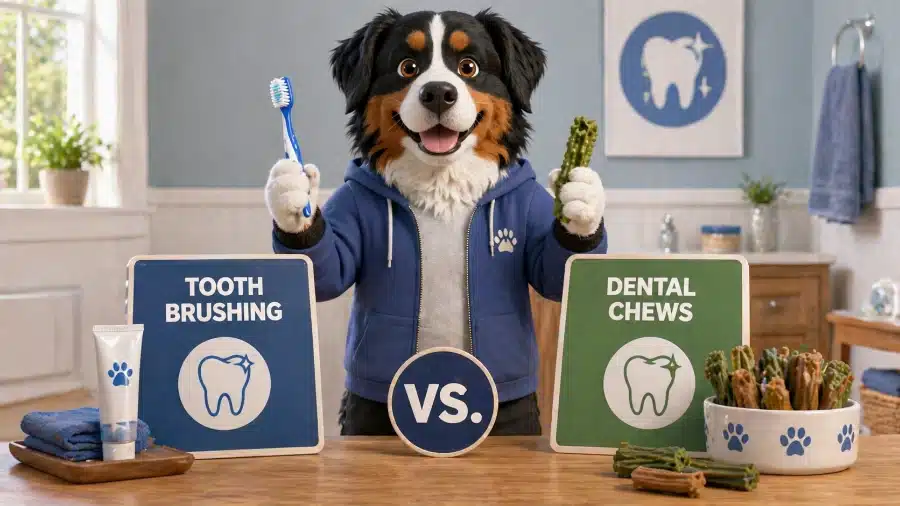
Brushing remains the most effective method for removing soft plaque before it hardens. Chewing, natural or assisted, provides additional mechanical cleaning. Supplements and natural compounds may support a healthier oral environment but do not replace physical removal of plaque.
Brushing a Dog’s Teeth
Brushing physically disrupts soft plaque, the earliest and most reversible stage of dental buildup. Once plaque mineralizes into tartar, it cannot be removed at home. Brushing is therefore a preventive process, not a curative one.
Canine-specific toothpaste is recommended, as human formulations often contain detergents or fluoride that should not be swallowed. Soft-bristled toothbrushes, finger brushes, or small pediatric-style brushes allow access to the gumline without causing tissue irritation.
Brushing focuses on the outer surfaces of the premolars and molars, where plaque collects most readily. Brief sessions introduced gradually are generally well tolerated. Early signs of inflammation, bleeding, or localized sensitivity can often be observed during brushing.
Although brushing is beneficial for all dogs, the degree of necessity varies. Some large-breed dogs with abrasive, low-carbohydrate diets and strong chewing habits accumulate minimal plaque, while others, like small dogs with crowded teeth eating soft foods, may require routine brushing throughout life.
How Often to Brush a Dog’s Teeth
Brushing frequency depends on the individual dog’s risk factors:
- Daily brushing offers the greatest plaque control and is ideal for dogs already prone to tartar accumulation or periodontal disease.
- Several times per week provides meaningful benefit for many dogs with moderate plaque formation.
- Occasional brushing may be adequate for dogs with excellent natural chewing habits, balanced diets, and low genetic risk.
In small breeds, or dogs with narrow muzzles or tightly spaced teeth, plaque accumulates more rapidly, making daily or near-daily brushing preferable. Monitoring the mouth for redness, odor, or uneven tartar buildup can help determine whether brushing frequency should increase.
What to Brush a Dog’s Teeth With
Safe brushing materials include:
- Canine-formulated toothpaste containing enzymes or gentle antimicrobial ingredients
- Soft-bristled toothbrushes designed for small mouths
- Finger brushes for dogs sensitive to larger implements
- Pediatric toothbrushes for improved precision
Human toothpaste should not be used, as it may irritate tissue or be harmful if swallowed.
How Chewing Helps Clean a Dog’s Teeth Naturally
Chewing provides one of the most effective natural mechanisms for maintaining cleaner teeth. The repetitive pressure of biting, tearing, and gnawing generates friction along the tooth surface, which helps disrupt early plaque and supports salivary flow. Saliva contributes minerals, lubrication, and antimicrobial compounds that collectively help regulate the oral microbiome.
A variety of safe, appropriately textured items can contribute to natural plaque removal. Fibrous dental chews, air-dried tendon or cartilage, and select raw meaty bones provide controlled abrasion when matched to the dog’s size and chewing style. Because raw bones vary in hardness, selection and supervision are important to avoid fracture risk. Cooked bones should not be used, as they splinter easily.
Abrasive plant-based toys and chews can also offer gentle cleaning action. Items made from coconut husk, other natural plant fibers, or woven vegetable materials provide mild scraping without excessive hardness. Similarly, certain textured rubber or plant-fiber balls are designed to create light abrasion along the tooth surface during play. These options can be particularly useful for dogs that chew lightly or prefer softer textures, allowing them to receive mechanical cleaning without high bite force.
Despite the benefits of natural chewing, not all dogs receive adequate plaque control from chewing alone. Dogs that chew unevenly, consume chews quickly, or consistently favor one side of the mouth may show limited improvement. For breeds with crowded teeth or those prone to accelerated plaque accumulation, chewing should be viewed as a supportive measure rather than a primary method of cleaning.
Natural mechanical cleaning works best when combined with brushing and dietary strategies that maintain a healthy oral environment. While chewing can reduce overall plaque load, it cannot evenly remove tartar once it forms, nor can it address disease beneath the gumline. Regular monitoring, along with veterinary evaluation, remains essential for comprehensive dental health.
Long-Term Prevention and Monitoring
Long-term dental health depends on regular mechanical cleaning suited to the individual dog. Diet, genetics, chewing habits, and age determine the level of care required. Monitoring gum appearance, breath odor, and chewing behavior helps detect early changes. Uneven tartar accumulation or avoidance of certain chew textures may signal localized discomfort.
Veterinary examination remains essential for identifying disease below the gumline and removing tartar safely under anesthesia. A balanced combination of chewing, brushing, nutrition, and routine dental evaluation provides the strongest approach to preventing periodontal disease.

General Health Topics
 Health Topics related to Dental Care & Oral Hygiene



Health Conditions
Health conditions related to Dental Care & Oral Hygiene


Follow the Research
Studies providing deeper insight into Dental Care & Oral Hygiene
| Title | Information |
|---|

Dig Deeper
Q/A's related to Dental Care & Oral Hygiene
| Title | URL | At a Glance |
|---|

Blog Articles
Articles related to Dental Care & Oral Hygiene
| Featured Image Link | Blog Title | Blog_URL_Link |
|---|---|---|

|
Is Your Dog’s Mouth Really Cleaner Than Yours? | https://www.bernies.com/blogs/bernies-blog/is-your-dogs-mouth-really-cleaner-than-yours/ |
 |
Can Dental Care Help Your Dog Live A Longer, Healthier Life? | https://www.bernies.com/blogs/bernies-blog/can-dental-care-help-your-dog-live-a-longer-healthier-life/ |
 |
Enzymatic Toothpaste For Dogs: What Are They? | https://www.bernies.com/blogs/bernies-blog/enzymatic-toothpaste-for-dogs-what-are-they/ |

|
The Role Of Probiotics For Dog Oral Health | https://www.bernies.com/blogs/bernies-blog/the-role-of-probiotics-for-dog-oral-health/ |

|
Dog Teething 101: How to Soothe Your Puppy’s Aching Gums | https://www.bernies.com/blogs/bernies-blog/dog-days-of-teething-simple-support-for-puppies/ |

|
Solving Dog Teeth Discoloration: A Guide to A Healthier Smile | https://www.bernies.com/blogs/bernies-blog/solving-dog-teeth-discoloration-a-guide-to-a-healthier-smile/ |

|
Strategies To Prevent Periodontal Disease In Dogs | https://www.bernies.com/blogs/bernies-blog/strategies-to-prevent-periodontal-disease-in-dogs/ |

|
Innovative Ingredients For Dog Oral Health Supplements | https://www.bernies.com/blogs/bernies-blog/innovative-ingredients-for-dog-oral-health-supplements/ |

|
Prevent and Treat Cavities in Dogs with a Holistic Approach | https://www.bernies.com/blogs/bernies-blog/cavities-in-dogs-a-holistic-approach/ |

|
Signs Your Dog May Be Struggling with Oral Health Issues | https://www.bernies.com/blogs/bernies-blog/signs-your-dog-may-be-struggling-with-oral-health-issues/ |

|
Canine Dental Health: The Role of Diet and Nutrition | https://www.bernies.com/blogs/bernies-blog/canine-dental-health-the-role-of-diet-and-nutrition/ |

|
Natural Ingredients That Promote Oral Health in Dogs | https://www.bernies.com/blogs/bernies-blog/natural-ingredients-that-promote-oral-health-in-dogs/ |

|
Tips For Identifying and Treating Oral Infections In Dogs | https://www.bernies.com/blogs/bernies-blog/tips-for-identifying-and-treating-oral-infections-in-dogs/ |

|
Overcoming Challenges Of Dog Dental Care: Tips And Tricks | https://www.bernies.com/blogs/bernies-blog/overcoming-challenges-of-dog-dental-care-tips-and-tricks/ |

|
How to Create a Regular Dental Routine For Dogs | https://www.bernies.com/blogs/bernies-blog/how-to-create-a-regular-dental-routine-for-dogs/ |
 |
Canine Oral Health: More Than Just Fresh Breath | https://www.bernies.com/blogs/bernies-blog/canine-oral-health-more-than-just-fresh-breath/ |
 |
Dog Teeth Brushing Or Dental Chews: Which Is Better For Dog Dental Health? | https://www.bernies.com/blogs/bernies-blog/dog-teeth-brushing-or-dental-chews-which-is-better-for-dog-dental-health/ |
 |
A Crucial Link: How Plaque And Tartar Affect Overall Health In Dogs | https://www.bernies.com/blogs/bernies-blog/a-crucial-link-how-plaque-and-tartar-affect-overall-health-in-dogs/ |

|
How To Choose The Best Dental Chews For Dogs | https://www.bernies.com/blogs/bernies-blog/how-to-choose-the-best-dental-chews-for-dogs/ |

|
Periodontal Disease in Dogs: How to Manage and Prevent This New, Old Problem? | https://www.bernies.com/blogs/bernies-blog/periodontal-disease-in-dogs-how-to-manage-and-prevent-this-new-old-problem/ |

|
The Connection Between Dental Health and Diabetes in Dogs | https://www.bernies.com/blogs/bernies-blog/the-connection-between-dental-health-and-diabetes-in-dogs/ |

|
Pet Dental Health Month: A Focus On Dog Dental Care | https://www.bernies.com/blogs/bernies-blog/pet-dental-health-month-a-focus-on-dog-dental-care/ |

|
The Link between Oral Health and Heart Disease in Dogs | https://www.bernies.com/blogs/bernies-blog/the-link-between-oral-health-and-heart-disease-in-dogs/ |

|
The Importance Of Early Dental Care For Puppies: Start With A Smile! | https://www.bernies.com/blogs/bernies-blog/the-importance-of-early-dental-care-for-puppies-start-with-a-smile/ |

|
Research Discovers Nutritional Benefit For Dog Dental Health In Black Soldier Fly | https://www.bernies.com/blogs/bernies-blog/research-discovers-nutritional-benefit-for-dog-dental-health-in-black-soldier-fly/ |
 |
Dog Gum Health: Color Them Pink! | https://www.bernies.com/blogs/bernies-blog/dog-gum-health-color-them-pink/ |

|
The Link Between Dog Size and Dental Health: What You Need to Know | https://www.bernies.com/blogs/bernies-blog/link-between-dog-size-and-dental-health/ |
 |
A Better Pet Grooming Routine: Tips from Our Director of Education | https://www.bernies.com/blogs/bernies-blog/a-better-pet-grooming-routine-tips-from-our-director-of-education/ |