
Mental Enrichment



Overview
Mental Enrichment for Dogs
Mental enrichment refers to the experiences and activities that engage a dog’s brain in a way that feels meaningful to them. In everyday language, people often use the term to mean “keeping a dog entertained” or “giving a dog something to do.” In practice, mental enrichment is more specific: it describes stimulation that allows dogs to solve problems, follow instincts, explore information, and make decisions—the same kinds of mental work that shaped canine behavior long before modern life.
Mental enrichment supports dogs because their brains are not designed for long periods of boredom, predictability, or passive waiting. Dogs evolved as animals that navigated complex environments, tracked scent, scavenged or hunted, collaborated socially, and used their mouths and bodies to interact with the world. Modern pet life is safer, but often less mentally demanding. When the environment provides few opportunities for exploration and purposeful effort, dogs frequently meet those needs in other ways—through restlessness, destructiveness, barking, overexcitement, anxiety, or compulsive habits. Enrichment helps prevent that gap by giving dogs appropriate, satisfying outlets for mental engagement.
Why Mental Enrichment Matters
Mental enrichment matters because a dog’s nervous system constantly interprets the world and decides what is safe, important, and worth responding to. When dogs spend most of their time under-stimulated, they can become either under-engaged (withdrawn, sluggish, or even destructive) or over-engaged (hypervigilant, reactive, restless). In both cases, the dog’s behavior reflects an internal state that is out of balance.
Many enrichment activities support emotional regulation because they naturally shift dogs into focused, purposeful attention. Scent exploration, problem-solving, and chewing can all reduce arousal by giving the brain something structured to process. For many dogs, enrichment works as a kind of pressure valve—helping them direct energy toward productive behavior and away from frustration.
Mental enrichment also supports physical well-being. When the brain spends more time in a regulated state, dogs often sleep better, recover better, and show fewer stress-driven behaviors that can affect digestion, immunity, appetite regulation, and pain sensitivity. In this way, mental enrichment is not separate from physical health—it is part of how the whole dog stays resilient.
What Enrichment Looks Like
A common misconception is that mental enrichment requires complex products or training. In reality, enrichment can be simple. The defining feature is not the object or the activity itself—it is the experience it creates in the dog.
Mental enrichment usually involves one or more of the following:
- information gathering (especially through scent)
- problem-solving (figuring something out to reach a reward)
- instinct expression (chewing, digging, shredding, tracking, searching)
- choice and agency (having a say in what happens next)
- novelty and variation (new environments, new challenges, new patterns)
A brisk walk can be mentally boring if the dog is prevented from sniffing, changing pace, or exploring. A slow walk where the dog can sniff and investigate may provide deep enrichment, even if it covers less distance. Likewise, a toy can be enriching if it creates effort and engagement, or it can be overstimulating if it produces frantic arousal without satisfaction.
Dogs as Individuals: Designing Enrichment That Fits
Mental enrichment works best when it matches the dog—not the human’s idea of what a dog “should” enjoy. Dogs differ in their enrichment needs because they differ in genetics, life stage, learning history, environment, and internal state.
A scent hound may find deep satisfaction in tracking games that feel “boring” to a herding dog. A terrier may need shredding and digging outlets more than they appreciate obedience training. A livestock guardian breed may find enrichment through slow environmental observation, controlled autonomy, and calm exploration rather than rapid-fire obedience drills.
Enrichment also changes across life stage. Puppies require short sessions and gentle exposures that build confidence without overload. Adolescents often need more challenge and novelty. Seniors may benefit most from low-impact scent work, gentle puzzle activities, and experiences that preserve agency and mobility without excessive physical strain.
A dog’s emotional state matters too. Highly anxious or reactive dogs often do best with enrichment that is predictable, structured, and soothing, such as sniffing, licking, chewing, or easy success-based search games. Highly confident dogs often benefit from more complex problem-solving and novelty. In both cases, enrichment should leave the dog more settled, not more frantic.
Common Forms of Mental Enrichment
Mental enrichment is often easiest to understand by category. These categories overlap, but each highlights a different type of brain engagement.
Scent-Based Enrichment
Scent exploration is one of the most biologically aligned enrichment activities for dogs because scent is their primary sensory system. Dogs do not simply smell the world—they interpret it through smell. A single sniff can provide information about who passed through, how long ago, what they ate, whether they were stressed, and whether they were healthy. Sniffing is not a “bonus” or a distraction from the walk. It is one of the most important ways dogs gather information, regulate emotion, and understand their environment.
In many dogs, the need to sniff functions like a basic mental requirement. When dogs cannot engage their nose—because walks move too quickly, environments stay too repetitive, or dogs spend most of their time indoors—many will seek alternative stimulation through hypervigilance, scavenging, barking, or obsessive interest in movement. Conversely, dogs who get regular opportunities to sniff often show more stable behavior, calmer recovery after excitement, and improved ability to settle.
Scent-based enrichment includes allowing sniffing during walks, treat scatters in grass, “find it” games indoors, short scent trails, and structured nose work activities.
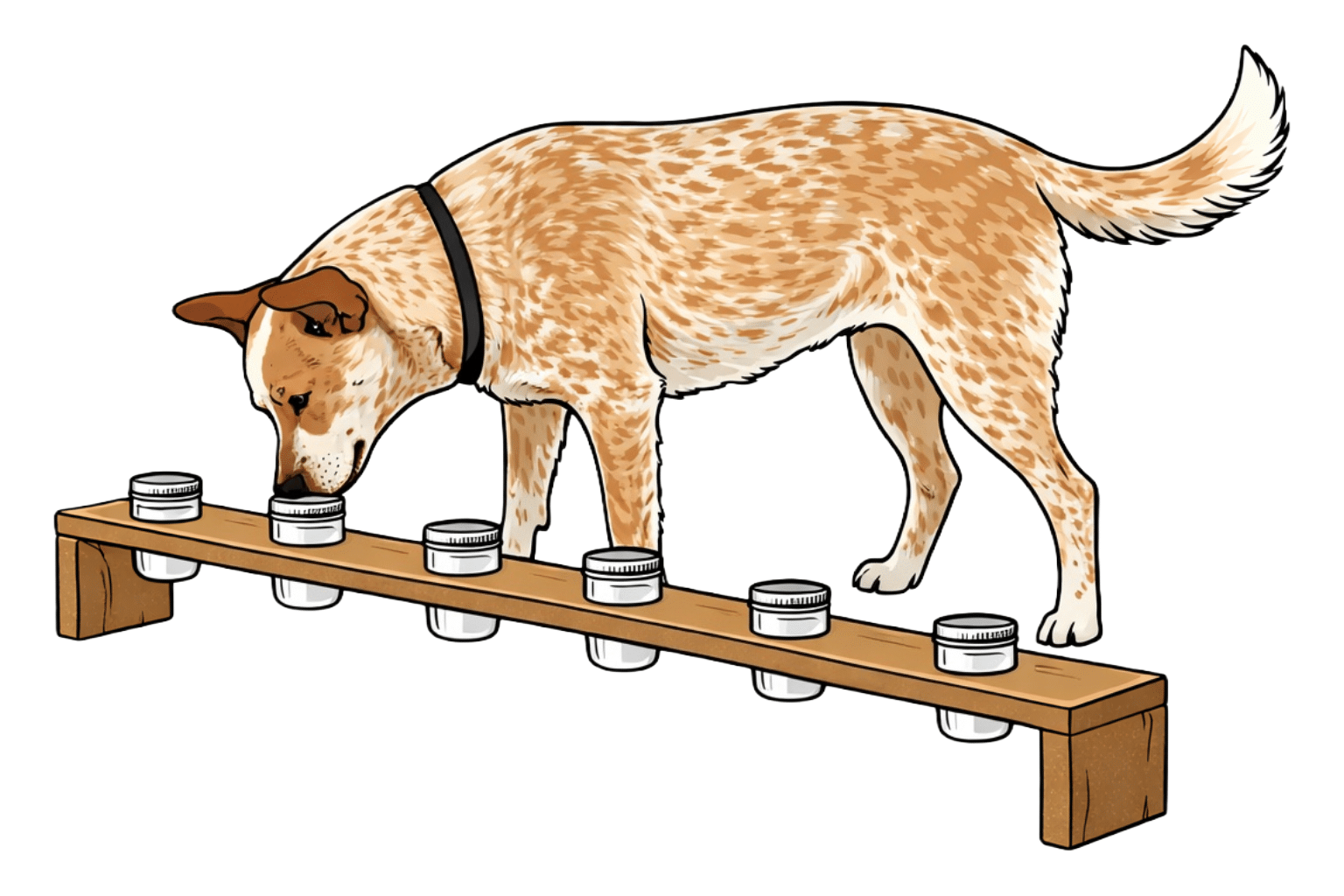
Nose work is a form of mental enrichment where dogs use their sense of smell to search for food or scents rather than relying on sight. In activities like the one shown above, treats or unique scents are hidden in containers and the dog investigates each option until it locates the correct scent. This type of enrichment taps into a dog’s natural sniffing instincts and provides focused mental stimulation that can be calming and deeply satisfying.
These experiences engage the brain in a way that often produces deep satisfaction with relatively low physical impact, making scent enrichment especially valuable for puppies, seniors, injured dogs, or dogs who become overstimulated by intense play.
Food-Based Problem Solving
Food-based problem solving provides enrichment because it mirrors a core biological pattern: in nature, animals rarely access food without effort. Even scavengers still search, manipulate, tear, chew, and persist to obtain calories. When domestic dogs receive every meal instantly in a bowl, the body may receive nutrients, but the brain receives very little meaningful work. Food puzzles restore that missing layer by turning eating into an active process rather than a passive event.
This type of enrichment engages attention, memory, persistence, and motor planning. It can also slow eating speed and shift dogs into a focused behavioral state, which often supports emotional regulation. Dogs that hover, demand attention, or become restless indoors frequently benefit from feeding formats that create a longer “work period” around meals. In many cases, food-based enrichment provides a form of purposeful engagement that reduces boredom behaviors and creates a sense of satisfaction after completion.
At the same time, food puzzles must match the dog’s frustration tolerance. A puzzle that is too difficult or too slow to yield reward can backfire, especially in anxious, impulsive, or easily frustrated dogs. Instead of producing calm engagement, it may trigger whining, pawing, barking, chewing the object destructively, or giving up entirely. In those cases, the problem is not the dog’s “stubbornness”—it’s a mismatch between the challenge level and the dog’s current skill or emotional state.
Well-matched food enrichment builds persistence and confidence; poorly matched enrichment can reinforce agitation and frustration. The goal is to make food time fun, not frustrating.
Chewing, Licking, and Oral Engagement
Dogs are mouth-first animals. Long before dogs lived in human homes, they used their mouths to capture food, tear tissue, crush bone, strip hides, carry objects, and explore the environment. That evolutionary history shaped the canine nervous system so that oral engagement—chewing, licking, gnawing, ripping, and working on something with the mouth—feels inherently rewarding. It is not a “treat activity.” It is one of the most natural and biologically meaningful ways dogs regulate themselves.
Oral behaviors also interact directly with arousal and stress physiology. Chewing and licking create repetitive, rhythmic patterns that many dogs experience as settling, similar to how some humans calm themselves through repetitive motion. For dogs that feel overstimulated, bored, anxious, or under-enriched, having something appropriate to chew often reduces pacing, barking, attention-demanding behavior, and destructive outlets. This is one reason oral enrichment gets used so widely in shelters and behavior work: it can shift a dog from a high-alert state into a more self-regulated state without requiring intense physical exercise.
Not all oral enrichment works the same way. Different dogs show different “mouth styles.” Some prefer long, steady chewing (gnawers), some prefer licking and soft persistence (lickers), and others prefer disassembly and tearing (rippers). The best oral enrichment matches the dog’s style and delivers a pace of reward that supports calm engagement. Rubber hollow toys that can be stuffed and frozen, lick mats, safe long-lasting chews, edible bones (when appropriate), and chewable enrichment objects all fit this category because they allow sustained effort over time, which is often the feature that makes oral enrichment so effective.
Oral enrichment can also backfire when it creates more frustration than satisfaction. If a dog cannot access the reward after prolonged effort—or if the reward is too small relative to the work—some dogs escalate into frantic chewing, whining, pawing, guarding behavior, or destructive attempts to “break open” the object. Dogs with high arousal patterns or compulsive tendencies may also turn oral enrichment into fixation, where the activity no longer produces calm but instead increases drive and difficulty disengaging. In those cases, the issue is not the tool itself—it is the mismatch between the dog’s emotional state and the enrichment design.
Because oral enrichment involves the mouth, safety and supervision matter. Hard chews can crack teeth in determined dogs, small objects can become choking hazards, and certain edible items can create obstruction risk if swallowed in large pieces. A species-appropriate enrichment approach treats oral engagement as essential, but also recognizes that the safest and most effective options depend on the dog’s size, chewing intensity, dental health, and behavior patterns.
Shredding, Digging, and Destruction-Based Outlets
Many dogs carry strong instinctual drives to tear, shred, and dig—behaviors rooted in feeding, shelter-building, and prey acquisition. In wild and working contexts, these behaviors serve clear functions: accessing food, creating resting spaces, regulating body temperature, or pursuing prey. When these drives have no appropriate outlet, they often surface as destructive behavior directed at furniture, bedding, carpeting, or landscaping. In those cases, destruction is not a training failure; it is an unmet biological need expressing itself in the nearest available materials.
Digging deserves special attention because it is particularly prominent in breeds developed for earth work and tunnel-based prey pursuit. Terriers, dachshunds, and other tunnel-chase breeds were selected specifically to follow prey underground, navigate tight spaces, and persist in digging despite resistance. For these dogs, the drive to dig is not optional or situational—it is foundational to how their nervous systems are wired. Preventing digging entirely often leads to frustration, stress, or displacement behaviors, whereas providing a safe outlet allows the behavior to occur without collateral damage.
Structured digging outlets allow dogs to express this instinct in a controlled way. Outdoor sandboxes or designated digging pits can satisfy the need to excavate while protecting the rest of the yard. Indoors, “dig boxes” filled with sand, soil alternatives, shredded paper, towels, or fabric strips can serve a similar function.
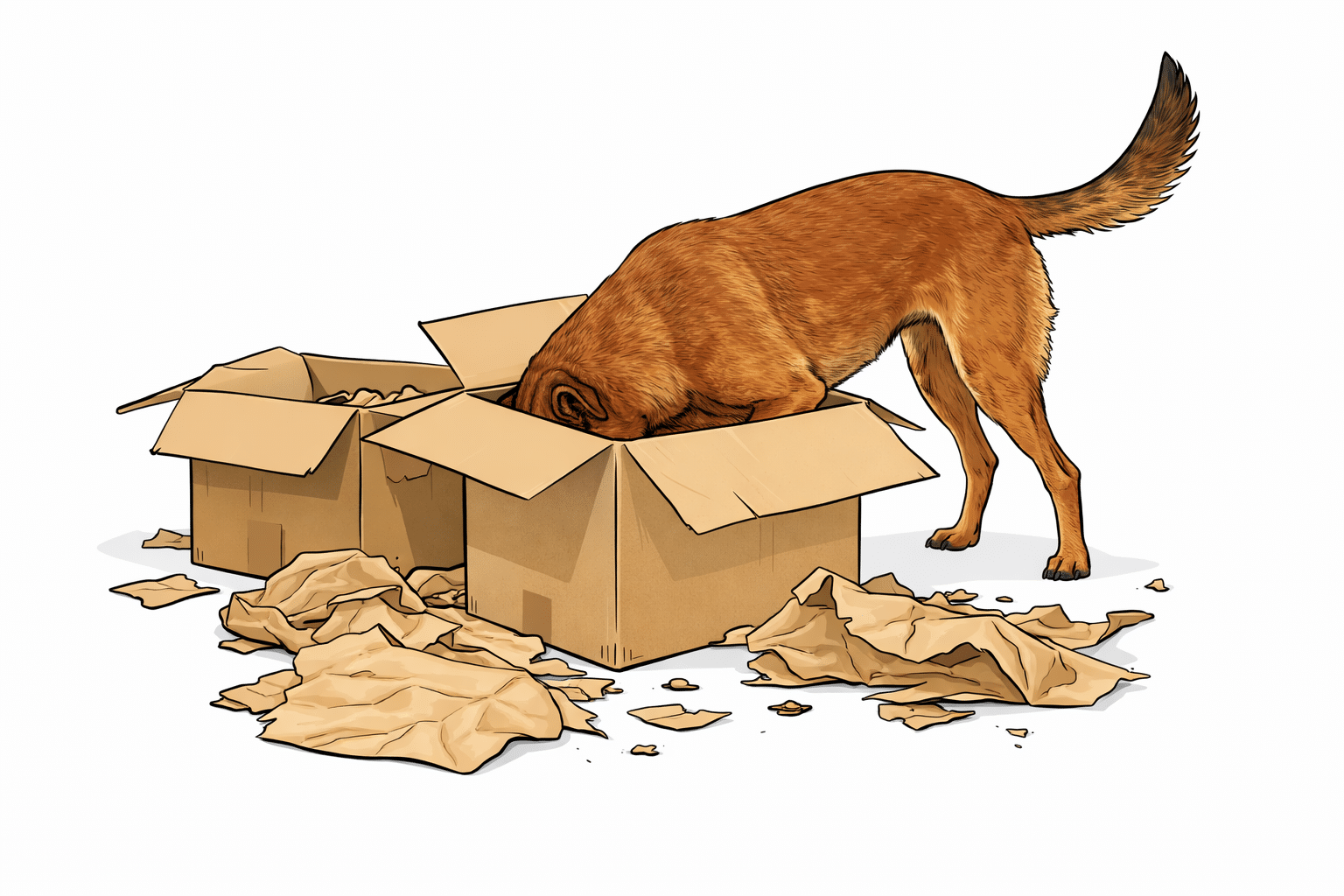
Shredding outlets—such as cardboard boxes, paper packing material, or purpose-designed destructible toys—meet related needs for tearing and disassembly. These activities may look chaotic, but they engage motor planning, persistence, sensory feedback, and emotional release in ways that many dogs find deeply satisfying when managed safely. There are lots of ideas online about setting up DIY dig and/or destruction boxes for dogs.
Learning and Training
Dogs naturally pay attention to patterns and feedback, and training gives the brain something structured to process: “What behavior makes the reward happen?” This engages cognition, builds communication, and creates a shared activity that strengthens the dog–human bond. For many dogs, learning itself is rewarding because it provides clarity, predictability, and a sense of success.
Training also supports emotional resilience. Dogs that regularly practice learning in a low-pressure environment often become better at recovering from frustration, adapting to change, and staying engaged under mild stress. This is one reason reward-based training plays such an important role in behavioral health: it builds confidence and cooperation while avoiding fear-based learning that can increase anxiety and reactivity.
Short sessions of reward-based training can include trick training, cooperative care exercises, agility foundations, and food-based shaping games.
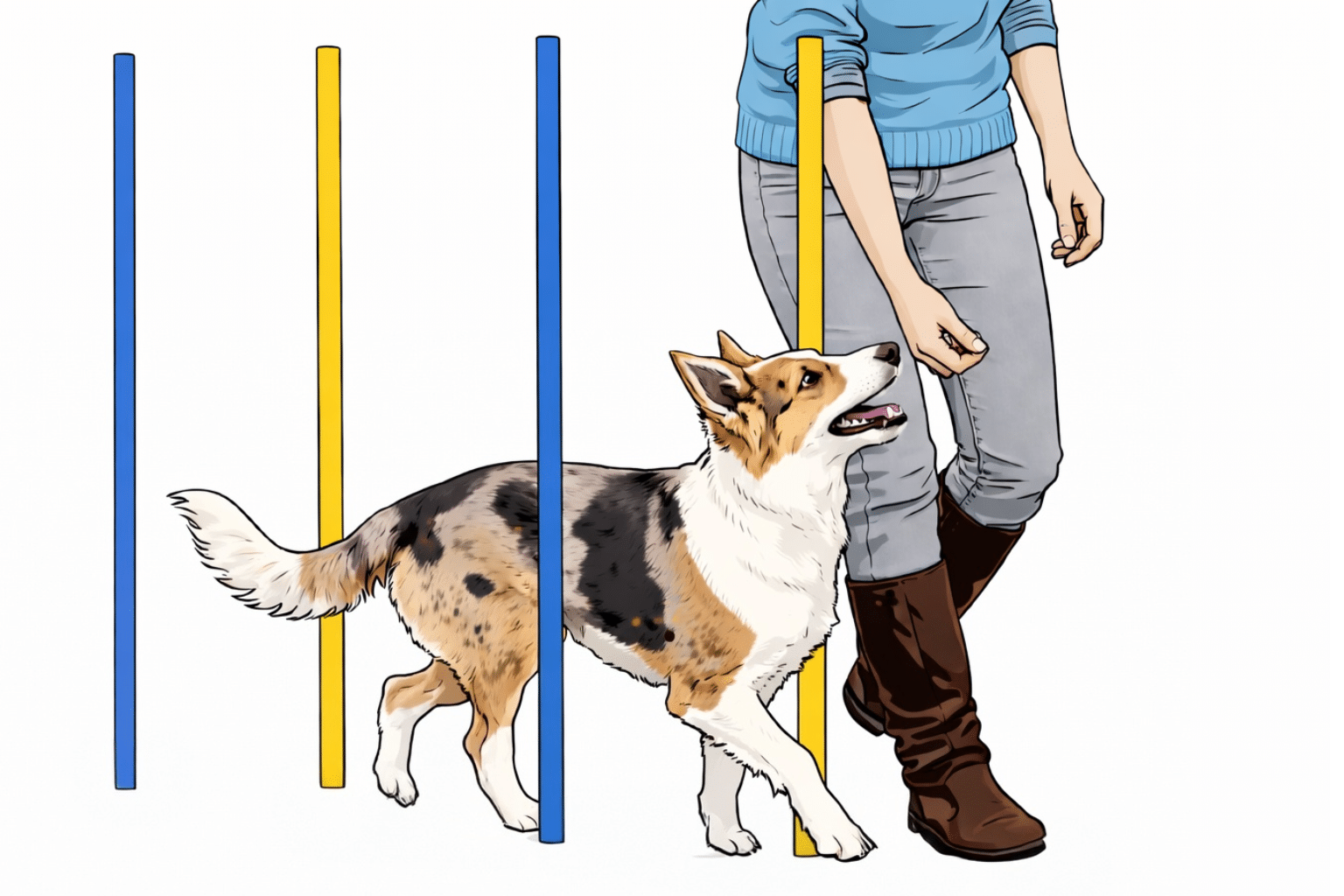
These activities function as mental enrichment when they give dogs meaningful goals, opportunities to succeed, and a sense of partnership with their person—especially for dogs who enjoy working closely with humans or who thrive on structure.
Herding and Chasing
Some dogs—especially herding breeds and herding mixes—carry a strong drive to monitor, influence, and organize movement in their environment. Selective breeding reinforced these traits over generations because dogs that could track motion, respond quickly, and “work the edges” of a group made livestock handling easier and safer. In modern life, that same wiring often shows up as intense interest in moving objects: balls, bikes, cars, running kids, squirrels, or anything that changes direction quickly.
Herding balls are large, durable exercise balls designed to let dogs safely chase, nudge, and “herd” an object using their nose and body—similar to how herding breeds instinctively move livestock. Because the ball is too big to pick up, dogs have to push and control it, which creates a fun problem-solving challenge as well as physical exercise.
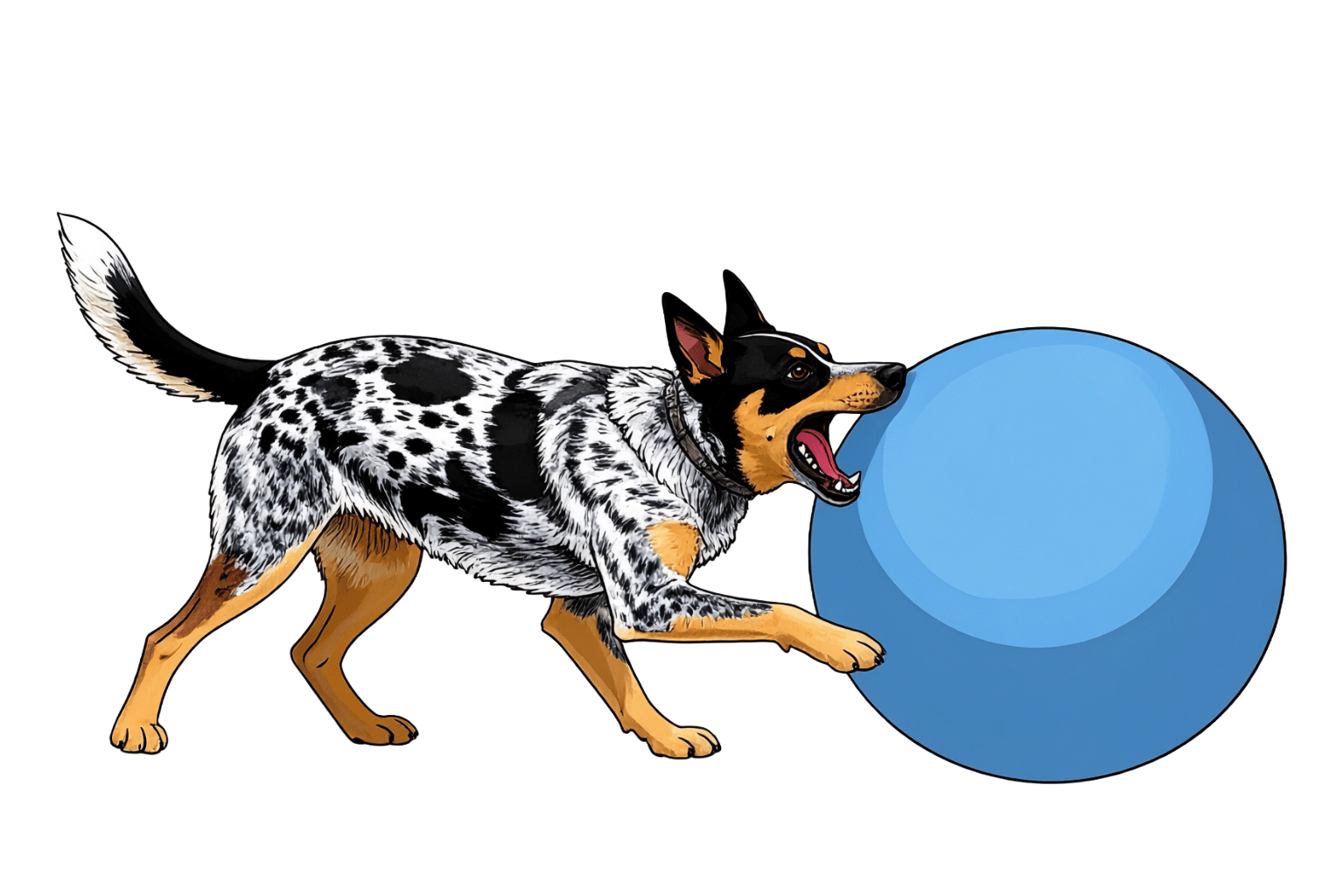
Herding balls and similar movement-based games can provide mental enrichment because they activate a dog’s instinct to track motion, adjust strategy, and control outcomes, not just run. The dog has to read how the object moves, anticipate where it will go, and use body position to influence its direction. That makes the activity more cognitively demanding than simple chasing, and for many dogs it creates a satisfying “job-like” experience that aligns with how their brains are built.
This category of enrichment also includes activities like controlled flirt-pole play, directional cue training, agility-style movement challenges, “go around” or “send-outs,” and games that involve driving an object toward a target.
For dogs with strong herding or prey-motor tendencies, these activities can be some of the most biologically relevant forms of engagement because they channel an instinct that often has nowhere appropriate to go in a typical home environment.
Summary of Enrichment Types
This table serves as a handy guide to consider the types of enrichment best suited to your dog’s unique needs.
| Enrichment Type | What It Engages | Why It Matters (Core Benefit) | Common Examples | Common Pitfalls / Watchouts |
|---|---|---|---|---|
| Scent-Based Enrichment | Olfactory processing, attention, information gathering | Supports regulation and satisfaction because scent is how dogs interpret the world; often calms dogs with low physical impact | Sniff-heavy walks, treat scatters in grass, “find it,” scent trails, nose work | Rushing walks; overly restrictive environments; overstimulation in high-distraction scent environments for some dogs |
| Food-Based Problem Solving | Persistence, problem solving, motor planning, reward learning | Restores effort-to-reward patterns and turns meals into meaningful brain work; can reduce boredom and demand behaviors | Puzzle feeders, slow feeders, treat balls, snuffle mats, frozen food toys, DIY food boxes | Too hard = frustration (barking, chewing, quitting); too easy = no engagement; watch resource guarding in multi-dog homes |
| Chewing, Licking, Oral Engagement | Rhythmic regulation, oral-motor drive, nervous system settling | Mouth-based engagement is biologically meaningful and often self-soothing; helps reduce pacing, barking, and destructive outlets | Stuffable rubber toys (frozen), lick mats, safe chews, food-stuffed bones, long-lasting edible chews | Too slow/too hard = frustration or fixation; choking/obstruction risk; cracked teeth from very hard chews; supervise intensity chewers |
| Shredding, Digging, Destruction Outlets | Prey-motor patterns, sensory feedback, persistence, emotional release, bedding comfort, heat regulation | Gives safe outlets for deep drives (tear/dig) that otherwise redirect to furniture or landscaping; especially important for tunnel-chase hunting breeds | Cardboard boxes with paper + treats, packing paper, destroyable toys, sandboxes, digging pits, indoor dig boxes | Ingestion of materials; escalation into frantic behavior if too stimulating; requires supervision + safe materials |
| Learning and Training | Pattern recognition, memory, communication, confidence building | Structured problem-solving builds resilience, frustration tolerance, and cooperative bonding; gives clarity and success experiences | Trick training, cooperative care, shaping games, agility foundations, short cue sessions | Too much pressure or repetition reduces enrichment value; avoid punishing errors; keep sessions short and success-heavy |
| Herding and Chasing (Movement Work) | Motion tracking, strategy, impulse control, “job” satisfaction | Channels herding/prey-motor instincts into structured engagement; often reduces obsessive fixation on bikes/cars/runner movement when managed well | Herding balls, controlled flirt pole, directional games (“send-outs,” “go around”), agility-style movement tasks | Uncontrolled chasing can increase arousal and obsession; watch for joint strain; stop if dog becomes frantic or cannot disengage |
Using Simple Household Items for Enrichment
Mental enrichment does not require expensive toys. Many common household items can become enrichment tools when used thoughtfully and safely:
- Cardboard boxes can be used as shredding containers or scavenger hunts.
- Paper bags can be filled with safe treats and torn open under supervision.
- Towels or blankets can hide food for “sniff-and-search” games.
- Plastic bottles (clean, label removed) can serve as noisy treat-dispensing toys for some dogs, though they should be monitored closely to prevent ingestion.
- Old clothing or fleece strips can become homemade snuffle games.
Dogs should always be supervised with enrichment items.
Bringing It All Together
Mental enrichment supports dogs because it aligns with how their brains evolved to function. Dogs need more than exercise and affection—they need meaningful engagement, instinct outlets, and opportunities to interact with the world in ways that feel natural to them. When enrichment matches the individual dog, it often improves not only behavior but also emotional stability, sleep quality, digestion, and resilience.
In a modern world that asks dogs to spend long stretches waiting quietly, mental enrichment becomes one of the most practical and powerful tools available. It helps dogs feel satisfied, regulated, and capable.

General Health Topics
 Health Topics related to Mental Enrichment




Health Conditions
Health conditions related to Mental Enrichment




Follow the Research
Studies providing deeper insight into Mental Enrichment
| Title | Information |
|---|

Dig Deeper
Q/A's related to Mental Enrichment

Blog Articles
Articles related to Mental Enrichment
| Featured Image Link | Blog Title | Blog_URL_Link |
|---|---|---|
 |
How to Stop Your Dog From Chewing Your Stuff | https://www.bernies.com/blogs/bernies-blog/how-to-stop-your-dog-from-chewing-your-stuff/ |
 |
Natural Anti-Anxiety Solutions for Dogs | https://www.bernies.com/blogs/bernies-blog/natural-anti-anxiety-solutions-for-dogs/ |
 |
How to Start Scent Work for Dogs at Home | https://www.bernies.com/blogs/bernies-blog/how-to-start-scent-work-for-dogs-at-home/ |
 |
The Benefits of Snuffle Mats and Puzzle Feeders for Dogs | https://www.bernies.com/blogs/bernies-blog/the-benefits-of-snuffle-mats-and-puzzle-feeders-for-dogs/ |
 |
What is Rotational Feeding for Dogs? Breaking Down the Pros and Cons | https://www.bernies.com/blogs/bernies-blog/what-is-rotational-feeding-for-dogs-breaking-down-the-pros-and-cons/ |
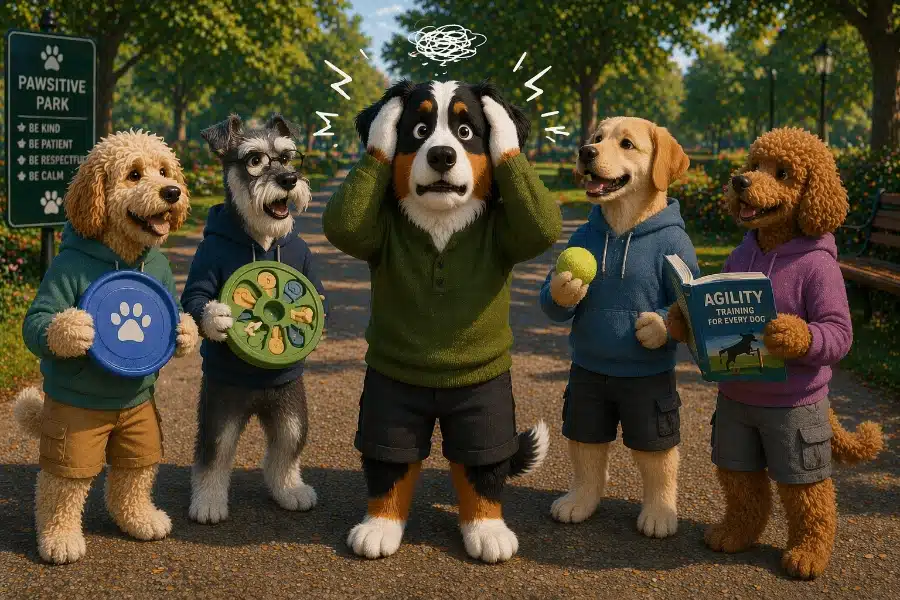 |
Is There Such a Thing as Too Much Enrichment for Dogs? | https://www.bernies.com/blogs/bernies-blog/is-there-such-a-thing-as-too-much-enrichment-for-dogs/ |
 |
The Science of Slow Feeders and How Eating Speed Affects Your Dog's Digestion | https://www.bernies.com/blogs/bernies-blog/the-science-of-slow-feeders-and-how-eating-speed-affects-your-dogs-digestion/ |
 |
The Lick Mat Effect and How Enrichment Supports Digestion, Calm, and Slow Eating | https://www.bernies.com/blogs/bernies-blog/the-lick-mat-effect-and-how-enrichment-supports-digestion-calm-and-slow-eating/ |