
Joint & Musculoskeletal



Overview
How Bones, Joints, Muscles, and Connective Tissues Work Together to Keep Dogs Moving
The joint and musculoskeletal system provides the strength, stability, and mobility dogs rely on for everything from running and jumping to posture, balance, and even everyday movement like standing up or going for a walk. This system includes bones, joints, muscles, ligaments, tendons, and fascia, all of which work together to support motion, absorb force, and maintain structural integrity throughout a dog’s life.
What’s Included in the Musculoskeletal System?
- Bones provide the structural framework. They give shape to the body, protect internal organs, and serve as anchor points for muscles. Some bones connect directly to others at joints, while others are linked via connective tissue like tendons and ligaments.
- Joints are where two or more bones meet. Healthy joints include a layer of articular cartilage that cushions bone ends, and a joint capsule filled with synovial fluid, which acts as a lubricant to reduce friction. This combination helps bones glide smoothly against each other during movement.
- Muscles generate force. They contract to move bones at the joints, enabling actions like walking, climbing, or wagging a tail.
- Tendons connect muscles to bones and help transmit the force generated by the muscle to create motion.
- Ligaments connect one bone to another across a joint. They help maintain joint stability and prevent excessive motion that could lead to injury.
- Fascia is the connective tissue that surrounds and separates muscles, bones, and organs. Though often overlooked, fascia plays a critical role in coordinating movement, distributing force, and supporting joint function through its interconnected structure.
How Do These Parts Work Together?
Movement in dogs is the result of carefully coordinated actions across all these tissues. For example:
- A dog’s shoulder joint allows the forelimb to swing during a stride. Muscles contract to pull the bones, tendons transmit the force, and cartilage inside the joint cushions the movement.
- Ligaments prevent the shoulder from extending too far, and fascia helps maintain alignment across nearby muscle groups.
- Synovial fluid inside the joint reduces friction, allowing smooth, low-resistance motion between bone surfaces.
When this system is working well, movement appears fluid, strong, and balanced. The dog shows no signs of hesitation, stiffness, or discomfort — even after exercise or during changes in position.
What Do Healthy Joints Look Like?
Healthy joints allow for smooth, strong, and pain-free movement. When the joint structures — including cartilage, fluid, ligaments, and surrounding muscles — are functioning properly, dogs move with ease and confidence. Here’s what that looks like:
Posture is balanced and weight is evenly distributed.
A dog with healthy joints stands squarely, without shifting weight to one side or leaning forward or back. This tells us the limbs and spine are aligned, and the joints can bear weight without discomfort or instability.
Movement is smooth and coordinated.
Gait should be rhythmic and symmetrical. Steps are even in length and timing, with no limping, stiffness, or hesitation. This reflects a full, pain-free range of motion and well-lubricated joints.
Transitions between positions are easy.
Dogs should be able to lie down, rise, sit, and stand without needing extra momentum or showing stiffness. These movements rely on stable joints and cooperative muscle engagement.
Activity feels natural, not cautious.
When joints are healthy, dogs approach stairs, jumps, or play with confidence. A willingness to move is one of the clearest signs that nothing hurts when they do.
No lingering soreness or visible inflammation.
After activity, dogs with healthy joints recover quickly and without signs of pain. Joints should not feel swollen, hot to the touch, or visibly enlarged, and the dog shouldn’t move stiffly after rest.
What Healthy Joints Look Like on the Inside
Cartilage is smooth and intact.
The ends of bones are covered by a glossy, resilient layer of articular cartilage. This tissue cushions impact and allows bones to glide against one another without friction.
Synovial fluid is clear and viscous.
Produced by the lining of the joint capsule, this fluid coats cartilage surfaces and delivers nutrients. In health, it is thick enough to provide lubrication and shock absorption.
The synovial membrane is thin and quiet.
The inner lining of the joint capsule produces fluid steadily without signs of irritation or overgrowth, keeping the joint environment stable.
The joint capsule is firm but not thickened.
This fibrous sleeve encloses the joint, maintaining pressure and alignment while permitting normal range of motion.
Ligaments are taut and supportive.
Bands of dense connective tissue connect bone to bone, guiding the joint through its proper arc of motion and preventing abnormal sliding or twisting.
Subchondral bone is smooth and uniform.
The bone beneath the cartilage is dense but slightly elastic, designed to bear and distribute loads without cracking or deforming.
Muscles and tendons are balanced around the joint.
Muscles generate force and tendons transmit it, while balanced tone ensures the joint is evenly supported on all sides.
What Can Go Wrong?
When stress or injury outpaces the body’s ability to repair, joint tissues begin to change. At first these changes are microscopic, but over time they manifest as recognizable conditions that affect mobility and comfort.
Cartilage can thin, fray, or wear away.
Once cartilage loses its smooth surface, bones grind against each other. This is the essence of osteoarthritis, the most common joint disease in dogs, often seen in hips, knees, and elbows.
Bones may not align as they should.
In hip dysplasia and elbow dysplasia, the joint surfaces develop abnormally, creating poor fit and uneven stress. These mismatches damage cartilage and set the stage for early arthritis.
Ligaments can rupture or stretch beyond their limits.
The cranial cruciate ligament (CCL) in the knee is especially prone to tearing. Without its stabilizing influence, the joint becomes unstable and painful, and secondary arthritis quickly follows.
The kneecap may slip from its groove.
In patellar luxation, the patella tracks out of place, causing intermittent lameness and abnormal loading across the joint. Over time, this misalignment damages cartilage and surrounding tissues.
Discs in the spine can degenerate or herniate.
In intervertebral disc disease (IVDD), the cushioning discs between vertebrae lose resilience or rupture. This can compress the spinal cord, producing back pain, nerve dysfunction, or paralysis depending on severity.
Each of these conditions disrupts the harmony of the musculoskeletal system. When one joint or structure falters, a dog compensates by shifting weight or altering gait. These adaptations may protect the injured area temporarily, but they often strain other joints and tissues, creating a cascade of secondary problems.
Why Proactive Support Matters
Dogs of all ages benefit from proactive support of their musculoskeletal system. The reason is simple: joints and connective tissues rarely fail overnight. Small stresses accumulate gradually, and once structural changes like cartilage loss or ligament instability occur, they cannot be reversed. Intervening early slows that process and helps tissues remain resilient for longer.
Nutrition provides the building blocks.
Compounds such as omega-3 fatty acids, collagen, and glycosaminoglycans support cartilage integrity and regulate inflammation inside joints. Supplying these before degeneration sets in gives the body more resources to maintain healthy tissue.
Movement strengthens protection around joints.
Regular, low-impact activity builds muscle, which stabilizes joints and absorbs force that would otherwise load cartilage and ligaments. Without adequate muscle tone, joints take more direct stress.
Therapeutic interventions maintain balance.
Massage, stretching, or targeted physical therapy preserve range of motion and prevent fascia or muscle imbalances that can restrict joint function. These approaches also improve circulation, which aids recovery from daily wear.
Preventive diagnostics catch problems early.
Orthopedic exams or imaging can reveal subtle instability, dysplasia, or early arthritis long before they are visible at home. Detecting these changes early allows for management strategies that delay progression.
Supporting the musculoskeletal system is therefore not just about treating disease once it appears. It is about sustaining the conditions that make movement fluid and comfortable in the first place. By protecting joint health early, we preserve not only mobility but also confidence and independence — qualities that shape a dog’s quality of life as much as longevity itself.
Types of Joints in Dogs
Not all joints are the same. Dogs have several categories of joints, each adapted for different functions:
- Synovial joints are the most common and most mobile. These include the hips, shoulders, elbows, knees (stifles), and ankles (hocks). They are lined with cartilage, filled with synovial fluid, and enclosed by a capsule. These are also the joints most commonly affected by osteoarthritis, hip dysplasia, elbow dysplasia, patellar luxation, and cranial cruciate ligament (CCL) tears.
- Cartilaginous joints allow limited movement. They are found between the vertebrae of the spine, where intervertebral discs cushion and stabilize. Conditions like intervertebral disc disease (IVDD) occur when these discs degenerate, harden, or herniate, putting pressure on nerves and the spinal cord.
- Fibrous joints are largely immobile, such as those in the skull. These joints rarely cause problems in adult dogs but are important during development.
A Closer Look at How Joints Really Work
A joint is more than a hinge between bones. It is a dynamic, living structure where bone, cartilage, fluid, and connective tissues interact to create motion while absorbing force. Each component has a specialized role, and movement depends on their cooperation.
- Cartilage cushions and protects. Articular cartilage lines the ends of bones, creating a smooth surface that minimizes friction and absorbs impact.
- Synovial fluid lubricates and nourishes. This viscous liquid, produced by the inner lining of the joint capsule, reduces wear between cartilage surfaces and delivers nutrients to tissues that lack a blood supply.
- Ligaments stabilize. These bands of dense connective tissue span from one bone to another, holding the joint together and limiting excessive or abnormal motion.
- Tendons transmit force. Tendons anchor muscle to bone. When a muscle contracts, the tendon pulls on the bone across a joint, creating movement.
- Muscles generate power. They provide the active force that drives motion, while also helping absorb impact and protect joints during activity.
- Fascia integrates. This connective tissue web surrounds muscles, bones, and joints, distributing force and helping coordinate whole-body movement.
When functioning in harmony, these elements allow joints to act as both shock absorbers and levers — resilient enough to withstand daily forces, yet precise enough to permit agile, fluid motion.
How the Connective Tissues of a Joint Differ
| Structure | What It Connects | How It Functions | Why It Matters for Movement |
|---|---|---|---|
| Tendon | Muscle to bone | A tough, fibrous cord that transmits the pulling force of a contracting muscle directly onto bone | Converts muscle power into skeletal motion; without tendons, muscles could contract but bones would not move |
| Ligament | Bone to bone | Strong, slightly elastic bands that span across joints | Acts as the joint’s “safety check,” preventing bones from sliding too far or twisting out of alignment |
| Cartilage (articular) | Covers bone ends inside the joint | Smooth, resilient tissue that absorbs compression and reduces friction | Protects bones from grinding against each other; makes motion fluid and pain-free |
| Joint capsule | Encases the joint, attaching bone to bone around its perimeter | Fibrous sleeve lined with synovium that produces synovial fluid | Maintains the sealed environment of the joint; supplies lubrication and contributes to stability |
| Fascia | Surrounds muscles, bones, organs | A continuous web of connective tissue that distributes force and maintains tension across the body | Integrates movement across regions, ensuring efficiency and preventing overload of a single joint |
Bringing It All Together
Bones, joints, muscles, and connective tissues form an interdependent system. Tendons cannot create motion without muscle, ligaments cannot provide stability without bone, and cartilage cannot remain healthy without nourishment from synovial fluid. Fascia weaves throughout, linking these components into a single, integrated whole.
When the system is balanced, movement is efficient, stable, and pain-free. But because each element relies on the others, even small disruptions can ripple outward. A stiffened fascia can alter muscle alignment; a stretched ligament can destabilize a joint; thinning cartilage can expose bone to forces it was never meant to bear. These changes compound over time, which is why early recognition and proactive care are so critical.
Ultimately, healthy movement is not the product of one structure but of a network working in concert. Understanding how these parts interact gives pet parents and clinicians a clearer picture of both resilience and vulnerability in the canine body — and provides the foundation for supporting mobility across a dog’s lifespan.

Health Conditions
 Health conditions related to Joint & Musculoskeletal
| Image & Title | At a Glance |
|---|

Therapeutic Interventions
Therapeutic Interventions of Joint & Musculoskeletal


Lifestyle Strategies
Lifestyle Strategies of Joint & Musculoskeletal


Foods
Food sources of Joint & Musculoskeletal

Food Components
Ingredient sources of Joint & Musculoskeletal

Food Component Groups
Ingredient sources group of Joint & Musculoskeletal

Nutrients
Nutrients Found in Joint & Musculoskeletal


Nutrient Types
Nutrient Types of Joint & Musculoskeletal

Nutrient Sub-Types
Nutrient Sub-Types of Joint & Musculoskeletal

Follow the Research
Studies providing deeper insight into Joint & Musculoskeletal
| Title | Information |
|---|---|
| Anti-inflammatory and anti-arthritic effects of piperine in human interleukin 1β-stimulated fibroblast-like synoviocytes and in rat arthritis models | At a Glance This 2008 laboratory study investigated whether piperine, the active compound in black pepper, could help reduce inflammation and joint damage in arthritis. Researchers tested piperine on human joint cells from arthritis patients and rats with induced arthritis to observe its effects on inflammatory pathways and pain response. The results showed that piperine reduced key inflammatory markers (IL-6, PGE2) and enzymes that contribute to cartilage breakdown (MMP-13, COX-2). Rats treated with piperine also experienced less joint swelling, improved movement, and reduced pain sensitivity. Connecting the Dots |
| Potential Adverse Effects of Omega-3 Fatty Acids in Dogs and Cats | At a Glance This 2013 review looks at the possible risks of omega-3 fatty acids in dogs and cats, especially EPA and DHA from fish oil. While omega-3s are commonly used to support skin, joint, heart, and kidney health, the authors explain that high amounts can sometimes cause issues like GI upset, changes in clotting, oxidative stress, immune shifts, or slower wound healing. The paper also stresses that plant-based ALA is not the same as EPA and DHA, so the source of omega-3s matters when considering both benefits and risks. Connecting the Dots |
| Regulation of bone remodeling by vitamin K2 | At a Glance This article, published in Oral Diseases in 2017, reviews how Vitamin K2 regulates bone remodeling, the process of breaking down and rebuilding bone tissue. The findings suggest that Vitamin K2 supports bone density, reduces fracture risk, and may help prevent osteoporosis, especially when combined with Vitamin D3. The research primarily examines human, rat, and mouse models to understand Vitamin K2’s role in skeletal health. Connecting the Dots |
| Roles of plant-based ingredients and phytonutrients in canine nutrition and health | At a Glance The 2021 review article by Tanprasertsuk et al. synthesizes existing research to provide a clear picture of how natural compounds found in fruits, vegetables, and herbs—like carotenoids, polyphenols, and phytosterols—may support dogs' overall well-being. Connecting the Dots |
| The Effects of Omega-3 Supplementation on the Omega-3 Index and Quality of Life and Pain Scores in Dogs | At a Glance A 16-week clinical study in 29 pet dogs found that daily omega-3 supplementation from anchovy and sardine oils significantly increased the Omega-3 Index in all size groups and reduced owner-reported pain in small and medium dogs. Large dogs did not show the same pain improvement, likely because fixed-size capsules delivered a lower mg/kg dose. No adverse effects were reported. Connecting the Dots |
| The relationship between vitamin K and osteoarthritis: A review of current evidence | At a Glance This 2020 review examines the relationship between Vitamin K status and osteoarthritis (OA), focusing on how Vitamin K influences cartilage calcification, inflammation, and joint degeneration. The findings suggest that sufficient Vitamin K levels may help slow OA progression by regulating proteins that prevent abnormal calcium buildup in joints. While the study focuses on human OA research, it may have implications for canine joint health and mobility. Connecting the Dots |
| The vital roles of boron in animal health and production: A comprehensive review. | At a Glance This 2018 review, published in the Journal of Trace Elements in Medicine and Biology, examined how boron influences bone strength, mineral metabolism, immune balance, and inflammation across multiple animal species. While dogs were not directly studied, the findings suggest boron may play a similar role in supporting canine joint health and overall resilience, though more research is needed to confirm its effects. Connecting the Dots |
| Therapeutic Effect of EPA and DHA Supplementation in Neoplastic and Non-Neoplastic Companion Animal Diseases | At a Glance This systematic review evaluates the therapeutic effects of EPA and DHA in treating various diseases in dogs and cats. Twenty-three randomized studies were analyzed, with benefits seen in both neoplastic (cancer-related) and non-neoplastic conditions such as allergic dermatitis, osteoarthritis, cardiovascular diseases, and haircoat disorders. The anti-inflammatory and immunomodulatory properties of EPA and DHA, through suppression of pro-inflammatory cytokines and matrix metalloproteinases, are highlighted as key mechanisms for their therapeutic effects. Connecting the Dots |
| Veterinary applications of pulsed electromagnetic field therapy | At a Glance This 2018 review explains how pulsed electromagnetic field (PEMF) therapy delivers carefully timed bursts of electromagnetic energy to stimulate tissue repair. Evidence supports its use in bone healing, osteoarthritis, wound healing, and post-operative pain and swelling. The paper emphasizes that different PEMF devices vary widely in waveform design, which determines whether they efficiently trigger biological cascades such as nitric oxide signaling. Veterinary studies are promising, but more controlled trials are needed to guide routine use. Connecting the Dots |
| Vitamin C in Health and Disease: A Companion Animal Focus | At a Glance This 2020 review article, published in Topics in Companion Animal Medicine, examined vitamin C in the health and disease of dogs and cats. The authors summarize evidence that while dogs and cats can produce their own vitamin C, levels fall during illness, raising interest in supplementation as a low-cost, low-risk therapy to support critically ill patients. Connecting the Dots |
| Vitamin C protects chondrocytes against monosodium iodoacetate-induced osteoarthritis by multiple pathways | At a Glance This 2016 laboratory study in rats and human-derived cell cultures investigated whether vitamin C could help protect cartilage from osteoarthritis (OA)-related damage. The study found that vitamin C reduced oxidative stress, inflammation, and cartilage breakdown in a rat model of OA, suggesting potential benefits. However, this research was not conducted in dogs, so its relevance to canine health is uncertain. Interestingly, higher doses of vitamin C were not more effective, meaning there may be an optimal amount beyond which additional vitamin C does not provide extra protection. Connecting the Dots |
| Vitamin K2 in animal health: An overview | At a Glance This 2016 review article surveyed what was known about vitamin K2 across species. The authors explain how K2 activates proteins that regulate bone and cartilage health, blood clotting, inflammation, kidney function, and vascular calcification. They also highlight a gap in companion animal nutrition: most commercial pet foods use synthetic K3 (menadione), which does not provide the same benefits as natural K2. The paper underscores the need for targeted research to understand whether dogs and cats could gain broader health advantages from true K2. Connecting the Dots |

Dig Deeper
Q/A's related to Joint & Musculoskeletal

Blog Articles
Articles related to Joint & Musculoskeletal
| Featured Image Link | Blog Title | Blog_URL_Link |
|---|---|---|
 |
Omega-3s: A Natural Anti-Inflammatory Powerhouse for Your Dog | https://www.bernies.com/blogs/bernies-blog/omega-3s-a-natural-anti-inflammatory-powerhouse-for-your-dog/ |
 |
The Power of Dog Hydrotherapy: Healing and Rehabilitation for Your Best Friend | https://www.bernies.com/blogs/bernies-blog/the-power-of-dog-hydrotherapy-healing-and-rehabilitation-for-your-best-friend/ |

|
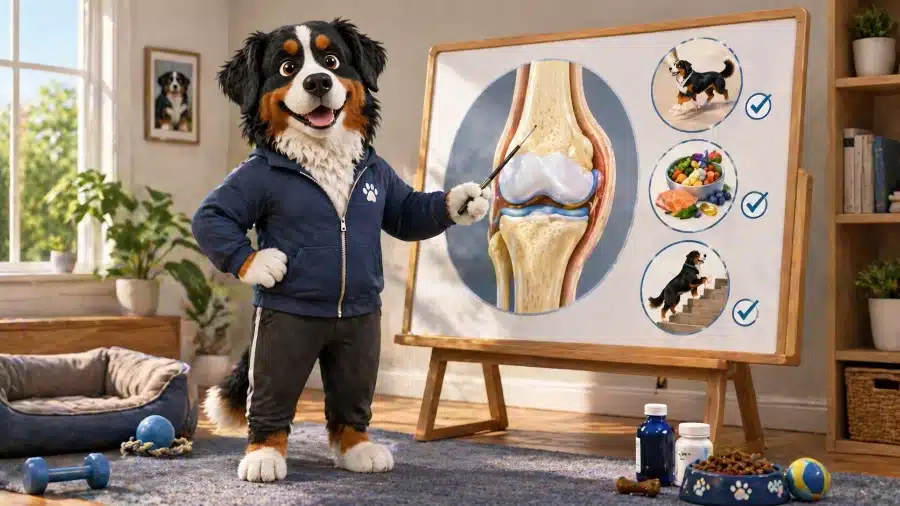
Canine Joint Health: 20 Tips For Preventative Care | https://www.bernies.com/blogs/bernies-blog/canine-joint-health-20-tips-for-preventative-care/ |
 |
Understanding Working Dog Breed Joints: Common Issues and Solution | https://www.bernies.com/blogs/bernies-blog/understanding-working-dog-breed-joints-common-issues-and-solution/ |
 |
How To Detect The Early Signs Of Joint Issues In Dogs | https://www.bernies.com/blogs/bernies-blog/how-to-detect-the-early-signs-of-joint-issues-in-dogs/ |
 |
Building the Best Joint Health in Young Dogs | https://www.bernies.com/blogs/bernies-blog/building-the-best-joint-health-in-young-dogs/ |

|
The Link Between Nutrition and Joint Health in Dogs | https://www.bernies.com/blogs/bernies-blog/the-link-between-nutrition-and-joint-health-in-dogs/ |
 |
Joint Health and Breed-Specific Concerns: What You Need to Know | https://www.bernies.com/blogs/bernies-blog/joint-health-and-breed-specific-concerns-what-you-need-to-know/ |
 |
How To Manage Dog Joint Pain In Cold Weather | https://www.bernies.com/blogs/bernies-blog/how-to-manage-dog-joint-pain-in-cold-weather/ |
 |
Is Taking Your Dog Running Good For Their Joint Health? | https://www.bernies.com/blogs/bernies-blog/is-taking-your-dog-running-good-for-their-joint-health/ |

|
Tips For Reducing Joint Stress In Large Breed Dogs | https://www.bernies.com/blogs/bernies-blog/tips-for-reducing-joint-stress-in-large-breed-dogs/ |

|
The Role of Diet in Managing and Preventing Joint Disease in Dogs | https://www.bernies.com/blogs/bernies-blog/the-role-of-diet-in-managing-and-preventing-joint-disease-in-dogs/ |

|
Dog Joint Supplements: Separating Fact From Fiction | https://www.bernies.com/blogs/bernies-blog/dog-joint-supplements-separating-fact-from-fiction/ |
 |
Managing Dog's Joint Pain During Travel: A Practical Guide | https://www.bernies.com/blogs/bernies-blog/tips-for-managing-joint-issues-during-travel-with-your-dog/ |
 |
The Joint Health Benefits of Turmeric for Dogs: Spice Up Your Dog's Health | https://www.bernies.com/blogs/bernies-blog/the-joint-health-benefits-of-turmeric-for-dogs-spice-up-your-dogs-health/ |
 |
Green Lipped Mussels for Dogs Joint Health | https://www.bernies.com/blogs/bernies-blog/green-lipped-mussels-for-dogs-joint-health/ |
 |
Cartilage Health In Dogs: How To Protect And Preserve It | https://www.bernies.com/blogs/bernies-blog/cartilage-health-in-dogs-how-to-protect-and-preserve-it/ |
 |
Recognizing and Addressing Spinal Issues Affecting Mobility in Dogs | https://www.bernies.com/blogs/bernies-blog/recognizing-and-addressing-spinal-issues-affecting-mobility-in-dogs/ |

|
Weight Management: Give Your Dog's Joints A Break | https://www.bernies.com/blogs/bernies-blog/weight-management-give-your-dogs-joints-a-break/ |
 |
Incorporating Physical Therapy for Dog Joint Health Maintenance | https://www.bernies.com/blogs/bernies-blog/incorporating-physical-therapy-for-dog-joint-health-maintenance/ |
 |
Joint Health in Senior Dogs: Getting Older Doesn’t Have To Be Harder | https://www.bernies.com/blogs/bernies-blog/joint-health-in-senior-dogs-getting-older-doesnt-have-to-be-harder/ |
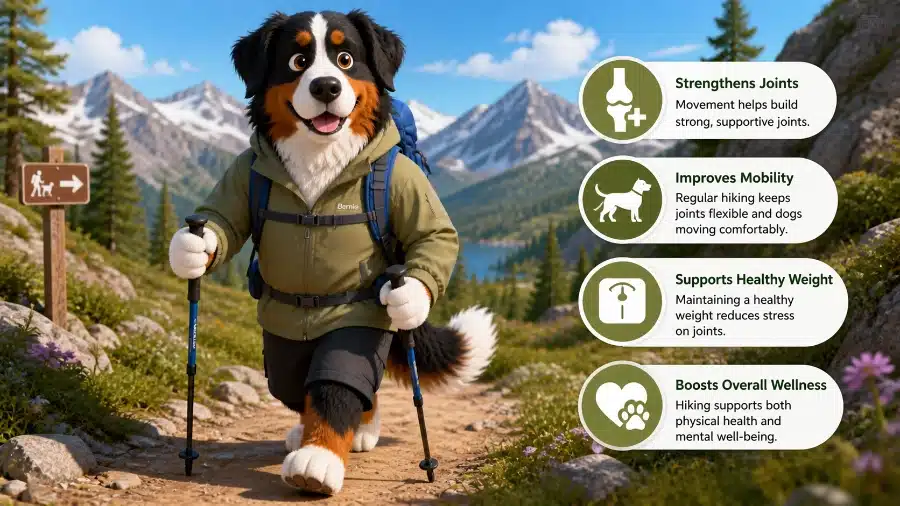 |
Discover the Joint Health Benefits of Hiking for Dogs | https://www.bernies.com/blogs/bernies-blog/discover-the-joint-health-benefits-of-hiking-for-dogs/ |
 |
Kinesiology Tape for Dogs: Does it Help with Mobility? | https://www.bernies.com/blogs/bernies-blog/kinesiology-tape-for-dogs-does-it-help-with-mobility/ |
 |
The Importance of Puppy Joint Health and Preventative Care | https://www.bernies.com/blogs/bernies-blog/the-importance-of-puppy-joint-health-and-preventative-care/ |
 |
How to Spot the Early Signs of Mobility Decline in Dogs | https://www.bernies.com/blogs/bernies-blog/how-to-spot-the-early-signs-of-mobility-decline-in-dogs/ |
 |
What Can I Give My Dog for Joint Pain at Home | https://www.bernies.com/blogs/bernies-blog/what-can-i-give-my-dog-for-joint-pain-at-home/ |