
Vitamins



Overview
What Vitamins Are and Why They Matter
Vitamins are micronutrients, organic compounds that a dog’s body needs in very small amounts to sustain normal physiological functions. Unlike macronutrients such as proteins, fats, and carbohydrates, vitamins don’t provide calories or energy directly. Instead, they enable the body’s systems to extract and use energy, regulate metabolism, support tissue growth, maintain nerve and immune function, and protect against cellular damage.
Each vitamin plays a unique role, often acting as a coenzyme, a molecule that “activates” enzymes to do their job. Enzymes are the specialized proteins that drive nearly all of a dog’s internal chemistry, from breaking down food to repairing tissues. However, many enzymes can’t function properly on their own; they need a vitamin to attach and complete their active form. In this way, vitamins act like the ignition key that starts the metabolic “engine.” When a vitamin binds to an enzyme, it changes the enzyme’s shape or charge just enough to make the reaction possible. This allows nutrients to be converted into energy, hormones to be synthesized, and damaged cells to be rebuilt. Without this support, the enzymes responsible for digestion, metabolism, reproduction, and healing would operate too slowly or not at all.
Dogs obtain vitamins primarily through food. Some vitamins can be made within the body (for instance, vitamin C in the liver or vitamin K by gut bacteria), while others must be consumed regularly through the diet. Because both deficiency and excess can disrupt health, maintaining the right balance is essential.
How Dogs Use Vitamins in the Body
Vitamins help coordinate chemical reactions that keep cells functioning properly. Here’s how they fit into the bigger picture:
- Energy metabolism: B-vitamins act as coenzymes that help convert food into usable cellular energy.
- Growth and repair: Vitamins A, C, D, E, and K play key roles in cell turnover, bone formation, and wound healing.
- Immunity and protection: Vitamins A, C, and E act as antioxidants that protect tissues from oxidative stress and boost immune defenses.
- Neurological and hormonal health: Vitamins like B6, B12, and D help regulate nerve signals and hormonal balance.
The body doesn’t need much of each vitamin, but it can’t function without them.
The Difference Between Fat-Soluble vs. Water-Soluble Vitamins
Before diving into each vitamin, it’s vital to understand how they behave in the body. Vitamins fall into two main categories, based on how they dissolve, travel, and are stored.
Fat-Soluble Vitamins
These include vitamins A, D, E, and K. They dissolve in fats (lipids) and require dietary fat and bile acids for absorption. Once absorbed, they are stored in the liver and fatty tissues, which means dogs don’t necessarily need to consume them daily, but excessive intake can lead to toxicity over time.
Fat-soluble vitamins are responsible for foundational functions:
- Vitamin A supports vision, skin, and immunity.
- Vitamin D regulates calcium and phosphorus for bone and muscle health.
- Vitamin E protects cells from oxidative damage.
- Vitamin K is essential for proper blood clotting and bone metabolism.
Water-Soluble Vitamins
These include vitamin C and the B-complex vitamins (B1 through B12). They dissolve in water and are not stored in large quantities. Excess amounts are excreted through urine, making toxicity rare but deficiencies more common if intake is inconsistent.
Water-soluble vitamins drive the energy and repair systems of the body:
- Vitamin C strengthens immunity and connective tissues.
- The B-family fuels energy metabolism and maintains the nervous system, skin, and red blood cell production.
Summary Table: Solubility Basics
| Property | Fat-Soluble (A, D, E, K) | Water-Soluble (B & C) |
|---|---|---|
| Absorption | Needs dietary fat and bile | Absorbed directly into bloodstream |
| Storage | Stored in liver & fat tissues | Minimal storage; excreted in urine |
| Deficiency Risk | Slower to develop | Faster to develop |
| Toxicity Risk | Higher (can accumulate) | Lower (rare, excess excreted) |
Fat-Soluble Vitamins in Detail
Fat-soluble vitamins are essential for a dog’s long-term health. They support strong bones, a healthy immune system, and normal tissue repair. Unlike water-soluble vitamins, these nutrients dissolve in fat during digestion. The body absorbs them along with dietary fats and stores them inside fat cells and in the liver. Because they are held in these tissues, they don’t leave the body quickly. This storage works like a slow-release reserve that can be used when a dog’s diet is low in certain vitamins.
But if too much is consumed—especially from supplements or rich foods like liver—the stored amounts can build up over time. High levels of vitamins A or D can eventually cause liver damage, bone changes, or other health problems. Fat-soluble vitamins are important and long-lasting, but they need to be managed with balance and care.
| Vitamin | Primary Functions | Common Dietary Sources | Deficiency Signs | Toxicity / Caution |
|---|---|---|---|---|
| A (Retinol) | Vision, skin, coat, immune support, reproduction | Liver, fish oil, egg yolks, dairy fats | Night blindness, dry coat, stunted growth | Liver damage, skeletal deformities |
| D (Calciferol) | Bone formation, calcium/phosphorus regulation, muscle function | Fish liver oil, egg yolks, fortified foods | Rickets, weak bones, muscle issues | Very toxic at high levels (can cause kidney failure) |
| E (Tocopherols) | Antioxidant, protects cell membranes, immune & reproductive health | Vegetable oils, seeds, leafy greens | Muscle weakness, poor fertility, dull coat | Rare, but very high doses may interfere with vitamin K |
| K (Phylloquinone / Menaquinone) | Blood clotting, bone metabolism | Leafy greens, liver, fish meal, gut microbes | Hemorrhage, poor clotting | Safe even at high doses |
Water-Soluble Vitamins in Detail
Water-soluble vitamins play a key role in a dog’s daily energy and metabolic health. They include vitamin C and the B-complex family of vitamins. These nutrients dissolve in water instead of fat, which changes how the body handles them. During digestion, they move directly into the bloodstream and travel to the tissues that need them most. Because they are not stored in large amounts, any extra is flushed out through urine.
This means dogs must get a steady supply of water-soluble vitamins every day. They help the body turn food into usable energy, build red blood cells, and support the nervous and immune systems. If a dog’s diet lacks these vitamins, the effects can appear quickly—low energy, poor appetite, or skin and coat problems are common signs. On the other hand, toxicity is very rare since the body removes the excess naturally.
In simple terms, water-soluble vitamins act like daily fuel additives: they don’t stay in storage for long, but the body needs them regularly to keep every system running smoothly.
| Vitamin | Primary Functions | Common Sources | Deficiency Signs | Toxicity / Caution |
|---|---|---|---|---|
| C (Ascorbic Acid) | Antioxidant, collagen formation, immune defense | Synthesized in dog’s liver; fruits & veggies | Rare; may show fatigue, slow healing | Very low risk; large doses may cause loose stool |
| B1 (Thiamine) | Carbohydrate metabolism, nerve transmission | Whole grains, pork, yeast | Weakness, nerve dysfunction, appetite loss | Safe |
| B2 (Riboflavin) | Energy metabolism, skin/eye health | Organ meats, eggs, green veggies | Dermatitis, poor growth | Safe |
| B3 (Niacin) | Fat & carb metabolism | Liver, poultry, peanuts | Diarrhea, dermatitis, dementia-like behavior | Safe |
| B5 (Pantothenic Acid) | Coenzyme A synthesis, energy metabolism | Meats, eggs, whole grains | Lethargy, poor coat | Safe |
| B6 (Pyridoxine) | Amino acid metabolism, neurotransmitters | Meat, fish, bananas | Anemia, seizures, dermatitis | Rare toxicity only at very high doses |
| B7 (Biotin) | Skin, coat, nail health | Egg yolks, liver, yeast | Dermatitis, alopecia | Safe |
| B9 (Folate) | DNA synthesis, cell division | Leafy greens, liver | Anemia, growth issues | Safe |
| B12 (Cobalamin) | Nerve function, red blood cells, energy metabolism | Animal products (meat, fish, eggs) | Lethargy, anemia, poor appetite | Safe |
What is Bioavailability?
Bioavailability describes how easily a vitamin is absorbed, transported, and used by the body once it’s eaten. It’s not just about how much of a nutrient is present in food, but how much the body can actually access and put to work. Two meals may contain the same vitamin on paper, yet the dog’s body might absorb one form more efficiently than the other.
Several factors influence bioavailability. Fat-soluble vitamins are absorbed best when a meal includes healthy dietary fats, since they rely on fat and bile for transport. Water-soluble vitamins, on the other hand, dissolve in water and are absorbed more directly, but they can also be lost through cooking, processing, or long storage times.
The source of the vitamin matters too. Nutrients from whole foods often come packaged with natural cofactors and enzymes that improve absorption compared to isolated supplements.
A dog’s age, digestive health, microbiome balance, and overall diet quality all play major roles as well. Puppies and older dogs may absorb nutrients differently, and any issue that affects gut function, such as inflammation or imbalance, can reduce how much the body can use.
Understanding bioavailability helps explain why complete, balanced diets made from varied and well-prepared ingredients are generally more reliable sources of vitamins than single supplements. It’s not just what’s in the bowl that matters, but how the body can use it.
Key Takeaways
- Vitamins are essential helpers that keep a dog’s metabolism, growth, and immune system running smoothly.
- Fat-soluble vitamins (A, D, E, and K) are stored in body fat and the liver, so balance is important to avoid buildup.
- Water-soluble vitamins (C and the B family) are not stored, so dogs need a steady dietary supply.
- Bioavailability (how well vitamins are absorbed) depends on diet composition, gut health, and food quality.


Nutrient Types
 Nutrient Types of Vitamins
| Image & Title | At a Glance |
|---|---|

|
Fat-Soluble Vitamins dissolve in fat and are stored in the liver and fatty tissues for long-term use. This group includes vitamins A, D, E, and K, which are important for vision, bone health, and antioxidant defense. |
 Water Soluble Vitamins Water Soluble Vitamins |
Water-Soluble Vitamins dissolve in water and are not stored in the body, meaning they must be consumed regularly. This group includes B-complex vitamins and vitamin C, which support metabolism, nerve health, and immune function. |

Follow the Research
Studies providing deeper insight into Vitamins
| Title | Information |
|---|

Dig Deeper
Q/A's related to Vitamins

Blog Articles
Articles related to Vitamins
| Featured Image Link | Blog Title | Blog_URL_Link |
|---|---|---|
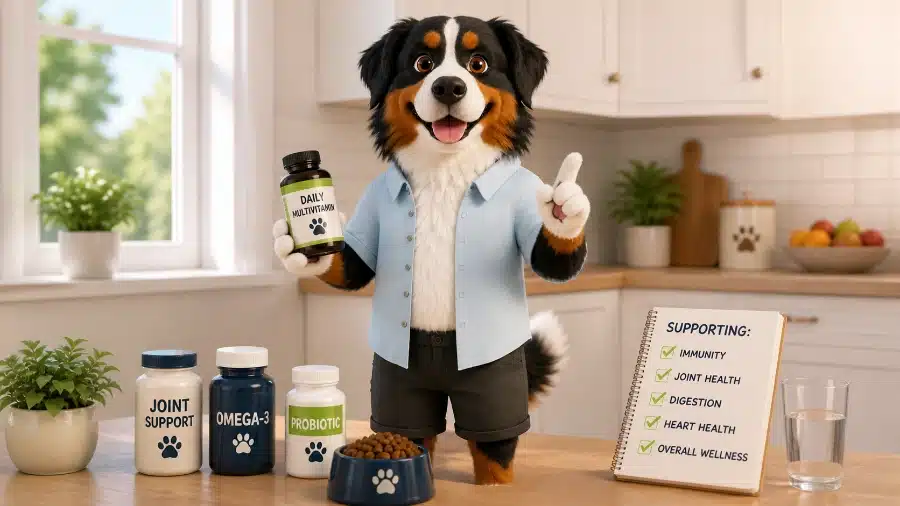 |
Is It Safe For My Dog To Have Vitamins And Supplements? | https://www.bernies.com/blogs/bernies-blog/is-it-safe-for-my-dog-to-have-vitamins-and-supplements/ |
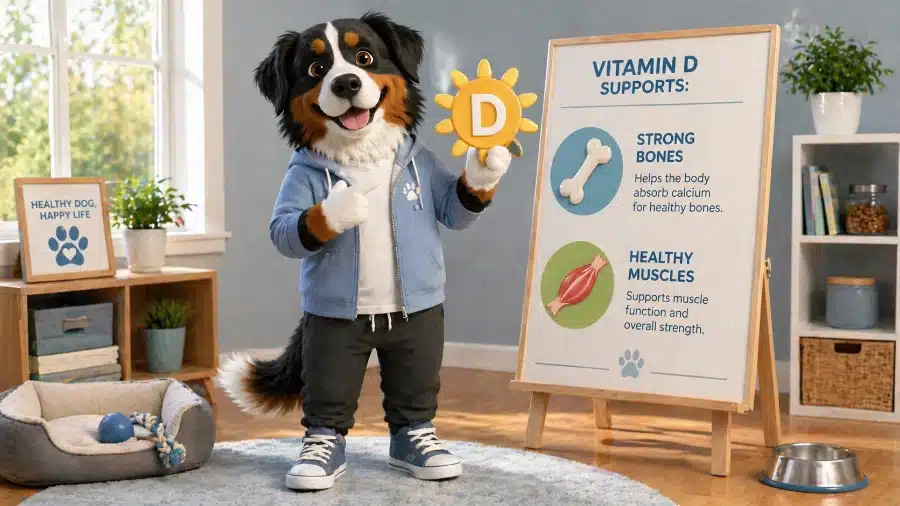 |
The Role of Vitamin D in Dogs: Importance for Bone and Muscle Health | https://www.bernies.com/blogs/bernies-blog/the-role-of-vitamin-d-in-dogs-importance-for-bone-and-muscle-health/ |