
Colitis



Overview
What Is Colitis?
Colitis refers to inflammation of the colon, or large intestine. It is not a specific disease, but rather a clinical condition that can result from a wide range of underlying causes, from infections to stress to immune-mediated disorders. Colitis most commonly presents as a distinct pattern of diarrhea known as large bowel diarrhea. Unlike general diarrhea, which may stem from many parts of the digestive tract, colitis is specifically a disorder of the colon’s structure or function.
The colon plays a crucial role in absorbing water and electrolytes from digested material and in storing and forming feces prior to elimination. When the colon becomes inflamed or irritated, it loses some of its ability to absorb water properly and regulate stool consistency. This results in common symptoms like increased stool frequency, urgency, mucus, and fresh blood. Inflammation can also cause heightened sensitivity and contractions in the colon, which may lead to straining (tenesmus) and discomfort during defecation.
Colitis can be acute (short-lived and often self-limiting) or chronic (persistent or recurrent over time). Understanding the source of the inflammation is key to finding an appropriate treatment strategy.
Common Signs of Colitis in Dogs
- Small, frequent stools
- Straining to defecate (tenesmus)
- Urgency or accidents in the house
- Mucus in the stool
- Bright red blood in the stool (hematochezia)
- Audible gut sounds or gas
- Intermittent vomiting (less common)
- Normal energy and appetite, especially in acute cases
Types of Colitis
- Acute colitis: Often triggered by dietary indiscretion, stress, or infection. Symptoms tend to appear suddenly and may resolve within a few days with basic support.
- Chronic colitis: Lasts for several weeks or more. Often requires deeper investigation and ongoing management.
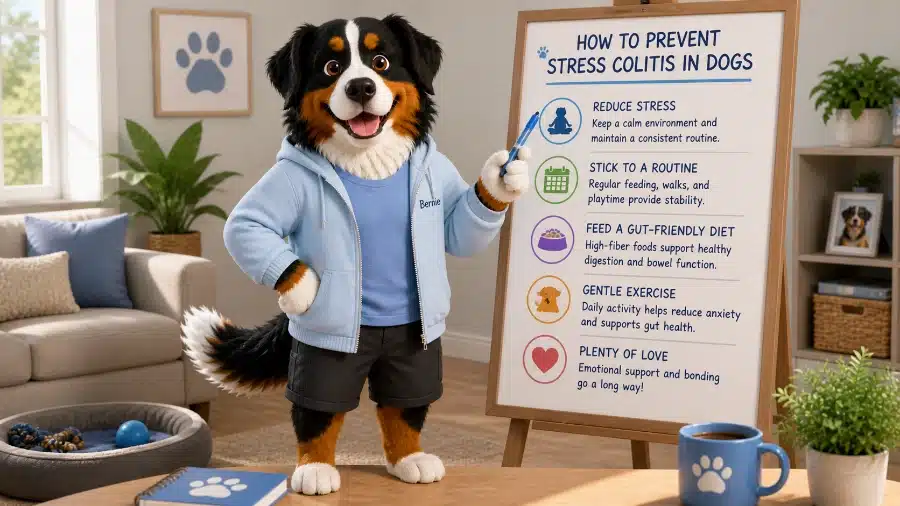
- Stress colitis: A common form triggered by psychological stress, changes in routine, or boarding.
- Granulomatous colitis: A rare, breed-associated form (seen in Boxers and French Bulldogs) involving invasive bacteria in the colon wall.
- Food-responsive colitis: Occurs when an ingredient in the diet is contributing to inflammation or immune response.
Causes of Colitis
Colitis can result from a variety of triggers. Some are short-term and easily resolved, while others require more detailed evaluation. In some cases, colitis is a symptom of a broader digestive disorder.
- Sudden diet changes or dietary indiscretion
- Bacterial, viral, or parasitic infections (e.g., Giardia, whipworms)
- Antibiotic use and subsequent dysbiosis
- Food intolerance or sensitivity
- NSAID overuse or drug-related irritation
- Environmental stress or anxiety
- Ingestion of non-digestible items or toxins
Colitis vs. IBD: What’s the Difference?
Inflammatory Bowel Disease (IBD) is a chronic condition involving inappropriate immune responses in the gastrointestinal tract. It can affect the colon, small intestine, or both, and may include colitis as one of its clinical signs. In cases where colitis symptoms persist despite basic treatment, veterinarians may investigate IBD as a potential underlying cause.
Diagnosing Colitis
Veterinary diagnosis is aimed at determining whether the colitis is acute and self-limiting, or part of a more complex condition. Steps may include:
- Fecal tests for parasites or bacteria
- Rectal exam and cytology
- Food trials (e.g., hydrolyzed or limited-ingredient diets)
- Bloodwork and inflammatory markers
- Abdominal ultrasound
- Colonoscopy and biopsy
Veterinarians may also distinguish colitis from small intestinal causes of diarrhea based on stool characteristics. Large bowel diarrhea, often associated with colitis, involves:
- Frequent trips to defecate
- Small volumes of stool
- Straining and urgency
- Mucus or fresh blood
This differs from small bowel diarrhea, which typically involves:
- Larger stool volumes
- Less frequent defecation
- More watery consistency
- Possible weight loss or nutrient malabsorption
Colitis vs. General Diarrhea
While colitis involves diarrhea, not all diarrhea is colitis. General diarrhea may originate from the small intestine, colon, or both. Colitis specifically refers to inflammation of the colon and typically causes large bowel diarrhea:
- Small volume, frequent stools
- Mucus or fresh blood
- Straining
By contrast, small bowel diarrhea often produces larger amounts of stool, fewer trips, and may be more watery or undigested in appearance. It may also be more likely to cause weight loss, vomiting, or loss of appetite.
Treatment and Management of Colitis
Treatment depends on the severity, duration, and suspected cause. Common supportive and targeted treatments may include:
- Temporary bland diet or easily digestible food
- Fiber supplementation (especially soluble or mixed fiber)
- Probiotics and prebiotics to help rebalance gut flora
- Deworming or antimicrobial therapy (if infection is detected)
- Anti-inflammatory medications (under veterinary direction and supervision)
- Stress management or environmental enrichment
Chronic colitis may require long-term dietary adjustments or rotating food trials to identify tolerable proteins and ingredients. Some dogs also benefit from ongoing microbiome support.
Prognosis and Long-Term Care
Many cases of colitis resolve quickly once the underlying cause is removed. Acute colitis may only need temporary support, while chronic colitis may require long-term management. Identifying patterns, supporting gut health, and minimizing stress are key parts of reducing flare-ups.

Related Questions
What Is Colitis in Dogs?
Colitis in dogs refers to inflammation of the colon, also called the large intestine. The colon normally absorbs water and helps form stool before elimination. When inflammation develops, this process becomes disrupted, leading to frequent, urgent bowel movements and changes in stool consistency. Rather than a single disease, colitis describes a pattern of digestive disturbance that can result from multiple underlying triggers.
What Causes Colitis in Dogs?
Colitis develops when the lining of the colon becomes irritated or inflamed. Common triggers include sudden diet changes, dietary indiscretion, infections from bacteria or parasites, and stress-related changes in gut function. Medications such as antibiotics can also disrupt the balance of gut bacteria, contributing to inflammation.
In some dogs, colitis reflects a more persistent sensitivity within the digestive tract, where the colon reacts to certain foods, environmental stressors, or shifts in the gut microbiome. Regardless of the trigger, inflammation interferes with the colon’s ability to absorb water and regulate normal stool formation.
What Are the Signs of Colitis in Dogs?
Colitis typically causes a distinct pattern of digestive changes. Dogs often pass small amounts of stool more frequently and may show urgency or have accidents. Straining during bowel movements is common, even when little stool is produced.
Stool may contain mucus or fresh red blood, and some dogs develop increased gas or audible intestinal sounds. In many cases, energy level and appetite remain relatively normal, especially when colitis develops suddenly.
Why Does Colitis Cause Mucus in a Dog’s Stool?
Colitis can cause mucus in the stool because the colon produces mucus as a protective response to irritation. The inner lining of the colon contains cells that secrete mucus to help lubricate and protect the surface from damage.
When inflammation develops, these cells may increase mucus production. The excess mucus mixes with stool and becomes visible during bowel movements. This reflects an active response within the colon as it attempts to protect and repair its lining.
Why Is There Blood in a Dog’s Stool With Colitis?
Blood in the stool with colitis usually appears as bright red streaks or droplets. This occurs because inflammation irritates the surface of the colon, making small blood vessels more fragile and prone to minor bleeding.
As stool passes through the inflamed area, it can disrupt these delicate vessels. Because the bleeding occurs in the lower digestive tract, the blood remains fresh in appearance rather than dark or digested.
Why Do Dogs With Colitis Poop More Frequently?
Dogs with colitis poop more frequently because inflammation increases sensitivity and activity within the colon. The irritated colon becomes more reactive, triggering the urge to defecate even when little stool is present.
At the same time, reduced water absorption leads to softer stool, which moves through the colon more quickly. This combination of urgency, sensitivity, and faster transit results in frequent trips outside with small amounts of stool.
What Is the Difference Between Colitis and General Diarrhea in Dogs?
Colitis is a specific type of diarrhea that originates in the colon, while general diarrhea can come from any part of the digestive tract. Colitis typically produces small, frequent stools with mucus, fresh blood, and straining.
In contrast, diarrhea from the small intestine often involves larger volumes of stool, fewer bowel movements, and a more watery consistency. Understanding where the disruption occurs helps guide diagnosis and treatment.
What Is the Difference Between Large Bowel and Small Bowel Diarrhea in Dogs?
Large bowel diarrhea, often associated with colitis, typically involves frequent attempts to defecate, small amounts of stool, and signs such as mucus or fresh blood. Dogs may strain or show urgency due to irritation in the colon.
Small bowel diarrhea produces larger volumes of stool less frequently. It may appear more watery and is more likely to be associated with weight loss or nutrient malabsorption. The differences reflect which part of the digestive tract is affected and how that region normally functions.
Can Stress Cause Colitis in Dogs?
Stress can trigger colitis by altering how the gut and nervous system interact. The digestive tract responds directly to stress signals, which can change intestinal movement, increase sensitivity, and affect the balance of gut bacteria.
In some dogs, these shifts lead to inflammation in the colon and the sudden onset of symptoms such as frequent stools, mucus, and urgency. This pattern is often referred to as stress colitis and may appear during changes in routine, travel, or boarding.
Is Colitis in Dogs Chronic or Acute?
Colitis can be either acute or chronic, depending on how long symptoms persist and what is driving the inflammation. Acute colitis develops suddenly and often resolves within a few days once the trigger is removed or the colon stabilizes.
Chronic colitis lasts for weeks or recurs over time. In these cases, the colon remains persistently sensitive or inflamed, and identifying underlying factors such as diet, microbiome imbalance, or immune responses becomes more important for long-term management.
How Is Colitis Diagnosed in Dogs?
Veterinarians diagnose colitis by combining clinical signs with targeted testing. They look for patterns such as frequent, small-volume stools, mucus, and straining, which point toward large bowel involvement.
Diagnostic steps may include fecal testing to check for parasites or infection, along with bloodwork or imaging when needed. In more persistent cases, food trials or advanced procedures such as colonoscopy may be used to better understand the cause of inflammation.
How Is Colitis Treated in Dogs?
Veterinarians treat colitis based on the underlying cause and severity of symptoms. Initial care often focuses on calming inflammation and restoring normal colon function through dietary adjustments, such as feeding easily digestible foods or adding specific types of fiber.
At home, caregivers may need to follow a temporary feeding plan, monitor stool quality, and maintain a consistent routine to reduce stress on the digestive system. If infection, parasites, or more persistent inflammation are involved, veterinarians may prescribe targeted medications.
Because colitis can recur, ongoing care often includes identifying triggers, supporting gut balance, and making gradual, consistent adjustments rather than frequent sudden changes.
Can Dogs With Colitis Live Normal Lives?
Dogs with colitis can live comfortable lives when the condition is properly managed. Many cases resolve quickly once the underlying trigger is addressed, especially in acute colitis.
For dogs with recurring or chronic patterns, long-term management focuses on maintaining digestive stability. This may include consistent diet choices, minimizing stress, and monitoring for early signs of flare-ups. With this approach, many dogs maintain regular routines and good quality of life over time.

General Health Topics
 Health Topics related to Colitis
| Image & Title | At a Glance |
|---|---|

|
The digestive and gastrointestinal systems break down food, absorb nutrients, and eliminate waste. When disrupted by inflammation, infection, or food sensitivities, they can cause discomfort, nutrient deficiencies, and broader health issues. Healthy digestion is essential to a dog’s overall well-being. |
|
Inflammation is the body's biological response to harmful stimuli such as injury, infection, or toxins. It involves immune cells, blood vessels, and molecular signals working to repair tissue and defend against threats. In dogs, while acute inflammation is beneficial for healing, chronic inflammation can contribute to diseases like osteoarthritis, allergies, and cardiovascular issues, causing ongoing damage to tissues and organs. |

Therapeutic Interventions
Therapeutic Interventions of Colitis

Lifestyle Strategies
Lifestyle Strategies of Colitis

Foods
Food sources of Colitis

Food Components
Ingredient sources of Colitis

Food Component Groups
Ingredient sources group of Colitis

Nutrients
Nutrients Found in Colitis

Nutrient Types
Nutrient Types of Colitis

Nutrient Sub-Types
Nutrient Sub-Types of Colitis


Follow the Research
Studies providing deeper insight into Colitis
| Title | Information |
|---|---|
| Roles of plant-based ingredients and phytonutrients in canine nutrition and health | At a Glance The 2021 review article by Tanprasertsuk et al. synthesizes existing research to provide a clear picture of how natural compounds found in fruits, vegetables, and herbs—like carotenoids, polyphenols, and phytosterols—may support dogs' overall well-being. Connecting the Dots |

Dig Deeper
Q/A's related to Colitis

Blog Articles
Articles related to Colitis
| Featured Image Link | Blog Title | Blog_URL_Link |
|---|---|---|
|
How to Treat Your Dog's Upset Stomach | https://www.bernies.com/upset-stomach/ |
 |
Dog Pooping Excessively: Make Diarrhea Go Away! | https://www.bernies.com/dog-diarrhea-make-it-all-go-away/ |
 |
What to Do if Your Dog Has Nighttime Diarrhea? | https://www.bernies.com/dog-has-diarrhea-at-night/ |

|
Dog Explosive Diarrhea: Causes, Treatment and Prevention | https://www.bernies.com/oh-no-colon-blow-how-to-help-dog-explosive-diarrhea/ |
|
What To Give a Dog with an Upset Stomach: Safe Remedies Explained | https://www.bernies.com/blogs/bernies-blog/what-to-give-a-dog-upset-stomach/ |
|
Can Bernie's Perfect Poop Help Stop Dog Diarrhea AND Dog Constipation? | https://www.bernies.com/blogs/bernies-blog/can-bernies-perfect-poop-help-dog-diarrhea-and-dog-constipation/ |

|
What is the Best Treatment for Colitis in Dogs? | https://www.bernies.com/blogs/bernies-blog/what-is-the-best-treatment-for-colitis-in-dogs/ |
 |
How To Prevent Stress Colitis In Dogs | https://www.bernies.com/blogs/bernies-blog/prevent-stress-colitis-in-dogs/ |
 |
How Can I Help Watery Dog Poop? | https://www.bernies.com/how-do-i-make-my-dogs-poop-less-watery/ |