
Home Mobility Modifications


Overview
Home Mobility Modifications for Dogs
Home mobility modifications refer to changes made to a dog’s living environment to support safe, confident movement. These modifications reduce unnecessary physical strain, lower injury risk, and help dogs move more comfortably through daily life—especially as bodies change with age, size, or health status.
Dogs spend a large portion of their lives inside human homes, yet most homes are designed for upright, shoe-wearing humans rather than four-legged animals. Smooth floors, stairs, furniture heights, and narrow transitions can all introduce movement challenges that dogs must navigate repeatedly. Thoughtful home modifications help align the environment with how dogs naturally move.
Why Dogs’ Environment Matters for Health
Movement challenges in the home often develop gradually. Dogs rarely announce discomfort until it becomes significant, and many compensate silently by changing how they move rather than avoiding movement altogether.
Common household movement risks include:
- slipping on smooth floors
- jumping on and off furniture
- navigating stairs repeatedly
- turning sharply in tight spaces
- rising from rest on hard surfaces
Over time, these stresses can contribute to joint strain, muscle tension, reduced confidence, and injury—particularly in dogs who are aging, growing rapidly, carrying extra weight, or recovering from injury.
Home mobility modifications matter because they reduce repeated low-level strain, which can be just as impactful over time as a single major injury.
Supporting Mobility Across Life Stages
Home modifications are often associated with senior dogs, but they are equally relevant for young and healthy dogs. Preserving mobility early helps reduce wear over time and supports safer movement habits long before stiffness or pain appears.
- In young dogs, mobility-friendly homes help prevent slips, awkward landings, and excessive joint stress during growth.
- In adult dogs, modifications reduce cumulative strain from daily movement.
- In senior dogs or mobility-limited dogs, modifications help maintain independence, confidence, and access to the home.
The goal is not to limit movement, but to support safer, more controlled movement throughout life.
Home Modifications as Injury Prevention
Many injuries occur not during exercise, but during routine movement at home. Slips, falls, awkward landings, and repeated strain add up over time.
Home mobility modifications function as passive injury prevention:
- they reduce risk without requiring training
- they support the dog continuously
- they adapt to changing needs over time
This makes them one of the most accessible and effective lifestyle strategies for protecting mobility.
Common Home Mobility Modifications
Non-Slip Flooring and Surface Traction
Smooth flooring is one of the most common contributors to mobility issues in dogs. Surfaces such as hardwood, tile, laminate, and polished concrete provide little traction for paws, especially during turns, starts, or stops.
Ways to improve traction include:
- placing rugs or runners along common walking paths
- using non-slip rug pads underneath mats
- adding traction strips to slick areas
- choosing textured flooring options when possible
Improved traction supports:
- safer turning and stopping
- reduced slipping and scrambling
- greater confidence in movement
- less joint strain during everyday walking
Traction support is especially important near stairs, food bowls, entryways, and favorite resting areas.
Ramps and Alternatives to Jumping
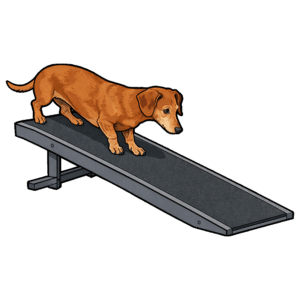
Jumping on and off furniture or in and out of vehicles places significant stress on the shoulders, spine, hips, and knees. While many dogs appear capable of jumping, repeated impact over time can contribute to joint wear and injury.
Ramps provide a gradual transition that:
- reduces impact on joints
- supports controlled ascent and descent
- encourages better weight distribution
- allows dogs to move independently without lifting
Ramps are commonly used for:
- beds, couches, and raised furniture
- vehicle entry and exit
- stairs that are difficult to navigate
Using ramps early—before mobility declines—helps normalize safer movement patterns rather than introducing changes only after pain appears.
Stair Modifications and Navigation Support
Stairs are a common challenge, particularly for dogs with joint sensitivity, long backs, short legs, or reduced vision. Even healthy dogs can slip or misstep on stairs, especially when surfaces are smooth or lighting is poor.
Supportive stair modifications may include:
- carpeted stair treads or traction strips
- baby gates to limit unsupervised stair use
- ramps as alternatives to steep staircases
- improved lighting to increase visual clarity
These changes reduce fall risk while preserving access within the home.
Elevated and Supportive Resting Areas
Hard floors can make resting and rising more difficult, particularly for older dogs or dogs with joint discomfort. Providing supportive resting areas helps dogs transition between lying and standing with less effort.
Helpful modifications include:
- orthopedic or well-cushioned beds
- beds placed near frequently used areas
- avoiding beds that require jumping to access
- stable surfaces that don’t slide when the dog shifts position
Comfortable rest supports recovery, sleep quality, and willingness to move.
Clear Pathways and Space to Turn
Tight spaces, cluttered walkways, and sharp turns can be challenging for dogs with reduced mobility, vision changes, or large body size. Creating clear movement paths reduces the need for sudden pivots or awkward maneuvering.
Simple adjustments include:
- rearranging furniture to widen walkways
- removing low obstacles or tripping hazards
- keeping frequently used areas easily accessible
Clear paths support smoother, more confident movement throughout the home.
Seeing the Home From a Dog’s Perspective
One of the most useful ways to think about home mobility is to literally change perspective. Dogs experience the home at a lower eye level, with a different center of gravity, different traction needs, and different visual cues than humans. What feels effortless to a person—smooth floors, sharp corners, furniture edges, stairs—may require constant physical adjustment for a dog.
Looking at the home from a dog’s point of view often reveals small but meaningful challenges: slick pathways where dogs accelerate or stop, tight turns near furniture, jumps that require repeated impact, or resting areas that are hard to rise from. These details are easy to overlook until mobility changes make them obvious.
Home mobility modifications invite pet parents to ask simple, practical questions:
- Where does my dog slip, hesitate, or rush?
- Where does my dog jump when a gradual option would work just as well?
- Where does my dog rest, and how easy is it for them to get up again?
- How often does my dog repeat the same movement patterns each day?
By observing movement patterns rather than waiting for injury or discomfort, the home can be adjusted proactively—supporting comfort, confidence, and long-term mobility. When the environment works with a dog’s body instead of against it, everyday movement becomes safer, easier, and more sustainable across every stage of life.

General Health Topics
 Health Topics related to Home Mobility Modifications

Health Conditions
Health conditions related to Home Mobility Modifications



Follow the Research
Studies providing deeper insight into Home Mobility Modifications
| Title | Information |
|---|

Dig Deeper
Q/A's related to Home Mobility Modifications
| Title | URL | At a Glance |
|---|

Blog Articles
Articles related to Home Mobility Modifications
| Featured Image Link | Blog Title | Blog_URL_Link |
|---|---|---|
 |
A Comprehensive Guide to Choosing the Right Dog Bed for Enhanced Mobility and Comfort | https://www.bernies.com/blogs/bernies-blog/a-comprehensive-guide-to-choosing-the-right-dog-bed-for-enhanced-mobility-and-comfort/ |