
Urinary & Reproductive



Overview
Why Urinary and Reproductive Health Is About More Than Urination or Breeding
Most people think about these systems only when something goes wrong. A dog starts having accidents, strains to urinate, develops a discharge, or shows changes during a heat cycle. But long before those signs appear, the body is constantly managing fluid balance, waste removal, tissue turnover, and hormone signaling behind the scenes.
The urinary system is one of the body’s primary filtration and regulation networks. It determines what stays in circulation and what gets eliminated, helping stabilize hydration, electrolyte levels, and metabolic waste. At the same time, the reproductive system is shaping how tissues respond to hormones that influence far more than fertility, including muscle tone, immune behavior, and the structure of the lower urinary tract.
These systems share space in the body, but more importantly, they share responsibility for maintaining internal balance. The bladder, urethra, uterus, and prostate all exist within the same anatomical region and respond to overlapping signals. This means changes rarely stay confined to one structure.
Understanding this topic requires stepping back from individual conditions and looking at how filtration, storage, elimination, and hormone signaling work together over time.
How a Dog’s Kidneys Filter Blood and Create Urine
The urinary system begins with the kidneys, which function as highly selective filtration organs. Blood is continuously passed through microscopic structures called nephrons, where the body decides what to keep and what to eliminate.
This process is a constant negotiation. Water, glucose, amino acids, and electrolytes are reabsorbed in precise amounts, while waste products like urea and excess minerals are directed into urine.
What makes this system unique is its responsiveness. The kidneys adjust output based on hydration, diet, metabolic demand, and hormonal signals. A well-hydrated dog produces more dilute urine. A dehydrated dog conserves water and produces more concentrated urine.
This is why early kidney changes often show up as shifts in drinking and urination patterns before anything else becomes obvious.
How Kidney Structure Supports Blood Filtration and Urine Formation
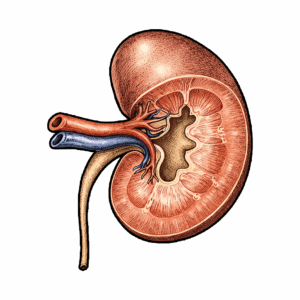
The kidneys are often described in terms of filtration, but that process is built into a specific internal structure. Looking at the anatomy makes it easier to see how blood is processed step by step.
The diagram below shows the internal structure of a dog’s kidney and how blood flows through it. Each labeled part reflects a different stage in filtering blood and forming urine.
- Renal Artery: Brings unfiltered blood into the kidney
- Renal Vein: Carries filtered blood back into circulation
- Cortex: Outer layer where initial filtration occurs
- Medulla: Inner region where water and mineral balance are adjusted
- Renal Pelvis: Central space that collects finished urine
- Ureter: Tube that carries urine from the kidney to the bladder
Together, these structures show how the body filters waste, reclaims useful substances, and directs fluid out of the body as urine.

What the Bladder and Urethra Actually Do During Urination
Once urine is produced, it moves to the bladder, where storage and release become the priority.
The bladder wall is made of smooth muscle called the detrusor muscle. It stretches as urine fills the bladder, then contracts to push urine out. At the same time, sphincters, which are circular muscles that control flow, must relax.
This is a coordinated neurological event. Signals travel between the bladder, spinal cord, and brain to determine when it is appropriate to urinate.
When this coordination is intact, urination is smooth and controlled. When it breaks down, dogs may strain, leak, urinate more frequently, or seem unable to fully empty the bladder.
This is where many common issues begin to surface, including urinary tract infections, incontinence, and functional bladder disorders.
Why Dogs Develop Urinary Tract Infections and Bladder Stones
The urinary tract is not sterile in the way people often assume. It is an active environment where fluid flow, pH, immune defenses, and microbial presence all interact.
Urinary tract infections (UTIs) often develop when bacteria are able to adhere to the lining of the bladder or urethra and multiply faster than the body can clear them. This can happen when urine sits too long in the bladder, when local defenses are weakened, or when the environment favors bacterial growth.
Bladder stones form differently. They develop when dissolved minerals in urine begin to crystallize and aggregate. This is influenced by urine concentration, pH, and the presence of certain compounds.
Both conditions reflect changes in the internal urinary environment rather than isolated external causes. They are signs that filtration, flow, or local balance has shifted enough to affect how urine behaves inside the body.
What the Reproductive System Is Regulating in Everyday Physiology
The reproductive system is often framed around breeding, but its daily role is hormonal regulation.
In females, the ovaries produce estrogen and progesterone, which control the heat cycle and influence tissues throughout the body. In males, the testes produce testosterone, which affects reproductive tissues, muscle mass, metabolism, and behavior.
These hormones act as systemic signals. They influence how cells grow, repair, and respond to stress. They also affect tissue tone, particularly in areas like the lower urinary tract.
The uterus, ovaries, testes, and prostate are not operating in isolation. They are responding to and shaping the body’s overall hormonal environment.
How Hormonal Cycles Shape the Female Reproductive Tract
In intact female dogs, the reproductive system moves through repeating hormonal phases.
Estrogen rises during the early part of the cycle, influencing tissue swelling, blood flow, and behavior. Progesterone dominates later phases, preparing the uterus for potential pregnancy and altering immune activity within reproductive tissues.
These shifts are normal, but they also change how the uterus functions at a structural level. Under the influence of progesterone, the uterine lining thickens and glands within the uterus increase their secretions. This creates a nutrient-rich environment designed to support a developing pregnancy.
At the same time, local immune defenses within the uterus are reduced. This is intentional. The body is trying to avoid rejecting a potential embryo. But this reduced immune activity also means bacteria that enter the uterus are less likely to be cleared efficiently.
This is where conditions like pyometra can develop. Pyometra is more than a simple infection. It is a hormone-driven change in the uterine environment that allows bacteria, often originating from the normal vaginal flora, to proliferate within a uterus that is primed to retain fluid rather than expel it.
As bacteria multiply, fluid and inflammatory material accumulate inside the uterine cavity. The uterus, which would normally contract and clear contents, becomes less responsive under progesterone’s influence. This allows the buildup to continue, sometimes rapidly.
In early stages, changes may be subtle, such as lethargy, decreased appetite, or mild discharge. As the condition progresses, the accumulation of infected material can place significant stress on the body, affecting hydration, circulation, and overall stability.
Pyometra is the result of hormonal timing, tissue response, and bacterial presence aligning, rather than a random or isolated infection.
How the Prostate Influences Urination in Male Dogs
In male dogs, the prostate sits just below the bladder and surrounds the urethra. This positioning makes it directly relevant to both reproductive and urinary function.
The prostate produces fluid that supports reproductive processes, but it is also highly responsive to testosterone.
Over time, prostate tissue can change in size and structure. When it enlarges, it can compress the urethra and affect urine flow. Dogs may strain, take longer to urinate, or show changes in posture.
This overlap is a clear example of how reproductive anatomy can directly influence urinary function without being a primary urinary problem.
What Changes in Urination or Reproductive Behavior Can Signal
Changes in this system are often first noticed through behavior rather than diagnosis.
A dog may start asking to go outside more often, have accidents in the house, strain while urinating, or lick the genital area more frequently. Urine may appear cloudy, darker, or have a stronger odor.
Reproductive-related changes may include discharge, swelling, shifts in cycle timing, or changes in behavior such as restlessness or decreased tolerance.
These signs do not point to a single condition on their own. They reflect underlying changes in filtration, tissue environment, hormone signaling, or structural function.
Paying attention to patterns is often more informative than focusing on a single episode.
How Aging Changes the Urinary Tract and Reproductive Organs
As dogs age, both systems shift in ways that are gradual but meaningful.
Kidney function may become less efficient, affecting how well urine is concentrated and how waste is cleared. Dogs may drink more water and urinate more frequently as a result.
Bladder tissues may lose some elasticity, and sphincter control may weaken, leading to leakage, especially during rest.
In females, hormonal cycling eventually changes, and tissue responsiveness shifts. In males, prostate changes become more common with age due to long-term hormone exposure.
These are not isolated failures. They reflect cumulative changes in cellular function, tissue structure, and hormonal signaling.
Why Urinary and Reproductive Health Are Best Viewed as a Shared System
Although the urinary and reproductive systems serve different primary roles, they are tightly linked through anatomy, hormones, and local tissue environments.
The lower urinary tract and reproductive organs share space, blood supply, and regulatory signals. What affects one often influences the other, even if indirectly.
This is why conditions rarely exist in complete isolation. A urinary issue may involve hormonal influence. A reproductive issue may affect urination.

Health Conditions
 Health conditions related to Urinary & Reproductive
| Image & Title | At a Glance |
|---|---|

|
Urinary Tract Infections (UTIs) occur when bacteria enter the urinary tract, causing frequent urination, accidents, or discomfort. They’re more common in female dogs and those with underlying bladder issues. |

|
Pyometra in dogs is a serious uterine infection that occurs in unspayed females, most often in the weeks following a heat cycle. It develops when normal reproductive hormones cause the uterus to retain fluid, creating conditions where infection can build and expand. As the uterus fills, pressure increases and inflammatory toxins can enter the bloodstream, affecting the entire body. Early signs may be subtle or absent, but the condition can progress quickly, which is why pyometra is treated as a medical emergency once suspected. |
|
Urolithiasis in dogs refers to the formation of mineral-based stones in the bladder or kidneys, which can cause pain, difficulty urinating, blood in the urine, and potential urinary obstructions. The type of stone determines treatment, which may include dietary changes, increased water intake, medications, or surgical removal in severe cases. |

Therapeutic Interventions
Therapeutic Interventions of Urinary & Reproductive

Lifestyle Strategies
Lifestyle Strategies of Urinary & Reproductive

Foods
Food sources of Urinary & Reproductive

Food Components
Ingredient sources of Urinary & Reproductive

Food Component Groups
Ingredient sources group of Urinary & Reproductive

Nutrients
Nutrients Found in Urinary & Reproductive

Nutrient Types
Nutrient Types of Urinary & Reproductive

Nutrient Sub-Types
Nutrient Sub-Types of Urinary & Reproductive

Follow the Research
Studies providing deeper insight into Urinary & Reproductive
| Title | Information |
|---|

Dig Deeper
Q/A's related to Urinary & Reproductive

Blog Articles
Articles related to Urinary & Reproductive
| Featured Image Link | Blog Title | Blog_URL_Link |
|---|---|---|
 |
Effective Techniques for Removing Dog Urine Smells and Stains | https://www.bernies.com/blogs/bernies-blog/effective-techniques-for-removing-dog-urine-smells-and-stains/ |

|
Spay Or Neutering? When Does Science Say It's The Right Time? | https://www.bernies.com/blogs/bernies-blog/spay-or-neutering-when-does-science-say-its-the-right-time/ |