



It’s gross. It’s frustrating. It’s messy. Your pet hates it too. But if you’re wondering “Why is my dog throwing up undigested food?” the first thing to know is that he’s not actually throwing up undigested food but instead, likely regurgitating food. There is definitely a difference and something you can do about it.
What Is Dog’s Regurgitation? Is It the Same Thing as My Dog Throwing up Undigested Food?
Looks like somebody’s been reading up on dog gut health because you’re asking the right questions. Canine vomiting is when your dog throws up food or liquid from his upper small intestine or stomach. You hear that distinct “Gluck, gluck, gluck” sound and you know he’s about to have a vomiting episode. But canine regurgitation is a different story and all dog owners should know that.
It seems like your dog is throwing up partially digested food, but it is not really them throwing up because what comes out of your dog’s mouth is not propelled by stomach or intestinal muscles. Instead it comes from the esophagus or pharynx. Since the food never made it to the stomach, it maintains much of its original look and feel. There is usually no warning and no retching sound. This can be dangerous because the larynx may not close in time, allowing food to enter the lungs. That can lead to aspiration pneumonia, so canine regurgitation should be addressed quickly.
A veterinarian should evaluate regurgitation especially if other symptoms are present. A physical exam and blood tests may be needed to diagnose underlying issues such as Addison’s disease, viral infections, digestive upset, inflammatory bowel disease, intestinal parasites and more.
How Do I Know if My Dog Vomited or If My Dog Regurgitated?
It is usually easy to tell the difference. You will likely not hear any warning noises before regurgitation. It comes out fast and unexpectedly and often looks like undigested food. Vomit, on the other hand, is mushier and may include bile or gastric juices that give it yellow coloring. Regurgitated food often still smells like dog food, while vomit smells sour and unpleasant. Learn more about the differences here: dog regurgitation vs. vomiting.
What’s up With My Dog’s Digestive Tract? Why Is My Dog Vomiting Undigested Food?
How Your Dog’s Digestive System Works
Understanding what’s happening inside your dog’s body makes it easier to know why food might come back up. When your dog eats, food travels down the esophagus and enters the stomach where strong acid and digestive enzymes begin breaking it down. From there the partially digested food moves into the small intestine for nutrient absorption and finally enters the large intestine to form stool.
If food never reaches the stomach or does not stay there long enough to mix with acid and enzymes, it will not break down. That is why regurgitated food often still looks whole or undigested.
If you are asking “Why is my dog throwing up partially digested food,” there are several common reasons. Many dogs eat too fast. When a dog wolfs down meals, it can lead to regurgitation or even dangerous bloat. Slower feeding methods such as snuffle mats, puzzle feeders and smaller portions can help.
Eating too much too quickly can also cause the body to simply reject excess food. Another possible cause is Megaesophagus, a condition in which the esophagus dilates and cannot effectively move food into the stomach. Food may then come back up the way it entered.
Dogs can also regurgitate or vomit due to esophageal disease, food allergies, food intolerances or parasites. Common allergens include wheat, dairy, beef and chicken. Parasites such as roundworms, hookworms and whipworms can cause vomiting, regurgitation, diarrhea and weight loss. Viral infections like parvovirus or coronavirus can also cause severe gastrointestinal symptoms.
Other causes include kidney disease, cancer, stomach ulcers, ingestion of toxins, motion sickness, stress or anxiety. Occasional vomiting might be minor, but repeated episodes always require a veterinary exam.
Vomiting vs Regurgitation
Many pet parents assume all throwing up is the same, but it is not. Vomiting comes from the stomach or upper intestine and includes retching, abdominal effort and sometimes bile. Regurgitation happens earlier in the digestive tract, in the esophagus, and usually occurs suddenly without any warning. Regurgitated food usually looks the same as it did going in because it never entered the stomach.
This distinction matters because regurgitation carries a risk of aspiration. Frequent vomiting or regurgitation should always be checked by a veterinarian.
What To Do Right After Your Dog Vomits
If your dog has a single vomiting episode, you can help settle their stomach by withholding food for a few hours. Offer small amounts of water or ice cubes so they stay hydrated without drinking too fast. When they seem ready, start with a bland meal such as boiled chicken and rice or a light broth before returning to their regular food.
If vomiting continues, if your dog is weak or if you notice blood, bloating or repeated episodes, seek veterinary care immediately.
If My Dog Is Throwing up Undigested Food Should I Be Concerned?
You should be concerned if vomiting is persistent or frequent. Continuous vomiting can lead to dehydration and other serious problems even if your dog seems okay otherwise. Vomit or stool that contains blood is a medical emergency.
Other warning signs include lethargy, loss of appetite, weight loss, behavior changes or a swollen belly. A bloated abdomen paired with unsuccessful attempts to vomit may indicate gastric dilatation volvulus which is life threatening and requires immediate care.
Always trust your instincts. If something feels off, it is best to call your veterinarian.
So What Is Going on With Dog Regurgitation?
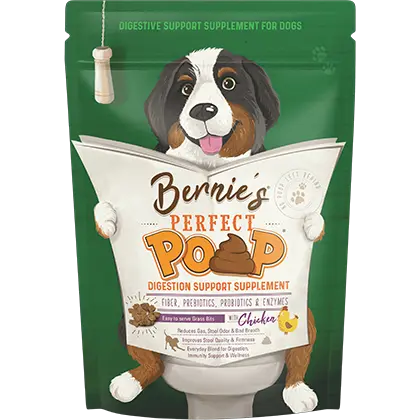
For many dogs, regurgitation is not uncommon and often happens because they are eating too fast or too much or not swallowing properly. To reduce or prevent episodes, start by offering healthy food and slowing their eating habits. Next, make Bernie’s Perfect Poop part of every meal.
The premium soluble and insoluble fiber in Bernie’s Perfect Poop helps food move through the system at the right speed and reduces the negative effects of fast eating. The prebiotics and probiotics support a thriving gut microbiome and help stomach acids stay balanced and ready for digestion. This encourages food to travel through the digestive tract instead of coming back up.
The digestive enzymes in Perfect Poop begin working with the first bite. They help break food down efficiently so nutrients can be absorbed properly. All of these ingredients work together in two delicious formulas and help keep regurgitation from becoming a recurring issue. A healthy gut is always the first step in reducing regurgitation and supporting your dog’s overall digestion.
Supporting Digestion From the Inside Out
If your dog is repeatedly regurgitating food, the first step is always a vet visit to rule out structural or medical issues. But for dogs who eat too fast, have sensitive stomachs, or struggle with inconsistent digestion, strengthening the gut can make a meaningful difference.
That’s where Bernie’s Perfect Poop comes in.
Perfect Poop isn’t just a probiotic. It’s a complete 4-in-1 digestive support supplement made with:
-
High-quality fiber (miscanthus grass, pumpkin, and flaxseed) to support healthy movement through the digestive tract
-
Prebiotics to feed beneficial gut bacteria
-
Spore-forming probiotics to help maintain microbial balance
-
Digestive enzymes to help break food down more efficiently
When digestion is working smoothly — when food is breaking down properly and moving at the right pace — there’s less chaos in the system. And less digestive chaos means fewer surprises on your rug.
Perfect Poop is easy to sprinkle on your dog’s food at every meal. No messy powders. No juggling multiple supplements. Just consistent, daily digestive support that helps the whole system do what it was designed to do.
Because when health starts in the gut, everything else tends to follow.
Other related topics:
What to Feed Your Dog After Throwing Up: Safe and Soothing Options


