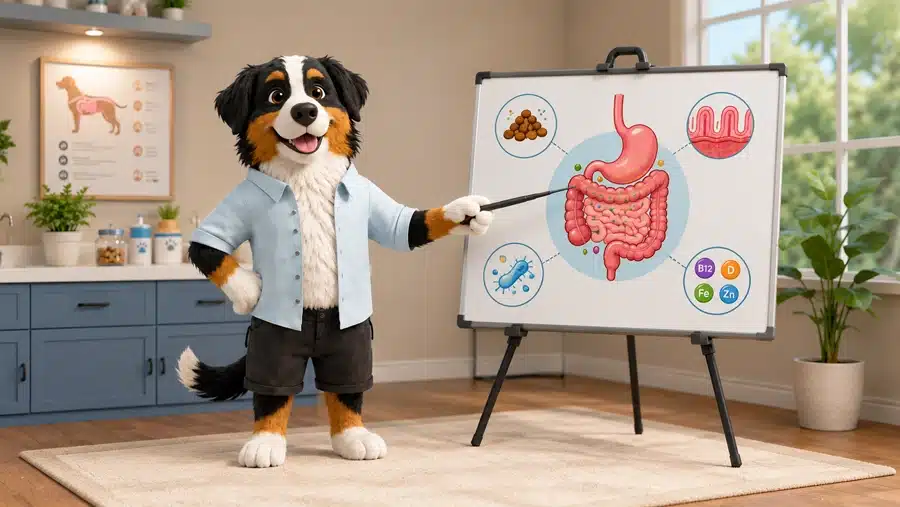


What Are Malabsorption and Bacterial Overgrowth?
Bacterial overgrowth can lead to a condition called small intestinal bacterial overgrowth. This condition is due to an increased number of bowel bacteria located in the small intestine. The overgrowth of bacteria causes damage to the surface of the bowel that prevents the absorption of nutrients which causes malabsorption. In a healthy dog’s digestive system, the small intestine relies on a balance of good bacteria to support mucosal digestion and keep the gut working as it should. When bad bacteria outnumber the helpful kind, the lining of the small intestinal tract may become inflamed. Inflammatory cells gather in the tissue, villous atrophy develops, and the tiny projections that normally absorb amino acids, fatty acids, and other nutrients start to break down. This defective uptake is often referred to as a malabsorptive disorder in dogs, and it is one of the main reasons many dogs lose weight even when they keep eating their regular food.
Common Causes of Poor Nutrient Absorption in Dogs
There is rarely a single underlying cause when dogs cannot absorb nutrients from their food properly. Plenty of dogs develop malabsorption as a result of one or more overlapping conditions affecting the gut. The sections below cover the most common reasons these dogs struggle to pull enough nutrition out of their food, and why some dogs get sicker faster than other dogs with similar symptoms.
Exocrine Pancreatic Insufficiency
Exocrine pancreatic insufficiency, often shortened to EPI, occurs when the pancreas fails to produce enough digestive enzymes. Without these digestive enzymes, intraluminal digestion breaks down and food passes through the intestinal tract largely undigested, leaving dogs hungry even after a full bowl of food. Exocrine pancreatic insufficiency can appear in dogs of any size, from small breeds to giant breeds, though some breeds of dogs are more prone to it than others. Common symptoms of pancreatic insufficiency include a ravenous appetite or increased appetite paired with steady weight loss, large volumes of pale stool, and in some cases eating poop as affected dogs try to make up for a nutrient deficiency. Dogs with exocrine pancreatic insufficiency usually need lifelong enzyme support, often in the form of a pancreatic extract sprinkled onto each serving of food.
Inflammatory Bowel Disease
Inflammatory bowel disease is a chronic disease where inflammatory cells build up in the lining of the small intestine and other parts of the gut. This chronic inflammation thickens the intestinal wall and interferes with a dog’s nutrient absorption. It often causes persistent diarrhea, severe weight loss in advanced cases, and sometimes other symptoms such as vomiting or visible fatigue in affected dogs. Because IBD in dogs can look a lot like other forms of intestinal disease, reaching a confirmed diagnosis sometimes takes time and multiple tests.
Leaky Gut Syndrome
The term “leaky gut” has become popular online, but veterinarians and researchers more commonly describe the condition as increased intestinal permeability or intestinal barrier dysfunction. While the internet version of “leaky gut syndrome” is often oversimplified, the underlying biology behind intestinal barrier damage is real and well recognized in both human and veterinary medicine.
The lining of the small intestine acts as a carefully controlled barrier. Its job is to allow nutrients from food to pass into the bloodstream while keeping bacteria, toxins, and inflammatory compounds contained inside the digestive tract. When that barrier becomes damaged or inflamed, the intestine may become more permeable than normal. This can allow unwanted substances to cross the gut lining more easily and place additional stress on the immune system.
In dogs, increased intestinal permeability is not usually considered a standalone disease. Instead, it is more often viewed as a secondary consequence of other gastrointestinal problems already affecting the gut. Chronic enteropathy, inflammatory bowel disease, parasites, infections, severe dysbiosis, food sensitivities, and long-term intestinal inflammation can all contribute to breakdown of the intestinal barrier over time.
Dogs experiencing intestinal barrier dysfunction may develop chronic diarrhea, inconsistent appetite, bloating, food sensitivities, poor nutrient absorption, or ongoing digestive upset that becomes difficult to fully resolve. In some cases, the inflammation associated with intestinal permeability may also worsen problems elsewhere in the body by continuously stimulating the immune system.
Because increased intestinal permeability is usually tied to another underlying intestinal disorder, treatment focuses less on “curing leaky gut” itself and more on addressing the root cause damaging the intestinal lining.
Parasites, Infections, and Other Triggers
Parasites such as giardia, hookworms, and whipworms can irritate the lining of the small intestine and make it harder for dogs to absorb nutrients from their food. Infections, foreign objects in the digestive tract, chronic stress, and repeated digestive upset can also interfere with normal digestion over time.
Some dogs may also react poorly to certain ingredients in their food. These food sensitivities can trigger inflammation in the gut and make digestive symptoms worse. When a food-related trigger is suspected, veterinarians sometimes recommend an elimination diet to help identify the problem ingredient safely and gradually.
Food safety can play a role as well. Bacterial contamination from spoiled food, poor food handling, or some raw diets may increase the risk of digestive irritation or infection in dogs. No matter what type of diet a dog eats, proper food storage and hygiene are important for supporting intestinal health.
Because so many different factors can affect the small intestine, finding and treating the underlying cause is often the key to improving nutrient absorption and helping dogs feel better long term.
Small Intestinal Bacterial Overgrowth
What was once commonly called small intestinal bacterial overgrowth, or SIBO, is now more often described by veterinarians as dysbiosis or antibiotic-responsive enteropathy (ARE). Rather than a simple overgrowth of “bad” bacteria, these conditions usually involve a broader imbalance in the gut microbiome and disruption of normal intestinal function. Dogs with dysbiosis or ARE commonly develop loose stools, excessive gas, weight loss, low energy levels, and inconsistent appetite. Some dogs improve temporarily with antibiotics, which is why the older term “antibiotic-responsive diarrhea” is still sometimes used. However, modern treatment approaches increasingly focus on restoring microbiome balance and addressing the underlying intestinal disease instead of relying on antibiotics alone. Because these conditions can interfere with digestion and damage the intestinal lining over time, they may contribute to poor nutrient absorption in affected dogs.
Does Malabsorption Cause Diarrhea?
Yes. Malabsorption can cause diarrhea in most dogs. In some cases, it may lead to chronic diarrhea that lasts for weeks or months.
Clinical Signs of Malabsorption in Dogs
- Weight loss
- Diarrhea
- Changes in appetite, such as increased pickiness or persistent hunger despite eating
These three signs and symptoms are noticeable and easy to detect by pet parents. If your dog has the same appetite but loses weight or has less of an appetite and starts to become anorexic, these are serious signs your dog is not absorbing nutrients. Diarrhea, especially chronic diarrhea is a sign nobody can miss. Other clinical signs to watch for in dogs include an increased appetite paired with steady weight loss, a dull coat, lower energy, and behaviors like eating poop as the body tries to make up for a nutrient deficiency. Some dogs will even start chewing on strange objects or stealing food from the counter because they still feel hungry after every meal of food. If your dog is experiencing any of these symptoms consult with a veterinarian to rule out any underlying conditions.
How Veterinarians Diagnose a Dog Not Absorbing Nutrients
Getting an accurate diagnosis matters because different malabsorptive disorders in dogs call for different treatment plans. A vet will usually start with a physical exam and a conversation about your dog’s eating habits, what kind of food they get, their lifestyle, and their symptom timeline.
Blood Tests and Initial Workup
Blood tests are typically the first step. These tests can flag nutrient deficiency, inflammation, and markers that point toward exocrine pancreatic insufficiency or another chronic disease in dogs. Fecal analysis is often run at the same time to check for parasites and infectious agents that can disrupt digestion in dogs.
Intestinal Biopsy and Advanced Diagnostics
If initial results are inconclusive, your vet may recommend an intestinal biopsy. An intestinal biopsy involves taking small tissue samples from the small intestine, usually during an endoscopy or surgery. The biopsy can reveal villous atrophy, inflammatory cells, and other structural changes that explain why the gut cannot function properly in affected dogs. While an intestinal biopsy sounds intimidating, it is often the most reliable way to tell inflammatory bowel disease apart from other causes of small intestinal disease in dogs.
What Is the Cause of This Condition?
Unfortunately, many cases of malabsorption have unknown causes but a healthy diet is a go-to treatment to help relieve the symptoms and prevent future malabsorption issues. Click here to get a more detailed look at the causes behind poor nutrient absorption in dogs.
Can the Condition Be Cured?
The prognosis is good when it comes to treating malabsorption especially if you notice the signs quickly. Usually, treatment involves an examination at the veterinarian office, a change in your dog’s diet and sometimes medication such as antibiotics are needed for serious cases. For long-term conditions in dogs, such as exocrine pancreatic insufficiency or chronic gut inflammation, steady management rather than a full cure is the realistic goal. With the right care, most dogs with these conditions can still live comfortable, active lives alongside healthy dogs in the same household.
How Can I Help My Dog with Poor Nutrient Absorption?
Providing your dog with a healthy diet that meets their nutritional needs is an excellent way to help your dog. Also, keeping their digestive system running at its optimal level by including an all-natural digestive supplement like Bernie’s Perfect Poop supports your dog’s gut health and helps maintain digestive regularity.
Bernie’s Perfect Poop contains all-natural ingredients such as flaxseed, pumpkin, miscanthus grass, prebiotics, fiber, probiotics, and enzymes which are all essential ingredients for gut health.
Dietary Modification
Dietary modification is one of the first steps a vet will recommend for affected dogs after diagnosis. For some dogs, that means switching to smaller, more frequent meals to ease the load on the small intestine. For other dogs, it involves removing specific ingredients from their food that trigger an immune system response. Whatever the plan looks like, consistency matters, and any change to a feeding routine should be introduced gradually so the gut has time to adjust to the new food. Many dogs do best when their food stays the same week after week once a plan is working.
Enzyme Support and Supplements
For dogs diagnosed with pancreatic insufficiency, veterinary-prescribed pancreatic enzymes are essential. These replacement pancreatic enzymes work alongside the small amount the pancreas still produces so that food can be properly broken down and the body can absorb nutrients again. A pancreatic extract is often mixed directly into each meal so the enzymes function from the very first bite of food.
Long-Term Digestive Support
Beyond targeted treatments, everyday support goes a long way for dogs with digestive issues. A high quality probiotic can help rebuild populations of helpful bacteria and crowd out bad bacteria in the small intestinal environment. Adding fiber and omega fatty acids to a dog’s daily food supports the gut lining and promotes digestive function. Paying attention to your dog’s digestive health day to day, rather than only reacting during flare-ups, is one of the best ways to help dogs absorb nutrients from their food long-term.
When to Seek Veterinary Advice for a Dog Not Absorbing Nutrients
Veterinary advice is important any time your dog shows persistent digestive symptoms. Reach out to your vet promptly if you notice chronic diarrhea lasting more than a few days, severe weight loss, sudden changes in appetite, clear lethargy, a refusal of food, or any of the clinical signs listed earlier. Getting veterinary advice early can mean the difference between a quick recovery and a drawn-out chronic disease for affected dogs. For giant breeds as well as very young or senior dogs, early intervention is especially important, because their bodies have less reserve to cope with prolonged nutrient deficiency. When dogs start to lose weight quickly or refuse their regular food for more than a day or two, that is always a signal to pick up the phone and ask for veterinary advice.
Final Thoughts on Your Dog’s Nutrient Absorption
A dog not absorbing nutrients is never something to brush off. Whether the root problem in dogs is small intestinal bacterial overgrowth, exocrine pancreatic insufficiency, inflammatory bowel disease, leaky gut syndrome, or one of the many intestinal disease processes covered here, identifying the underlying cause early gives your dog the best chance at a full recovery. By working closely with your vet, making thoughtful dietary adjustments to your dog’s food, and supporting your dog’s digestive system every day, you can help your dog regain steady energy, a stronger immune system, and a better quality of life. Healthy dogs are happy dogs, and small daily steps add up to a big difference for dogs living with malabsorption.