


Most of the time, one soft stool after a walk isn’t cause for alarm. Dogs eat, drink, sniff, get wound up and sometimes overdo it, and their guts notice all of it. It’s a question we hear a lot at Bernie’s Best, and the honest answer is that it depends on what else happened that day. Here’s the tricky part: several very different causes look identical on the sidewalk. Some are harmless and pass in a day. A few need a vet.
Call your vet or an emergency clinic right away if loose stool comes with heavy panting, drooling, weakness or collapse after exertion [5][6], with vomiting and unusual tiredness, with black, tarry stool or a lot of blood, or with a swollen belly and retching that produces nothing. If none of that fits, keep reading. This guide is written for adult dogs. Puppies have their own gut-development story, so if you’re raising one, check in with your vet.
Is It Normal for a Dog’s Stool to Get Soft After a Walk?
Sometimes, yes. Healthy stool is usually firm without being hard, in well-formed pieces that hold together. A stool that’s a little softer than usual after a busy day can be a blip rather than a pattern, and the pattern is what tells you the most. Part of this is just timing. Walks are when most dogs go, so that’s when you notice.
One soft stool after a big outing, a new route or a lot of excitement? Watch it. Soft stool after most walks, or stool that keeps getting looser? That deserves a closer look.
Can Exercise Cause Diarrhea in Dogs?
The strongest evidence comes from dogs at the extreme end of endurance. Researchers who examined racing Alaskan sled dogs before and after the Iditarod, about 1,100 miles over roughly 10 days, found that sustained, strenuous exercise was associated with increased intestinal permeability in the 16 dogs that finished the race [1]. In plain terms, the gut lining, the barrier between the intestine and the rest of the body, let more pass through than it normally would. A separate study of long-distance racing sled dogs found a high rate of diarrhea and bloody stool that wasn’t linked to common intestinal germs, and the authors raised the possibility that prolonged exercise itself plays a part [2].
Those are elite endurance dogs running for days. Neither study tested ordinary walks, so they can’t tell us whether a 40-minute loop around the neighborhood affects the gut the same way. A big hike, a long run or a full day at the beach may be more likely to loosen stool than an easy stroll.
There may be a simpler explanation for many dogs, too. The racing-dog authors point to human runners, where exercise-related changes in how the colon moves are among the proposed causes of gut trouble [2]. Whether that applies to a regular walk isn’t known, but it’s one possible reason a busy day can leave stool softer.
How Grass, Snacks and Puddle Water on a Walk Can Lead to Loose Stool in Dogs
It’s the cause dog parents catch least, because you can’t always see it happen. Every time a dog eats or drinks, the body has to decide what to accept and what to react to, and something unfamiliar can upset the gut. VCA notes that colitis, or inflammation of the colon, can follow contaminated food or an allergic reaction to a dietary protein [3]. The Companion Animal Parasite Council notes that Giardia, which we cover below, is acquired from fecal-contaminated water or food [4]. That doesn’t mean every loose stool is an allergy or an infection, and your vet can help tell them apart.
On a walk, the list of unfamiliar things is long. A bite of something from the gutter. Grass, mud or a dropped snack. A treat from a friendly stranger. Water from a puddle or a lake. Or maybe the walk wasn’t the problem at all, and the puddle was.
A reliable “leave it,” a shorter leash along trash-heavy stretches and fresh water from home give the gut fewer surprises.
Can Stress or Excitement on a Walk Cause Diarrhea in Dogs?
It can. That’s the thing about walks: they’re exciting. New dogs, new smells, a loud truck, or a dog who loses it at the sight of a squirrel. VCA Animal Hospitals describes stress colitis, inflammation of the colon (the large intestine), as one of the leading causes of large bowel diarrhea in dogs [3]. In colitis, the inflamed colon absorbs less water and holds less stool, so dogs often feel a sense of urgency and need to go frequently, in small amounts [3]. Some strain, and some pass a little bright red blood at the end [3]. If your dog squats three or four times over the last block of a walk, that pattern is worth noticing.
Most dogs with stress colitis are back to normal within three to five days [3]. Stress can play a part in loose stool during routine changes, travel or boarding too, which we cover in a separate post.
Why Heat Can Bring On Diarrhea in Dogs After Exercise
On a mild day, this one usually isn’t in play. When hard exercise and warm weather combine, it moves up the list. Dogs cool off mostly by panting, since they have sweat glands only on their paws, so strenuous exercise in hot or humid weather can push a dog past what the body can shed [6]. Cornell’s veterinary college lists heavy panting, drooling, vomiting, diarrhea, weakness and collapse among the signs of heatstroke [6]. In a review of UK veterinary clinical records, digestive signs sat in the moderate grade of heat-related illness, a step above the mild signs of altered breathing and tiredness [5].
So loose stool after a hot run, especially with heavy panting or drooling, means getting your dog out of the heat and calling a vet right away [6]. Loose stool can also mean extra water loss, so fresh water matters.
Could Giardia or Other Parasites Be Behind Your Dog’s Loose Stool?
It sounds more intense than it is, but parasites deserve a mention. One to know about is Giardia, an intestinal parasite that the Companion Animal Parasite Council calls common in dogs [4]. Dogs with Giardia may show no signs at all, or they may have acute or chronic diarrhea, with or without weight loss [4]. The same guidelines note studies finding higher rates in dogs that visit dog parks [4].
Loose stool that keeps coming back, especially after time around other dogs, is a good reason to bring a stool sample to your vet. The level of testing and prevention that fits your dog depends on lifestyle and location, and the conversation can cover conventional options and everyday habits, like bringing fresh water from home.
What to Do When Your Dog Has Loose Stool After a Walk
Start by playing detective. Jot down when the loose stool happens, which route you took, how hard your dog worked, what your dog may have eaten or drunk, and what the weather was like. A week or two of notes often shows a pattern, and it gives your vet something better than “it happens sometimes.”
From there, bring fresh water on every outing, build up to longer or harder exercise gradually, and walk when it’s cooler on warm days.
If the stool is mildly loose and your dog is otherwise acting like themselves, some dog parents offer a short bland diet. Chicken and white rice is the classic, though it isn’t ideal for every dog. It lacks the soluble fiber that supports stool formation, and it may not sit well with dogs who react to chicken. Many dogs do better with turkey, eggs or lean beef, paired with steamed fibrous vegetables like sweet potato. Your vet can help you decide what fits your dog and for how long.
Both conventional veterinary care and gentle at-home support can play a role. Your vet may recommend a stool test or a diet change, and some dog parents also add daily digestive support as part of a broader plan. Loose stool that sticks around still belongs with your vet.
Dog Diarrhea but Acting Normal? When to Call the Vet
Acting normal is a good sign, but it isn’t a reason to wait indefinitely. A dog who’s bright, eating and drinking, with one soft stool after a big day, is usually fine to watch. The signs below can point to concerns beyond a simple gut upset:
- Loose stool that lasts more than a day or two
- Blood in the stool, or black, tarry stool
- Vomiting, unusual tiredness or a dog who seems “off”
- Refusing food or water
- Loose stool that keeps coming back after walks, even when each episode is mild
- Signs of heatstroke after a hot or hard outing, like collapse, weakness or drooling, which is a medical emergency [6]
- A swollen belly with retching that produces nothing, which is also an emergency
Photos and your notes from the past week help your vet see the whole picture.
Where Bernie’s Perfect Poop Fits in a Dog’s Digestive Routine
Some dog parents want something steady in the background once the vet has ruled out anything urgent. A daily digestive routine is one option, and it’s a supporting one. It adds support alongside a dog’s regular diet. It isn’t a fix for whatever set off one rough walk, and it doesn’t replace a vet visit.
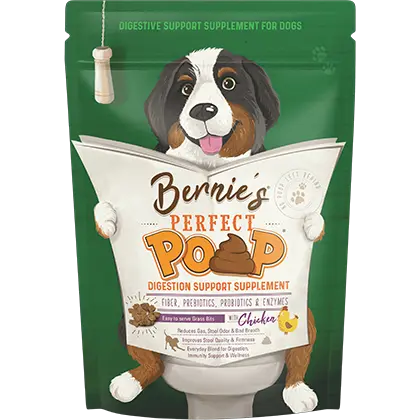
That’s where Bernie’s Perfect Poop can fit. It has been used by and has supported digestive wellness for millions of dogs. It’s a 4-in-1 formula with fiber, prebiotics, probiotics and digestive enzymes in grass bits that mix into wet or dry food without the mess of a powder, and it’s designed to support healthy digestion and stool quality. The fiber comes from three sources, a blend of soluble and insoluble fiber, with Miscanthus grass as the primary one and dried pumpkin as a supporting one. The probiotics are two strains of Bacillus, a type of beneficial bacteria that forms spores.
Perfect Poop is for adult dogs. It isn’t for puppies or pregnant dogs, and the label advises introducing it gradually over about a week, starting with a quarter of the recommended serving. Serving size depends on your dog’s weight, so the label is the best place to check. If your dog has ongoing diarrhea, the vet visit should come before any supplement. If your dog is in the middle of a food change or a stressful stretch, there’s no single right order. For some dogs, adding a supplement before the change may make it smoother. For others, it’s better to wait until things settle. Your vet can help with timing.
Perfect Poop comes in cheddar cheese and chicken flavors dogs enjoy, and the cheddar cheese flavor also contains chicken fat. It’s grain-free, made in the USA and made without artificial colors or flavors. If your dog isn’t a fan, the Growl-Free Guarantee gives you a full refund if you’re not happy for any reason, and there’s a Flavor/Product Swap, too. Whatever you decide, loose stool after walks is a clue worth following.
Frequently Asked Questions
Is it normal for a dog to have soft stool at the end of a walk?
It can be. A bit of extra excitement, a new snack or a harder-than-usual outing can soften stool for a day. One soft stool that firms up again usually isn’t a concern. Stool that stays loose, keeps coming back or comes with other changes deserves a call to your vet.
Can too much exercise cause diarrhea in dogs?
It may, at the extreme end. Studies of racing sled dogs found gut changes after, and a high rate of diarrhea during, long-distance racing [1][2], but those dogs run for days, and the research didn’t test ordinary walks. Heat is a separate concern: digestive signs can be part of heat-related illness [5], and heavy panting with drooling, weakness or collapse after a hot outing points to heatstroke, a medical emergency [6].
How long does stress-related loose stool last in dogs?
Stress colitis usually clears up in about three to five days [3]. That said, a stretch of loose stool that drags past a day or two, gets worse or comes with blood is a reason to call your vet.
Can a dog get Giardia at the dog park?
It’s possible. Dog park visitors have shown higher Giardia rates in studies, though many infected dogs show no signs at all [4]. A vet can check a stool sample if loose stool keeps returning.
Should I skip walks while my dog has loose stool?
It depends on the dog and on what else is going on. Shorter, easier outings with plenty of fresh water suit many dogs, but if your dog is tired, vomiting, refusing food or has blood in the stool, hold off and call your vet.
References
[1] Davis MS, Willard MD, Williamson KK, Steiner JM, Williams DA. Sustained Strenuous Exercise Increases Intestinal Permeability in Racing Alaskan Sled Dogs. Journal of Veterinary Internal Medicine. 2005;19(1):34-39. https://doi.org/10.1111/j.1939-1676.2005.tb02655.x
[2] McKenzie E, Riehl J, Banse H, Kass PH, Nelson S Jr, Marks SL. Prevalence of Diarrhea and Enteropathogens in Racing Sled Dogs. Journal of Veterinary Internal Medicine. 2010;24(1):97-103. https://doi.org/10.1111/j.1939-1676.2009.0418.x
[3] Barnes C, Weir M, Ward E. Colitis in Dogs. VCA Animal Hospitals, Know Your Pet. 2025. https://vcahospitals.com/know-your-pet/colitis-in-dogs
[4] Companion Animal Parasite Council. Giardia (dog section). CAPC Guidelines. 2026. https://capcvet.org/guidelines/giardia/
[5] Hall EJ, Carter AJ, Bradbury J, Barfield D, O’Neill DG. Proposing the VetCompass clinical grading tool for heat-related illness in dogs. Scientific Reports. 2021;11:6828. https://doi.org/10.1038/s41598-021-86235-w
[6] Cornell University College of Veterinary Medicine, Riney Canine Health Center. Heatstroke: A medical emergency. Canine Health Information. Accessed 2026. https://www.vet.cornell.edu/departments-centers-and-institutes/riney-canine-health-center/canine-health-information/heatstroke-medical-emergency


