


Here’s the thing: it probably is. But that doesn’t mean there’s nothing left to do.
How to Improve Your Dog’s Diet Without Changing Their Food
If your dog’s food carries an AAFCO nutritional adequacy statement, it’s already formulated to be complete and balanced for their life stage [1]. That’s not a small thing. It means the baseline nutrition is probably covered.
What it doesn’t mean is that there’s nothing left to optimize. Complete and balanced is a floor, not a ceiling. A dog can be eating food that meets every minimum requirement on the label and still have loose stool half the week, or a coat that looks a little duller than it should. That’s where a better bowl comes in, as a thoughtful layer of improvements, as opposed to a full diet replacement.
What Can You Add to Your Dog’s Bowl?
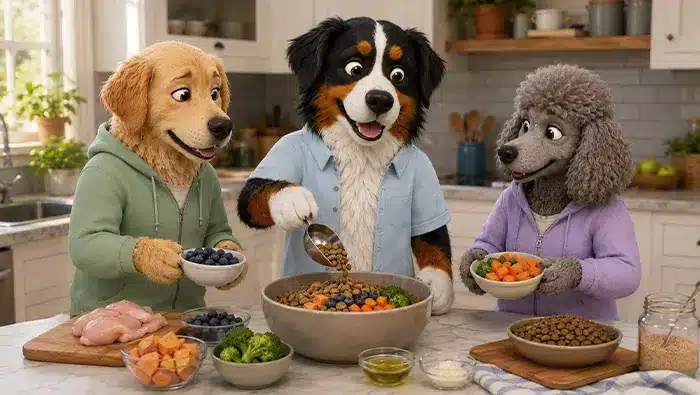
Improving your dog’s bowl can be as simple as adding more freshness, variety, moisture or targeted nutritional support to the food they already eat.
Fresh whole-food additions can add flavor, texture and useful nutrients. Water or dog-safe broth can increase moisture. Depending on your dog’s needs, other additions might include fiber-rich foods, omega-3 sources, fermented foods or targeted supplements.
Digestive support is an especially useful place to start because other nutrients still have to be broken down, absorbed and made available to the body before they can be used. Supporting digestion and nutrient utilization can help your dog get more value from the food and other beneficial additions already going into the bowl.
Fiber, prebiotics, probiotics and digestive enzymes can each support that process in different ways. Certain fibers feed beneficial gut bacteria, which produce short-chain fatty acids that help nourish cells in the intestinal lining [2]. Prebiotics help support beneficial bacteria, probiotics provide live microorganisms and digestive enzymes help break down components of food during digestion.
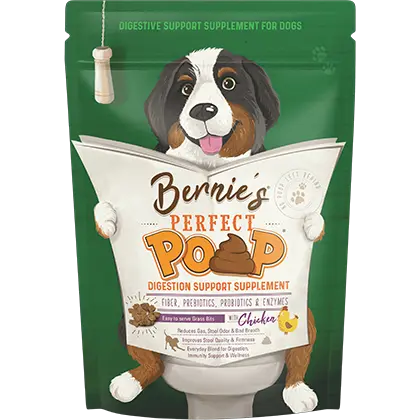
A digestive supplement such as Bernie’s Perfect Poop can be one practical bowl-builder because it combines several forms of digestive support in a single addition to the food your dog already eats.
How to Improve Different Types of Dog Diets
Whether your dog eats kibble, raw food or a home-prepared diet, thoughtful additions can be layered into the bowl without changing the entire feeding approach.
What you add should complement the base diet and your dog’s individual needs. That might mean more moisture, fresh whole-food additions, extra fiber, or targeted nutritional support. Bernie’s Best builds its supplements around that same idea, supporting what your dog already eats instead of replacing it.
For example, dog parents looking to support digestion can add fiber without changing the rest of the diet.
When to Add New Foods or Supplements to Your Dog’s Diet
When adding a new food, topper, or supplement, timing matters in two ways: how quickly you introduce it, and when you serve it.
A gradual introduction is often a practical approach, especially for dogs with sensitive digestion. Research on full diet changes in dogs has found that gradual transitions can lead to less GI upset and fewer unfavorable shifts in the gut microbiome than abrupt changes [3]. While that study looked at switching diets rather than adding supplements, introducing new additions slowly can still make it easier to see how your dog responds.
It can also help to add one new thing at a time. If you introduce several toppers, foods, or supplements at once and your dog’s stool changes, it becomes much harder to know which addition was responsible.
For many additions, serving them with a regular meal is the simplest approach and can make daily use more consistent. Some ingredients may have specific serving directions, so follow the product label when using a supplement.
Give each new addition enough time to evaluate before making another change. Watch stool quality, appetite, gas, and overall tolerance over the first several days. Some nutritional benefits build more gradually, so changes in areas like skin, coat, or mobility may take longer to notice than digestive changes.
Dogs that tolerate dietary changes well may need less of an adjustment period, while dogs with sensitive stomachs may benefit from a slower introduction.
Why Fiber Matters in Your Dog’s Diet” or “Why Fiber Is a Worthy Upgrade
Fiber is not classified as an essential nutrient for dogs [5], but “not essential” does not mean “not useful.” In nutrition, an essential nutrient is one that must be supplied in the diet because the body cannot make enough of it on its own.
Fiber falls into a different category. Dogs can meet basic nutritional requirements without a defined minimum amount of fiber, but different types of fiber can still support normal digestion, stool quality, and the gut environment.
Certain fibers are fermented by beneficial gut bacteria into short-chain fatty acids, which help nourish cells in the intestinal lining [2]. Other fibers add bulk, hold water, or help support stool consistency. This is also why the type of fiber matters, not just the total amount.
Researchers have studied Miscanthus grass as a dietary fiber source in dogs, and it was found to support acceptable digestibility and stool quality compared with more traditional fibers such as cellulose and beet pulp [4]
Digestive support can therefore be a useful addition to an otherwise complete diet. Bernie’s Perfect Poop combines Miscanthus grass fiber with inulin and XOS prebiotics, spore-forming probiotics, and digestive enzymes in one topper that mixes into your dog’s existing food.
Dog parents who want to explore fiber further can read our guide to adding more fiber to a dog’s diet. Bernie’s University also explains the difference between prebiotics and probiotics and provides a deeper look at digestive supplements.
A better bowl doesn’t have to mean starting over. Sometimes it just means one good scoop of a simple supplement.
Build Your Dog’s Better Bowl Today
A better bowl can include more moisture, fresh whole-food additions, extra fiber, beneficial fats, or targeted supplements based on your dog’s needs. Small additions can make the existing diet more useful without turning every meal into a complicated routine.
Digestive support is a strong place to start because digestion affects how food is broken down and how nutrients become available for the body to use. Supporting that process can also help your dog get more from the other beneficial ingredients and supplements you add to the bowl.
Bernie’s Perfect Poop makes that step simple. It combines fiber, prebiotics, probiotics, and digestive enzymes in one daily topper designed to support digestion, nutrient utilization, and stool quality. Just mix it into the food your dog already eats.
Every bag is backed by the Growl-Free Guarantee, so you can try it as part of your dog’s better bowl with confidence.
Frequently Asked Questions
- Do I need to change my dog’s food to add fiber and probiotics? No. A topper or supplement mixes into whatever your dog already eats, adding support without replacing the current diet.
- Can I add a digestive supplement to any type of food? Yes. Whether your dog eats kibble, raw, or home-cooked, a fiber and probiotic topper works the same way. What matters more is the quality of the base diet, not its format.
- How long does it take to notice a difference after adding a supplement to the bowl? Many dog parents notice changes in stool quality within a few days to a week of consistent daily use, though every dog’s gut responds a little differently.
- Should I start with a full serving or ease into it? Either can work. Dogs with sensitive stomachs often do better easing in over a week. Plenty of dogs handle a full serving from day one with no issue. Watching the stool for the first week is the best guide regardless.
- Is fiber actually necessary if my dog’s food is already complete and balanced? Fiber isn’t classified as an essential nutrient, so a complete and balanced food isn’t required to contain much of it. That said, fiber still plays a real role in feeding gut bacteria and supporting digestion, which is why many dog parents choose to add more than the baseline amount.
References
- U.S. Food and Drug Administration. “Complete and Balanced” Pet Food. 2020. https://www.fda.gov/animal-veterinary/animal-health-literacy/complete-and-balanced-pet-food
- Bhosle A, Jackson MI, Walsh AM, Franzosa EA, Badri DV, Huttenhower C. “Response of the gut microbiome and metabolome to dietary fiber in healthy dogs.” mSystems. 2025;10(1):e0045224. https://pmc.ncbi.nlm.nih.gov/articles/PMC11748496/
- Liao P, Yang K, Huang H, Xin Z, Jian S, Wen C, He S, Zhang L, Deng B. “Abrupt Dietary Change and Gradual Dietary Transition Impact Diarrheal Symptoms, Fecal Fermentation Characteristics, Microbiota, and Metabolic Profile in Healthy Puppies.” Animals (Basel). 2023;13(8):1300. https://pmc.ncbi.nlm.nih.gov/articles/PMC10135323/
- Donadelli RA. “Effects of Miscanthus Grass as a Fiber Source in Pet Diets on Extrusion Processing and Diet Utilization by Dogs and Cats.” Doctoral dissertation, Kansas State University, 2019. https://krex.k-state.edu/items/0903a6b1-64b0-42e5-bfe9-ab432bf4cdd1
- Association of American Feed Control Officials (AAFCO). “Reading Labels.” 2023. https://www.aafco.org/consumers/understanding-pet-food/reading-labels/


