

The best time to make your dog’s Thanksgiving dinner is before you finish preparing yours. Once the butter, gravy, onions, and seasonings go in, many familiar holiday dishes are no longer suitable for dogs.
Set aside a little plain turkey and a few vegetables before they make their way into casseroles and side dishes. Later, you can add a small portion to your dog’s regular food. Your dog gets to join the celebration, and you haven’t introduced a whole new meal that might leave their stomach feeling less than thankful.
Which Thanksgiving Foods Can Dogs Eat?
Many traditional Thanksgiving ingredients are perfectly reasonable foods for dogs when prepared simply. The important difference is often how they’re cooked and what gets added along the way.
Some dog-friendly Thanksgiving foods include:
- Turkey: Fully cooked, boneless, skinless meat without added seasoning.
- Pumpkin: Plain cooked pumpkin or canned 100% pumpkin, without added sugar or spices.
- Green beans: Plain, cooked green beans, chopped into manageable pieces.
- Sweet potatoes: Plain, fully cooked sweet potatoes without butter, marshmallows, or other toppings.
- Carrots: Plain cooked carrots, cut into appropriately sized pieces.
The ASPCA recommends offering small amounts of appropriate Thanksgiving foods, such as turkey and green beans, alongside a dog’s regular meal [1].
Of course, the ingredients that make Thanksgiving dinner delicious for humans can create problems for dogs.
Onions and garlic, including concentrated powders, can damage a dog’s red blood cells. They’re common in stuffing, gravy, and savory side dishes. Butter, fatty meat, and rich sauces can also cause digestive upset and may trigger pancreatitis in susceptible dogs. Pancreatitis is a potentially serious inflammation of the pancreas, an organ involved in digestion [1].
Chocolate, foods containing xylitol (also called birch sugar), and certain nuts are additional holiday hazards. For a longer list, see our guide to holiday foods to avoid feeding your dog.
A good rule for Thanksgiving is to set your dog’s portion aside before adding butter, gravy, sauces, salt, or seasonings. If a dish has already been mixed together and you’re unsure what’s in it, leave it off your dog’s plate.
If your dog eats something potentially toxic, especially food containing xylitol, chocolate, onions, or garlic, contact your veterinarian or the ASPCA Animal Poison Control Center at (888) 426-4435 immediately [1]. Don’t wait for symptoms to appear.
Can Dogs Eat Thanksgiving Turkey?
Yes, dogs can eat Thanksgiving turkey when it’s fully cooked, boneless, skinless, and free of added seasonings. Small portions of lean turkey make a tasty addition to many dogs’ regular meals.
Turkey provides protein, which supplies amino acids dogs need to maintain their muscles and other body tissues. It also contains nutrients such as B vitamins, phosphorus, and selenium. You can learn more about its nutritional characteristics in the Bernie’s University guide to turkey.
However, not every part of the Thanksgiving turkey belongs in your dog’s bowl.
Skip the skin and fattier pieces, especially if the bird has been basted in butter or oil. Remove all bones, including small fragments that could become mixed into shredded meat. Cooked poultry bones can splinter or create choking and intestinal injury risks [1].
Lean white meat is usually an easy choice. Shred or chop it into small pieces and allow it to cool before serving.
The turkey should also be thoroughly cooked. Raw or undercooked poultry can carry harmful bacteria such as Salmonella, so even dogs that normally eat a raw diet should receive safely cooked turkey if they’re sharing the family’s holiday roast.
Dogs with a history of pancreatitis or those following a medically prescribed low-fat or restricted diet may need to skip turkey altogether. Check with your veterinarian before adding holiday extras to their meals [2].
Can Dogs Eat Pumpkin and Green Beans at Thanksgiving?
Yes, dogs can eat plain pumpkin and cooked green beans at Thanksgiving. Both are common ingredients in dog-friendly meals, but preparation makes all the difference.
Green beans are especially easy to set aside while you’re cooking. Steam or boil a few before adding the rest to your casserole, then let them cool and chop them into manageable pieces.
Green bean casserole is another story. Traditional recipes often contain creamy sauces, fried onions, butter, and plenty of salt. Those additions make the finished dish a poor choice for dogs.
Pumpkin is another familiar Thanksgiving ingredient with a useful nutritional role.
The flesh contains both soluble and insoluble fiber. Soluble fiber can hold water in the digestive tract, while insoluble fiber adds bulk to stool and supports normal intestinal movement. The balance of these fibers helps explain why pumpkin is often included in foods and supplements intended to support digestive regularity.
Our Bernie’s University pumpkin guide explains more about pumpkin’s fiber, nutrients, and different forms.
For your dog’s Thanksgiving plate, choose plain cooked pumpkin or canned pumpkin labeled 100% pumpkin.
Pumpkin pie filling and pumpkin pie mixes are different products. They often contain sugar, spices, and other additions that dogs don’t need. Some baking ingredients, including concentrated nutmeg and products containing xylitol, can be harmful to dogs [3].
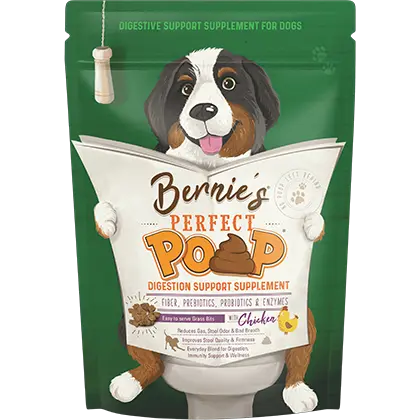
If you’ve noticed pumpkin on your dog’s supplement label, there’s a reason for that, too. Dried pumpkin is one of the three fiber sources in Bernie’s Perfect Poop, alongside Miscanthus grass and flaxseed. Each contributes to the formula’s overall fiber profile.
For Thanksgiving itself, though, there’s no need to get complicated. A little plain pumpkin or a few green beans can be a simple way to share the holiday meal.
How to Make a Dog-Safe Thanksgiving Meal
You don’t need a special recipe to make Thanksgiving dinner for your dog. Start with the food they already eat, and treat the holiday ingredients as small additions.
Here’s one way to build a simple Thanksgiving plate:
- The base: Your dog’s usual food, in their normal portion.
- The turkey: A little shredded, fully cooked, skinless turkey with no bones or seasoning.
- The vegetables: A small spoonful of plain pumpkin or a few chopped, cooked green beans.
- Their usual supplements: Their regular serving of Perfect Poop, if it’s already part of their feeding routine.
You don’t need to include every ingredient. A little turkey alone may be plenty, especially for dogs who aren’t used to eating vegetables.
It’s also helpful to think about what your dog has eaten before. Thanksgiving isn’t necessarily the best day to introduce several unfamiliar foods at once.
Even foods that are safe for dogs can cause loose stool, gas, or vomiting when offered in unusually large amounts or introduced too quickly. Adding one new food at a time makes it easier to recognize how your dog responds [2].
How much Thanksgiving food should you give your dog?
A commonly recommended guideline is to keep treats and other extras to no more than 10% of a dog’s total daily calories [2]. That includes the turkey and vegetables you’re adding to their bowl, along with any treats handed out during the day.
For a small dog, that allowance may amount to only a few bites. Larger dogs have more room in their daily calorie budget, but their holiday extras should still be modest.
If you’re already using Perfect Poop, continue with the established serving and feeding instructions. Keeping familiar parts of your dog’s routine consistent can be especially helpful when the household schedule, visitors, and food offerings are all changing.
Thanksgiving Treats for Dogs: Guests, Allergies and Prescription Diets
The Thanksgiving plate you prepare for your dog isn’t always the only holiday food they receive.
A guest might slip them a bite of turkey. A child might share part of a roll. And there’s always the possibility of a dog discovering that the floor beneath the dinner table is an excellent place to spend the afternoon.
It’s worth letting everyone know which foods your dog can have and whether they’ve already received their holiday treat. Those extra bites count toward the same daily treat allowance, even when they come from different people.
For some dogs, the safest Thanksgiving dinner is simply their regular food.
Dogs eating prescription diets may need to avoid additional foods because the diet has been formulated for a particular medical purpose. Adding extras can change the nutritional balance or interfere with the intended feeding plan [2].
Food allergies deserve similar attention. A dog who reacts to a particular protein shouldn’t receive it just because it’s a holiday. Turkey may be appropriate for some dogs with food sensitivities, but it’s still a potential allergen.
The same consideration applies to supplements and flavored products. For example, Bernie’s Perfect Poop contains chicken fat, including in its cheddar cheese flavor. Always check the ingredient list when managing a known or suspected food allergy.
Finally, pay attention to how your dog feels after the meal. A little extra food can cause temporary digestive upset, but repeated vomiting, persistent diarrhea, abdominal pain, lethargy, or changes in appetite deserve veterinary attention. Symptoms following a particularly fatty meal should be taken seriously because pancreatitis is one possible concern.
Keeping Perfect Poop in Your Dog’s Holiday Routine
Thanksgiving is a good reminder of how much a dog’s digestive system does every day. Whether the bowl contains their usual food or a little turkey and pumpkin, the digestive tract must break down the meal, absorb nutrients, and move what’s left through the intestines.
That’s the everyday process we had in mind when we created Bernie’s Perfect Poop.
Perfect Poop combines four types of digestive support in one easy-to-serve formula:
- Fiber from Miscanthus grass, dried pumpkin, and flaxseed helps support regular bowel movements and healthy stool consistency.
- Prebiotics provide nourishment for beneficial microorganisms in the gut.
- Probiotics introduce beneficial bacteria that help support a healthy gut environment.
- Digestive enzymes help break down components of food during digestion.
Pumpkin might be the familiar Thanksgiving ingredient, but Miscanthus grass provides the largest share of Perfect Poop’s added fiber. Together, these fiber sources contribute different properties that help support normal digestion and stool quality. You can explore the science of Miscanthus grass and dietary fiber in Bernie’s University.
Perfect Poop comes in convenient grass bits that can be mixed into wet or dry food, making it easy to incorporate into an established feeding routine.
If your dog already enjoys Perfect Poop daily, Thanksgiving is simply another day to serve it as usual.
If you’re considering trying it for the first time, the introduction should be gradual. The feeding guidance recommends starting with about one-quarter of the suggested serving and increasing over approximately a week. That gives your dog’s digestive system time to adjust to the additional fiber and other ingredients.
There’s no need to introduce a new supplement and several new foods all on Thanksgiving Day. Some families may prefer to establish their supplement routine beforehand, while others may find it easier to wait until after the holiday.
Perfect Poop is labeled for adult dogs and should not be given to puppies or pregnant dogs according to current product guidance.
Most importantly, a digestive supplement isn’t a substitute for choosing appropriate foods and portions. The goal is to support your dog’s everyday digestion, alongside a suitable diet and healthy feeding habits.
And if you decide to make Perfect Poop part of your dog’s routine, every bag is backed by our Growl-Free Guarantee.
Here’s to a Thanksgiving full of good food, happy dogs, and a Friday morning everyone can enjoy.
Frequently Asked Questions
Can dogs eat turkey skin?
It’s best to skip turkey skin. It contains more fat than lean turkey meat and may be coated in butter, oil, or seasonings. Fatty foods can cause digestive upset and may trigger pancreatitis in susceptible dogs [1]. Small amounts of plain, skinless turkey are a safer choice.
How much turkey can a dog eat?
The right amount depends on your dog’s size, usual diet, and daily calorie needs. A useful guideline is to keep treats and food extras to 10% or less of daily calories [2]. That means a few small pieces may be enough for a smaller dog, especially if they’re also receiving other holiday treats.
Can dogs eat mashed potatoes?
Dogs can generally eat small amounts of plain, fully cooked potatoes, but Thanksgiving mashed potatoes often contain butter, cream, salt, or garlic. These additions can make them unsuitable for dogs. If you’re already sharing plain turkey and vegetables, there’s no need to add mashed potatoes.
Can dogs eat stuffing?
Traditional Thanksgiving stuffing is best kept off your dog’s plate. Most recipes contain ingredients such as onions, garlic, butter, and seasoned broth. Onion and garlic can damage a dog’s red blood cells and cause anemia [3]. Offer a small portion of plain turkey instead.
References
- ASPCA. “Thanksgiving Safety Tips That Will Keep Your Pets Feeling Thankful This Holiday.” ASPCA News. 2025. https://www.aspca.org/news/thanksgiving-safety-tips-will-keep-your-pets-feeling-thankful-holiday
- Grant C, Williams K, Downing R. “Dog Treats.” VCA Animal Hospitals. 2024. https://vcahospitals.com/know-your-pet/dog-treats
- ASPCA Animal Poison Control Center. “When Pumpkin Spice Is Not So Nice.” ASPCA News. 2020. https://www.aspca.org/news/when-pumpkin-spice-not-so-nice
- Rubin SI. “Introduction to Digestive Disorders of Dogs.” Merck Veterinary Manual. 2026. https://www.merckvetmanual.com/dog-owners/digestive-disorders-of-dogs/introduction-to-digestive-disorders-of-dogs


