

Something feels different, but you can’t quite put your finger on what.
Musculoskeletal problems in dogs rarely announce themselves with obvious pain or dramatic limping. They creep in slowly, showing up as small shifts in movement or behavior that are easy to dismiss as normal aging. Catching these early signals matters because what you do now shapes how comfortably your dog moves for years to come.
What “Bad Joints” Actually Means
This phrase usually points to structural problems where bones, cartilage, ligaments, or fluid stop working as smoothly as they should. Cartilage starts to thin. Ligaments stretch or tear. Bones don’t sit in their sockets quite right. Inflammation builds up inside the capsule.
These changes stem from different causes. Osteoarthritis involves cartilage breaking down over time, letting bones rub together more directly. Hip dysplasia and elbow dysplasia occur when structures don’t form properly from the start, creating abnormal wear patterns. Ligament injuries, like a torn cranial cruciate ligament, destabilize movement and often lead to arthritis down the road.
The common thread? Something has disrupted the smooth cooperation between cartilage, fluid, ligaments, and bone. Movement becomes harder and less comfortable.
Movement Changes You Can See
Dogs are good at hiding discomfort. By the time they’re limping noticeably, the problem has usually been developing for a while.
That’s why the subtle stuff matters.
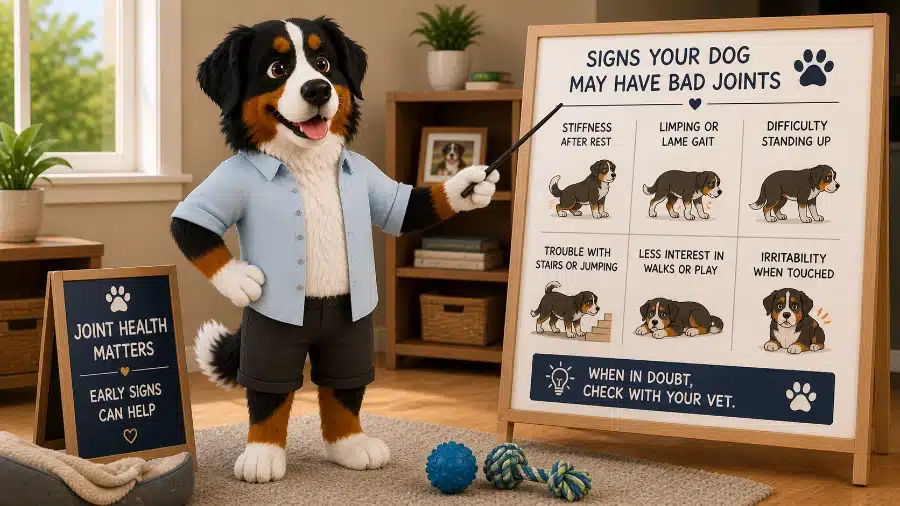
Stiffness after rest is one of the earliest signs. Your dog gets up from a nap and moves carefully for the first few steps, then loosens up once they’re warmed up. Inflamed or thinning cartilage feels stiff after being still, but movement pumps synovial fluid through and reduces that initial discomfort.
Hesitation before certain movements tells you something, too. Your dog pauses at the bottom of the stairs or circles a few times before committing to a jump. They’re not refusing, just being more cautious. They’ve learned that a particular motion might hurt, so they’re bracing for it.
Slower walks, shorter play sessions. Your dog used to pull on the leash for the whole walk. Now they’re content to stroll. They still fetch, but stop after a few throws instead of begging for more. Moving for long periods becomes tiring when bones aren’t gliding smoothly.
Favoring one leg or shifting weight. You might notice your dog standing with more weight on their front legs, or resting one back leg while standing still. They’re redistributing the load to take pressure off an uncomfortable area.
Changes in how they sit or lie down. Some dogs with hip or knee problems stop sitting squarely and start shifting to one side. Others struggle to find a comfortable position when lying down or choose softer surfaces more often.
Behavioral Shifts That Signal Discomfort
Musculoskeletal pain doesn’t just change how dogs move. It changes how they interact with the world.
Reluctance to be touched in certain spots. Your dog used to love a good scratch along their back or hip. Now they flinch or move away when you reach for those areas. Pain makes dogs protective of the parts that hurt.
Grumpiness or irritability. Chronic discomfort wears on anyone. A dog who’s normally social might start snapping at other dogs or people who get too close, especially if they’re worried about getting bumped or jostled.
Less interest in activities they used to enjoy. They don’t get excited about car rides anymore because getting in and out is uncomfortable. They stop greeting you at the door because standing up quickly has started to hurt.
Licking or chewing at specific areas. Some dogs will obsessively lick or chew at a painful spot, trying to soothe it. You might notice them focused on a wrist, elbow, knee, or hip.
Sleeping more, moving less. When movement stops feeling good, dogs naturally do less of it. If your dog is choosing rest over activity more often than before, it’s worth asking why.
These behavior changes show dogs adjusting their routines to avoid discomfort. They’re not being lazy or stubborn. They’re protecting areas that don’t feel right.
Physical Changes You Can Feel or See
Sometimes musculoskeletal problems show up in ways you can actually touch or observe.
Muscle loss in one leg. If a dog uses one leg less because it hurts, the muscles in that leg will start to shrink. You might notice one thigh or shoulder looks thinner than the other. This asymmetry tells your vet that the dog has been compensating for pain by shifting weight away from the affected limb.
Swelling or warmth around an area. An inflamed area can feel slightly puffy or warmer than the surrounding tissue. Inflammation brings increased blood flow and fluid buildup.
Grinding or popping sensations. When you gently move your dog’s leg through its range of motion, you might feel clicking, popping, or a grinding sensation. These can indicate cartilage damage or bone changes.
Visible limping or lameness. By the time limping is obvious, the problem is usually well-established. But even subtle limping, the kind that only shows up after exercise or first thing in the morning, deserves attention.
What Happens Inside When Things Go Wrong
Understanding what’s happening beneath the skin can help you recognize why these signs show up.
In a healthy system, articular cartilage covers the ends of bones, creating a smooth, slippery surface that lets them glide past each other without friction. Synovial fluid fills the capsule, acting as both a lubricant and a shock absorber. Ligaments hold everything in proper alignment, and muscles provide the power to move through a full range of motion.
When cartilage starts wearing away, bones lose that protective cushion. They begin rubbing together more directly, which irritates the tissue and triggers inflammation. The body tries to stabilize the unstable area by growing bony deposits called osteophytes, but these just make movement stiffer and more uncomfortable. The capsule may thicken, and the fluid becomes less effective at doing its job.
None of this happens overnight. It builds over months or years. That slow progression is exactly why early recognition matters. The sooner you notice changes, the more room you have to protect your health before permanent damage sets in.
Who’s Most at Risk?
Some dogs face higher odds of developing musculoskeletal problems.
Large and giant breeds carry more weight on their frames, which puts extra stress on cartilage and connective tissue from puppyhood onward. German Shepherds, Labrador Retrievers, Golden Retrievers, Great Danes, and Bernese Mountain Dogs are all predisposed to conditions like hip dysplasia and osteoarthritis.
Breeds with specific structural tendencies run into trouble more often. Bulldogs and Pugs can develop patellar luxation, where the kneecap slips out of place. Dachshunds are prone to intervertebral disc disease because of their long spines. Rottweilers and Bernese Mountain Dogs see higher rates of elbow dysplasia.
Highly active dogs put their musculoskeletal systems through a lot. If your dog runs agility, goes on long hikes, or plays hard at the dog park several times a week, they’re asking a lot from their cartilage and ligaments. Over time, repetitive stress can wear down structures.
Dogs with a history of injury. A torn ligament, a fracture near a load-bearing area, or even a bad sprain can change how forces distribute for the rest of the dog’s life. This altered biomechanics often leads to arthritis years down the road.
Overweight dogs. Every extra pound adds mechanical load to structures that are already working hard. Fat tissue also produces inflammatory compounds that circulate through the body, contributing to systemic inflammation.
Knowing your dog’s risk factors helps you watch for early signs of joint issues and take proactive steps before problems develop.
When to Talk to Your Vet
You don’t need to wait for obvious limping to schedule a vet visit.
If you’ve noticed any combination of the signs we’ve talked about, stiffness after rest, hesitation before jumping, behavior changes, muscle asymmetry, or reduced activity, it’s worth getting your dog evaluated. Your vet can perform a physical exam that checks the range of motion, looks for swelling or pain responses, and assesses muscle mass.
They may recommend X-rays to look inside. Imaging can reveal narrowing in the space where cartilage used to be, bony growths, changes in bone density, and fluid buildup. For more complex cases, your vet might suggest advanced imaging like CT or MRI, or they might take a sample of fluid to analyze.
The goal isn’t just to confirm whether problems exist. It’s to understand how severe they are, which areas are affected, and what approaches will help most. That information shapes everything from pain management to exercise recommendations to nutritional support.
Bringing notes or a short video of your dog moving at home can be helpful. The way your dog behaves in a familiar, comfortable environment sometimes shows things that don’t appear during a clinical exam.
Supporting Health Before and After Problems Start
Here’s what a lot of dog parents don’t realize: you don’t have to wait for a diagnosis to start caring for your dog’s musculoskeletal system.
Weight management is one of the most powerful tools you have. Keeping your dog at a lean body condition reduces mechanical stress on cartilage and limits the production of inflammatory compounds from fat tissue . Even a few pounds can make a noticeable difference in how comfortably a dog moves.
The right kind of exercise keeps structures lubricated and muscles strong without creating excessive wear. Low-impact activities like controlled leash walks on soft surfaces, swimming, and gentle stretching help maintain function. High-impact activities, sudden direction changes, or weekend-warrior bursts of intense exercise can create more stress than benefit, especially for dogs with developing issues.
Omega-3 fatty acids from fish sources work as natural anti-inflammatories. EPA and DHA get built into cell membranes and compete with pro-inflammatory omega-6s, shifting the body toward producing fewer inflammatory signals. For a dog dealing with inflammation, that can mean real improvements in comfort.
Research-backed supplements can provide targeted support. For decades, glucosamine and chondroitin were the standard ingredients. However, research has shown that these ingredients are far less effective than once believed, with little to no evidence of benefit. Experts are now looking at other evidence-based alternatives that directly support health, including undenatured Type-II collagen, properly absorbed curcumin, omega-3s, astaxanthin, and boron.
Bernie’s Healthy Hips was formulated based on the analysis of over 150 ingredients to create a formula designed to support your dog’s musculoskeletal health and mobility. The soft chews deliver 16 research-backed active ingredients that work with your dog’s body to help maintain cartilage, manage inflammation, and support comfortable movement.
The Gut Connection
What your dog eats affects their musculoskeletal system more than most people realize. A significant portion of the immune system lives in the digestive tract. When the gut microbiome is out of balance, it can drive systemic inflammation that shows up throughout the body. Supporting digestion with fiber, prebiotics, probiotics, and enzymes may help keep that inflammation in check.
Bernie’s Perfect Poop pulls all four of those together in one formula. The fiber comes from Miscanthus grass, grown by small farms in Missouri and Arkansas without pesticides or herbicides. That grass contains about 85% dietary fiber along with natural prebiotic xylooligosaccharides. The formula also includes inulin, plus hardy spore-forming probiotics Bacillus Subtilis and Bacillus Coagulans that actually survive stomach acid and make it to the gut alive. Digestive enzymes round things out.
It comes as grass bits, not powder. No mess floating around, nothing stuck to the bowl. Dogs go for the natural cheddar or chicken flavor. And it’s grain-free and gluten-free.
Bernie’s Perfect Poop has helped millions of dogs achieve better digestive wellness. It is designed to keep the gut balanced, which creates a vital foundation for the rest of the body to naturally manage daily inflammation and stress.
Combining Approaches for Better Results
A lot of dog parents find that combining conventional treatment with holistic support works best. Your vet might recommend NSAIDs or other pain medications to manage inflammation and discomfort. These can be effective for many dogs, though long-term use means monitoring liver and kidney function.
Therapies like acupuncture, chiropractic care, hydrotherapy, massage, and laser therapy can complement what your vet prescribes. These approaches help maintain range of motion, release muscle tension, improve circulation, and support the body’s natural healing processes.
The most successful care plans tend to be the ones that address multiple angles at once: weight management, appropriate exercise, anti-inflammatory nutrition, research-backed supplements, pain control when needed, and supportive therapies that keep the whole musculoskeletal system balanced.
Trust What You’re Seeing
You know your dog better than anyone else. If something feels off in the way they move or behave, that instinct is worth listening to. Musculoskeletal problems in dogs rarely start with dramatic symptoms. They show up as small changes that are easy to dismiss. But those early signals are also your best opportunity to protect long-term mobility and comfort.
Early intervention usually means more options. Whether it’s adjusting exercise routines, managing weight, adding science-based dog health supplements, or working with your vet on a treatment plan, the sooner you start, the more you can do to help your dog stay active and comfortable for years to come.
And this isn’t just a senior dog issue. Younger dogs can develop problems too, especially if there’s a history of injury, a developmental condition, or a breed predisposition. Paying attention to how your dog moves at every life stage gives you the chance to catch problems before they progress.
Give Your Dog the Support They Deserve
Supporting musculoskeletal health doesn’t have to be complicated. It starts with recognizing the signs, working with your vet to understand what’s happening, and taking steps to protect mobility before problems become severe.
Bernie’s Healthy Hips delivers 16 research-backed active ingredients in soft chews that dogs actually enjoy eating. Every bag comes with our Growl-Free Guarantee. Try it risk-free and see what targeted support can do for your dog’s comfort and mobility.
Frequently Asked Questions
Can young dogs have musculoskeletal problems?
Yes. While these issues are more common in older dogs, younger dogs can develop problems too, especially if they have breed-specific predispositions like hip dysplasia, elbow dysplasia, or patellar luxation. Dogs with a history of injury or high-impact activity can also show changes early in life.
Is stiffness after rest always a sign of problems?
Stiffness that improves once your dog starts moving is often one of the earliest signs of inflammation or cartilage changes. While occasional stiffness after intense exercise can be normal, consistent stiffness after every nap or overnight rest deserves a vet evaluation.
How much weight loss makes a difference?
Even a few pounds can reduce stress and improve comfort. Studies have shown that weight loss in overweight dogs can lead to measurable improvements in mobility and pain levels, sometimes within weeks of reaching a healthier body condition.
Do I need to wait for X-rays to start supporting my dog?
No. Proactive care through weight management, low-impact exercise, anti-inflammatory nutrition, and research-backed supplements can benefit dogs before damage shows up on imaging. Early intervention helps protect cartilage and slow the progression of wear.
Can digestive health really affect musculoskeletal comfort?
Yes. A significant portion of the immune system lives in the gut, and when the gut microbiome is out of balance, it can drive systemic inflammation throughout the body. Supporting gut health with fiber, prebiotics, probiotics, and enzymes may help manage inflammation.