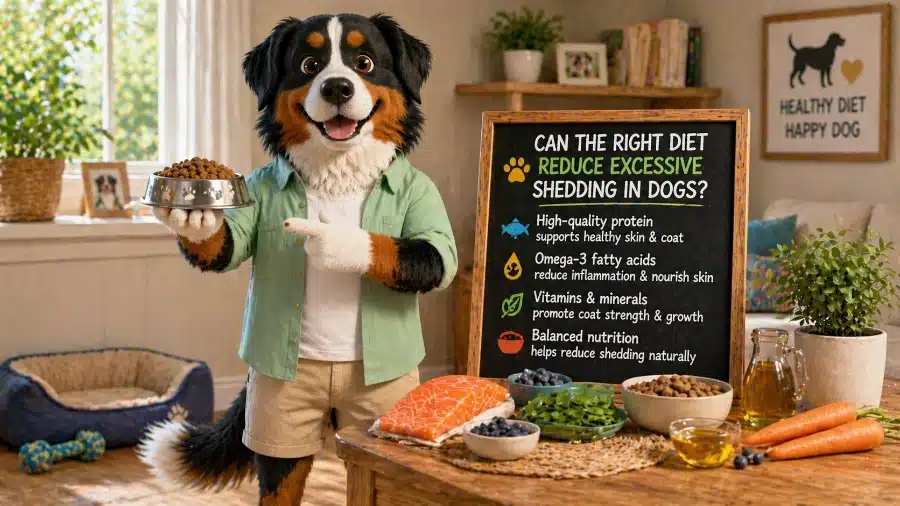


Some shedding is just part of life with a dog. But when the fur seems relentless, when brushing barely makes a dent and new loose hair keeps appearing everywhere, it is worth asking whether what is in the bowl is part of the story.
For a lot of dogs, it is.
Understanding Normal and Excessive Shedding
All dogs shed. It is a natural, ongoing process in which older hair falls out to make room for new growth. How much a dog sheds depends on breed, coat type, age, and the time of year.
Double-coated breeds like Huskies, Golden Retrievers, and German Shepherds shed heavily by nature, with dramatic increases in spring and fall as they transition between seasonal coats. Short-haired breeds like Beagles and Labrador Retrievers tend to shed more consistently year-round. Some low-shedding breeds, including Poodles and Bichon Frises, produce minimal loose fur by comparison.
Here is the tricky part: “normal” covers a wide range. The better question is whether your dog’s shedding has changed, not whether it exists at all.
Most of the time, a sudden increase in loose fur or a shift in coat quality traces back to something benign, including nutritional gaps, an imbalanced fat ratio in the diet, poor digestive absorption, or seasonal transitions. Less commonly, heavier shedding can be linked to underlying conditions such as thyroid dysfunction, hormonal changes, environmental allergies, or skin infections. Sorting out which is which almost always starts with a closer look at what the dog is eating.
How Diet Shapes the Coat from the Inside Out
Diet can play a big role in coat health because the gut is closely connected to the immune system and to the body’s ability to deliver nutrients to the skin and hair follicles. Every time a dog eats, the body has to decide what to accept and what to react to. If the gut is out of balance, whether from highly processed food, poor-quality fats, or an unhealthy mix of gut bacteria, the immune system becomes more reactive and the skin barrier begins to weaken. When that happens, hair follicles receive fewer of the building blocks they need to anchor and produce healthy fur. [1]
Over time, that nutritional shortfall shows up as excess shedding, a dull or brittle coat, and skin that looks flaky or dry. The coat is often one of the first places where internal imbalance becomes visible.
Fat balance is a central part of this picture. Many commercial dog foods are high in omega-6 fatty acids, which support cellular function but also fuel pro-inflammatory signals when they dominate the diet. When omega-6 intake is high relative to omega-3s, the body produces more compounds that drive inflammation. For skin and coat health, that imbalance can translate to increased hair loss, dryness, and an irritated skin barrier. [2]
For a broader look at how dog skin and coat health functions as a system, the Bernie’s Best University overview covers the underlying physiology.
The Omega-3 Connection
Omega-3 fatty acids, specifically EPA (eicosapentaenoic acid) and DHA (docosahexaenoic acid), are the most thoroughly researched dietary compounds for coat quality in dogs. [2]
Here is how they work. EPA and DHA are incorporated into the phospholipid layer of skin cell membranes, where they do two things simultaneously. They help regulate the production of sebum, the natural oil that lubricates and conditions the coat. They also compete with omega-6 fatty acids in inflammatory pathways, shifting the balance toward anti-inflammatory compounds called resolvins and protectins. The result is a skin barrier that holds moisture more effectively, hair follicles that receive better nutritional support, and a coat that tends to shed less as a result.
Dogs with diets low in omega-3s often show visible differences in coat texture and the volume of loose hair compared to dogs whose fat intake is more balanced.
The source of omega-3s matters, too. ALA, the omega-3 found in flaxseed and some plant oils, has limited conversion to EPA and DHA in dogs. Fish-derived omega-3s and marine algae provide EPA and DHA directly, which is why these sources tend to produce more consistent results for coat health.
More on how different omega-3 forms compare: omega-3 fats for dogs.
Other Nutrients That Matter for the Coat
Omega-3s get most of the attention in coat health conversations, but they do not work alone. Several other nutrients play direct roles in building and maintaining healthy fur.
Protein is perhaps the most foundational. Hair is made primarily of keratin, a structural protein. Dogs whose diets lack sufficient high-quality protein, or whose digestive systems cannot fully break down and absorb the protein they consume, often show changes in coat density, texture, and shedding rate.
Zinc is a trace mineral that plays a direct role in hair follicle function and skin cell turnover. A deficiency can lead to dry, brittle hair and increased loose fur. Certain northern breeds like Huskies and Samoyeds have higher zinc requirements than average and may be more susceptible to zinc-related coat changes. [3]
Fatty acid metabolism and keratin synthesis both depend on biotin, a B vitamin found in many whole-food ingredients. Outright deficiency is not common in dogs eating a complete diet, but suboptimal levels can contribute to a coarser or duller coat.
The key nutrients that support coat health from the inside out include:
- Omega-3 fatty acids (EPA and DHA): Reduce skin inflammation, support sebum production, and help maintain a less reactive skin barrier
- High-quality protein: Provides the amino acids needed for keratin production and hair follicle maintenance
- Zinc: Supports skin cell turnover and anchors hair at the follicle
- Biotin: Contributes to keratin synthesis and fatty acid metabolism in the skin
- Vitamin E: Protects skin cell membranes from oxidative damage and supports omega-3 activity [4]
- Linoleic acid (omega-6): In appropriate amounts, supports the skin’s moisture barrier and cell membrane integrity
What Is Missing from Many Commercial Diets
Not all dog foods deliver these nutrients in a form the body can actually use. Processing methods, ingredient quality, and fat composition all affect what the dog’s system receives.
Highly processed kibble, particularly formulas made with rendered fats or low-grade protein meals, may not supply omega-3s in meaningful amounts after manufacturing. Heat-sensitive nutrients like EPA and DHA degrade during high-temperature processing, which means even formulas with decent ingredient lists may deliver less than expected by the time they reach the bowl. [5]
Whether you feed kibble, raw, or home-cooked meals, quality sourcing matters. Diets built around whole proteins, minimally processed fats, and identifiable ingredients tend to provide more bioavailable nutrition than those relying heavily on by-products and unnamed protein sources. If you feed raw, working with your vet to source high-quality, properly handled meat is a reasonable approach.
Food sensitivities are worth considering as well. Diet can affect skin and coat outcomes through the immune system’s response to specific ingredients. If the gut is repeatedly exposed to proteins it does not tolerate well, the resulting immune activity can create systemic inflammation that becomes visible in the coat. For dogs dealing with persistent dull coats, excess fur loss, and skin irritation alongside inconsistent digestion, identifying and removing trigger ingredients may help the gut and immune system settle.
More on how dietary sensitivities connect to the gut and skin: food allergies and gut health.
When Diet Is Not the Whole Story
Improving nutrition, whether through diet changes or premium dog supplements, is often the most impactful starting point for a dog with a suboptimal coat. For most dogs, that is the whole story.
That said, it is worth knowing when other factors may be at play. Hypothyroidism is one of the more common underlying conditions that affects coat quality. The thyroid regulates metabolic rate and skin cell renewal. When thyroid hormone levels drop, dogs may shed more heavily, develop a sparse or dull coat, and show other signs like weight gain and reduced energy. This is typically identified through a blood panel. [6]
Seasonal and environmental allergies can drive ongoing skin inflammation that loosens hair and thins the coat over time. Unlike food sensitivities, these reactions are triggered by inhaled or contact allergens rather than diet. Addressing both sources of inflammation, dietary and environmental, often produces better results for dogs dealing with chronic skin and coat concerns. More on food sensitivities in dogs and how they differ from environmental allergies.
Hormonal shifts, stress, post-partum changes in intact females, and certain medications can also affect the hair cycle and shedding rate. In some dogs, patterned hair loss may also be linked to Alopecia X, a condition sometimes referred to as hair cycle arrest. Any dog where heavy shedding comes on suddenly, shows unusual patterns like symmetrical hair loss, or is accompanied by visible skin changes warrants a veterinary evaluation.
Supporting the Coat With Targeted Supplementation
Diet improvements address the foundation. For the specific nutritional gap most closely linked to excess shedding, supplementing with concentrated, bioavailable omega-3s offers a more direct path.
Bernie’s OMG! Omegas delivers a concentrated formula designed to support skin and coat health from the inside out. Each soft chew provides a minimum of 275 mg of omega-3 fatty acids, with EPA and DHA sourced from anchovy oil and marine microalgal oil. The formula also includes natural Vitamin E and green tea extract polyphenols, which help increase omega-3 absorption and bioavailability, supporting the fatty acids’ ability to reach the tissues where they do their work.
That absorption piece matters. A supplement can only deliver results if the EPA and DHA actually get built into skin cell membranes. The combination of concentrated omega-3s with absorption-supporting ingredients is what sets apart a formula that circulates from one that produces visible coat changes.
OMG! Omegas comes in soft chew format, available in pork or salmon flavors, and is sized for dogs of all breeds and ages. Made in the USA, sustainably sourced, molecularly distilled to remove contaminants, and packaged without PFAS.
Recommended daily serving: 1 chew for dogs up to 25 lbs, 2 chews for 26-50 lbs, 3 chews for 51-75 lbs, 4 chews for 76-100 lbs, and 5 chews for dogs over 100 lbs.
For a closer look at how fatty acids translate to visible coat differences: omega-3s and coat quality.
Excessive shedding is not always a breed thing or a seasonal thing. For many dogs, it is a signal that the skin and hair follicles are not receiving the nutritional support they need. Addressing the omega-6 to omega-3 imbalance, improving protein quality, and ensuring the digestive system is absorbing what the dog eats are the changes most likely to make a visible difference. A well-supported coat that sheds less is not just a cosmetic outcome. It reflects genuine nutritional balance working from the inside out.
Ready to support your dog’s coat from the inside out? OMG! Omegas delivers concentrated EPA and DHA in soft chews your dog will actually eat, with Vitamin E and green tea extract that help the omega-3s absorb and do their job. Every bag is backed by the Growl-Free Guarantee, so you can try it risk-free.
Frequently Asked Questions
Can changing my dog’s food reduce excessive shedding?
Sometimes, but it depends on what “excessive” means for your dog. Some breeds, like Huskies, German Shepherds, and Labrador Retrievers, naturally shed large amounts of fur, even when they are completely healthy. Seasonal coat changes can also dramatically increase shedding for certain dogs.
Shedding may be considered excessive when it is noticeably worse than your dog’s normal pattern, develops suddenly, or occurs alongside signs like dull fur, flaky skin, itchiness, bald patches, or changes in coat texture. In those cases, nutrition can absolutely play a role. Poor diet quality, nutrient deficiencies, or difficulty absorbing nutrients may all contribute to unhealthy skin and coat function. Improving diet quality or adding targeted nutritional support may help support healthier shedding patterns over time.
What nutrients are most linked to excessive shedding in dogs?
Omega-3 fatty acids, especially EPA and DHA from fish or algal oils, are among the most researched nutrients for supporting skin and coat health. High-quality protein is also critical because hair is primarily made of protein. Other important nutrients include zinc, biotin, and vitamin E, which help support skin integrity and normal hair growth.
When dogs do not receive enough of these nutrients, or cannot absorb them efficiently, the coat may become dry, brittle, dull, or prone to increased shedding.
How long does it take to see results from dietary changes?
Individual results vary depending on the dog’s age, the degree of nutritional deficiency, and the changes made. Coat improvements often take several weeks to a few months to become noticeable, since the hair growth cycle takes time to respond to nutritional shifts.
Do omega-3 supplements help with dog shedding?
Research suggests that supplementing with EPA and DHA from fish or algal sources may help support coat quality and reduce excess shedding by supporting skin barrier function and a healthy inflammatory response. [7] The source and concentration of omega-3s affects how consistently they produce results.
Could excessive shedding be a sign of something medical?
Yes. Diet is often the right place to start, but conditions like hypothyroidism, food sensitivities, hormonal imbalances, and environmental allergies can also drive heavy shedding. If dietary and supplementation changes do not make a difference over time, or if it comes with bald patches, visible skin changes, or other symptoms, a veterinary evaluation is worth scheduling.
Citations
[1] Song H, Mun SH, Han DW, Kang JH, An JU, Hwang CY, Cho S. “Probiotics ameliorate atopic dermatitis by modulating the dysbiosis of the gut microbiota in dogs.” BMC Microbiology. 2025;25:228. DOI: 10.1186/s12866-025-03924-6. https://link.springer.com/article/10.1186/s12866-025-03924-6
[2] Lenox CE. “Timely Topics in Nutrition: an overview of fatty acids in companion animal medicine.” Journal of the American Veterinary Medical Association. 2015;246(11):1198-1202. DOI: 10.2460/javma.246.11.1198. Summarized at Bernie’s University: https://www.bernies.com/university/research-paper/an-overview-of-fatty-acids-in-companion-animal-medicine/
[3] White SD, Bourdeau P, Rosychuk RAW, Cohen B, Bonenberger T, Fieseler KV, Ihrke P, Chapman PL, Schultheiss P, Zur G, Cannon A, Outerbridge C. “Zinc-responsive dermatosis in dogs: 41 cases and literature review.” Veterinary Dermatology. 2001;12(2):101-109. DOI: 10.1046/j.1365-3164.2001.00233.x. PubMed: https://pubmed.ncbi.nlm.nih.gov/11360336/
[4] Plevnik Kapun A, Salobir J, Levart A, Tavčar Kalcher G, Nemec Svete A, Kotnik T. “Vitamin E supplementation in canine atopic dermatitis: improvement of clinical signs and effects on oxidative stress markers.” Veterinary Record. 2014;175(22):560. DOI: 10.1136/vr.102547. PubMed: https://pubmed.ncbi.nlm.nih.gov/25205675/
[5] Cleaver L. “Omega-3 sources and efficacy differ in pet food formulations.” Petfood Industry. 2026 Feb 10. Available from: https://www.petfoodindustry.com/news-newsletters/petfood-forum-news/article/15816788/omega3-sources-and-efficacy-differ-in-pet-food-formulations
[6] Heseltine J. “Hypothyroidism in Animals.” Merck Veterinary Manual. Reviewed/Revised May 2024; Modified May 2025. Available from: https://www.merckvetmanual.com/endocrine-system/the-thyroid-gland/hypothyroidism-in-animals
[7] Carlisle C, Metzger BT, Tintle NL, Polley K, Jackson KH, Le Brun-Blashka S, Griffiths J, Harris WS. “The effects of omega-3 supplementation on the omega-3 index and quality of life and pain scores in dogs.” Animals. 2024;14(21):3108. DOI: 10.3390/ani14213108. PMC: https://pmc.ncbi.nlm.nih.gov/articles/PMC11545626/