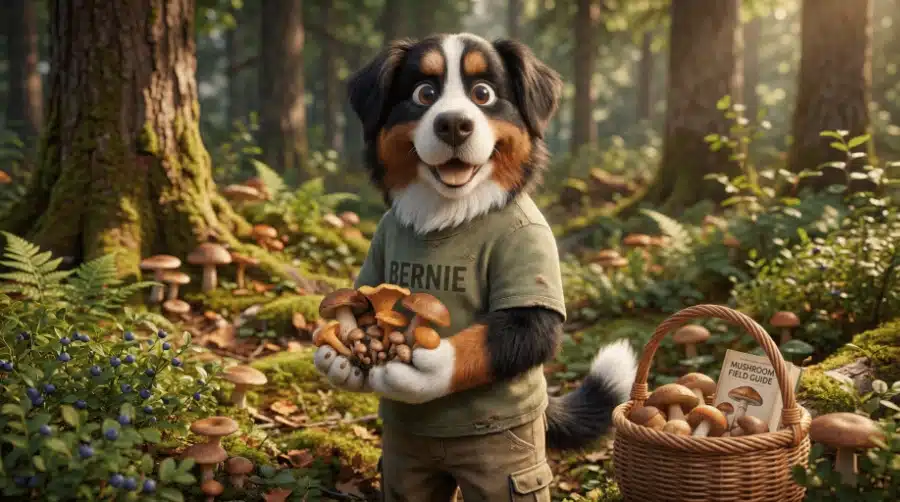


As fall rolls in and damp weather encourages mushrooms to pop up everywhere, many dog parents start to wonder: Are mushrooms safe for dogs? The answer isn’t simple. While some mushrooms can provide health benefits, others can be extremely dangerous, even deadly. Understanding which mushrooms are safe (and which aren’t) is essential for keeping your dog healthy and safe during mushroom season. When it comes to mushrooms and dogs, education and awareness can make all the difference.
Each morning on the trails in the woods around my home, we are greeted by new clusters of mushrooms that seem to appear overnight. My dogs sniff curiously at them, never biting, but their interest always reminds me how quickly accidents can happen and how important it is to stay alert. Living in the woods means we see dozens of mushroom species every season, fascinating, beautiful, and potentially risky. Those daily walks have taught me that even a peaceful stroll can come with hidden surprises, making vigilance one of the simplest ways to keep our dogs safe.
Are Wild Mushrooms Dangerous for Dogs?
Yes, wild mushrooms can be dangerous for dogs. The challenge is that even experienced foragers can struggle to identify mushroom species correctly. Many harmless and harmful varieties look almost identical, and even using identification apps or photos online can lead to dangerous mistakes. Misidentifying mushrooms is one of the most common causes of accidental poisoning in both humans and pets. This is a serious concern whenever we talk about mushrooms and dogs, especially because dogs explore the world with their noses and mouths.
Among the most dangerous varieties are:
- Amanita species such as Death Cap and Destroying Angel, which can cause liver and kidney failure
- Gyromitra species (False Morels), which can trigger seizures and liver damage
- Inocybe and Clitocybe mushrooms, which often cause neurological symptoms like tremors and drooling
Even a small bite of these mushrooms can be life-threatening. Because the risks are so high, it’s safest to assume any wild mushroom could be toxic and prevent your dog from eating them. Remember, what might look safe in a photo could be deadly in real life.
Symptoms of Mushroom Poisoning in Dogs
Signs of mushroom toxicity in dogs can appear within minutes or take several hours to show. Watch for vomiting, diarrhea, drooling, lethargy, seizures, jaundice (yellowing of gums or eyes), abdominal pain, or loss of coordination. If you suspect your dog has eaten a wild mushroom, call your veterinarian or an emergency clinic immediately. These mushroom poisoning symptoms in dogs require urgent attention.
For more information on what to do in an emergency, check out Pet Poison Prevention: What You Need to Know.
How to Keep Your Dog Safe During Mushroom Season
Mushrooms thrive in cool, damp conditions, especially in the fall. While they may seem harmless, prevention is key to keeping your pup safe. Here’s how:
- Supervise Outdoor Time: Keep a close eye on your dog during walks, especially in wooded or shaded areas where mushrooms grow in clusters.
- Remove Mushrooms from Your Yard: Regularly inspect and safely dispose of any mushrooms you find. Wear gloves and seal them in a bag before throwing them out.
- Use a Leash on Walks: If your dog tends to explore with their mouth, keep them leashed to prevent snacking on mushrooms.
- Teach a “Leave It” Command: This command can literally save your dog’s life when they come across something dangerous.
- Stay Aware During Adventures: Whether hiking, camping, or RVing, always stay alert to what your dog is sniffing or tasting.
If your dog does manage to eat a wild mushroom, try to safely collect a sample (wear gloves) and bring it to your vet for identification. If possible, take a clear photo of the area where the mushroom was growing, including the surface it was growing on (such as soil, grass, or wood), since this can help with accurate identification. Do not solely rely on internet photos to identify it yourself. Understanding what to do if your dog eats a wild mushroom can mean the difference between mild illness and a medical emergency.

Which Mushrooms Are Safe for Dogs to Eat?
For dog parents, it’s less about memorizing every type of mushroom and more about understanding what makes one safe versus risky. Think in terms of everyday choices, what you can confidently find in the grocery store, how to prepare it safely, and how to spot the warning signs that a mushroom isn’t meant for your dog. This approach keeps the focus practical and relevant while steering clear of deep fungal anatomy or identification details.
A while back, I invited a local mushroom forager, someone who’s spent years studying the fungi that grow in our area, to walk the woods around my home with me. We spent hours identifying species, and I was amazed by how many harmless and harmful varieties looked nearly identical. What I learned from that experience is that there’s no substitute for local knowledge; working with someone experienced is far safer than relying on photos or apps online. That lesson has stayed with me and deepened my respect for nature’s complexity.
Not all mushrooms are bad. In fact, some functional mushrooms can support your dog’s immune system, reduce inflammation, and promote overall wellness. You may even find these varieties fresh at your local grocery store or farmers’ market:
- Shiitake Mushrooms: Contain antioxidants and support immune and cardiovascular health.
- Reishi Mushrooms: Known as the “mushroom of immortality,” they help reduce inflammation and promote relaxation.
- Turkey Tail Mushrooms: Powerful immune boosters with anticancer properties.
- Lion’s Mane Mushrooms: Support brain and nerve health, especially beneficial for senior dogs.
- Button or Cremini Mushrooms: Common grocery store mushrooms that are safe when cooked and can add mild nutritional value.
Important: Always cook mushrooms before feeding them to your dog. Cooking not only makes them easier to digest but also helps release their beneficial compounds and deactivate potential irritants.
You can learn more about the role of mushrooms in a dog’s diet and how they’re used in Bernie’s formulations at Bernie’s University: Mushrooms for Dogs. For dog parents wondering if dogs can eat mushrooms safely, the answer is yes, but only the right kinds, and only when properly prepared.
How to Prepare Mushrooms Safely for Dogs
Cooking mushrooms doesn’t just make them tastier; it transforms their chemistry in ways that make them safer and more beneficial. Heat breaks down compounds that can be tough on digestion and helps release beta-glucans, antioxidants, and other nutrients locked inside the mushroom’s cell walls. This is why raw mushrooms, while not usually toxic, don’t offer the same nutritional benefits as cooked ones.
Cooking mushrooms properly is key to unlocking their benefits. Gently sauté or simmer mushrooms on low heat for about 15–20 minutes. This helps break down chitin (a tough fiber) and makes their nutrients more bioavailable. You can sauté in a small amount of water, butter, or oil, and skip salt and other seasonings.
You can add a small amount to your dog’s regular meal (a few small pieces). Introduce gradually and monitor for any digestive upset. Cooked functional mushrooms are generally safe and even beneficial when served in moderation.
If you’re curious about other natural ways to support your dog’s mobility and wellness, read Outdoor Activities That Can Enhance Your Dog’s Mobility.
A Balanced Approach to Mushrooms and Dogs
Can dogs eat mushrooms? The answer isn’t black and white. Living surrounded by the woods, I’m reminded daily that mushrooms can be fascinating, beautiful, and potentially risky all at once. Watching my dogs pause to sniff a new cluster after rain has taught me to slow down, notice what’s changed, stay present, and make thoughtful choices. That mindset extends to the kitchen, too, using only safe, store‑bought varieties and cooking them well.
Wild mushrooms do carry real hazards, but knowledge and simple habits keep the focus on enjoying time outside with our dogs. With a bit of care, mushrooms and dogs can coexist safely, and even deliciously, on your pup’s plate.


