

You’ve heard acupuncture might help. But between wondering if it actually works and trying to figure out what you’ll pay for it, the questions start piling up before you even make the call.
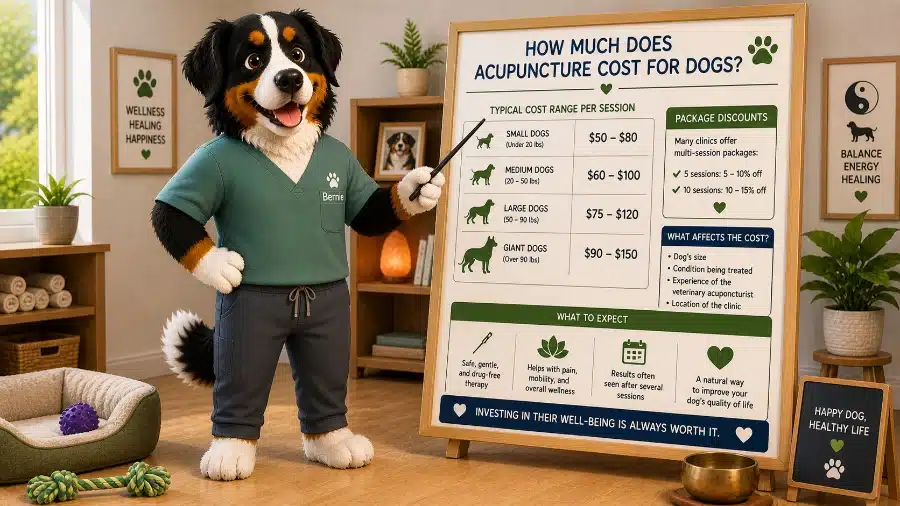
Costs typically run $60 to $300 per visit. The price depends on where you live, the complexity of what you’re treating, and whether you’re seeing a mobile practitioner or visiting a clinic. Here’s what shapes that number and what you’re actually paying for.
Important Dog Health Tip: Always check with your vet before making changes to your dog’s routine, whether it’s diet, supplements, or exercise.
What Goes Into the Price
This isn’t a one-size-fits-all treatment. The cost reflects several factors, and understanding them helps you know what to expect when you start calling around.
Initial consultations run higher than follow-ups. That first visit includes a full health history review, a physical exam, and treatment planning on top of the actual needlework. First appointments often cost $150 to $300, while return visits drop to $60 to $120.
Location affects pricing. Clinics in urban areas with higher overhead tend to charge more than those in rural locations. A visit in San Francisco or New York might hit the upper end of the range, while a practice in a smaller town could fall closer to $60 to $80.
Mobile practitioners charge differently. Some veterinary acupuncturists offer house calls, which eliminates the stress of transporting a pup dealing with joint issues. Expect to pay a travel fee on top of the base cost, though the convenience often makes it worth the extra expense for those who struggle with car rides or clinic visits.
Your dog’s condition matters. A single joint showing mild stiffness may need shorter, simpler appointments than managing multiple sites of discomfort or dealing with a complex chronic situation. More extensive treatment plans mean more time, which translates to higher costs.
Practitioner credentials play a role. Veterinarians certified through programs like the International Veterinary Acupuncture Society (IVAS) have completed extensive training beyond veterinary school. This specialized expertise can affect pricing, though it often means better outcomes and fewer visits needed overall.
How Many Visits Will Your Dog Need?
One treatment won’t solve a chronic problem. This therapy works through cumulative effects, which means multiple appointments before you see real changes.
For acute conditions, you might see improvement in one to three visits. A pup who tweaked something during a hike or developed sudden stiffness after an awkward landing may respond quickly.
Chronic issues take longer. Managing osteoarthritis, hip dysplasia, or long-term mobility challenges often starts with a series of six to twelve appointments. Some practitioners recommend weekly visits at first, then taper to every other week or monthly as symptoms improve.
Degenerative conditions may require ongoing maintenance. Progressive joint disease might benefit from monthly appointments indefinitely to maintain comfort and mobility.
Your veterinary acupuncturist can give you a clearer timeline after evaluating the specific situation. They’ll consider how long the problem has been developing, which joints are affected, and how the early treatments go.
What Happens During a Visit
Understanding the process helps you know what you’re paying for.
Thin needles get inserted at specific points on the body while your pup stays relatively still. These acupuncture points sit where nerves and blood vessels converge, and stimulating them can affect how the nervous system processes discomfort, muscle tension, and inflammation.
Most tolerate the needles well. They’re about as thin as a hair, and insertion causes minimal sensation. Some relax so completely during treatment that they fall asleep.
Appointments usually run 15 to 60 minutes, depending on needs and tolerance. The practitioner may use techniques like electroacupuncture, where mild electrical stimulation is applied through the needles, or aquapuncture, where small amounts of liquid are injected at specific points.
Does This Actually Work?
The American Veterinary Medical Association recognizes acupuncture as a valid treatment modality. That doesn’t mean every patient responds the same way.
Research shows that about 25% experience major improvement, 50% show significant improvement but still have some symptoms, and 25% show little to no benefit. Those numbers tell you the therapy helps most to some degree, though the extent varies.
Musculoskeletal issues like arthritis, hip dysplasia, or nerve-related discomfort tend to respond well. The treatment may help reduce muscle spasms, improve circulation to affected areas, and support the body’s natural pain modulation systems. If you’re still weighing whether this approach fits your situation, reading up on the benefits of acupuncture for dogs can help you decide.
This works best as part of a broader care plan. It’s not a standalone solution. Most veterinarians recommend combining it with other supportive therapies, appropriate exercise, weight management, and sometimes conventional pain medications or research-backed supplements.
Insurance and Payment Options
Some pet insurance policies cover this therapy. Companies like Embrace, Nationwide, and Spot include it in their standard coverage or offer it through wellness plan add-ons.
Check your policy details before assuming coverage. Some insurers require that treatment be deemed medically necessary by your primary veterinarian. Others cap the number of visits they’ll reimburse per year or limit coverage to specific conditions.
If insurance isn’t an option, ask about package deals. Many practitioners offer discounted rates when you prepay for a series. A package of six treatments might save you 10% to 15% compared to paying per visit.
When It Makes Sense
Not every situation calls for acupuncture. But certain scenarios make it worth considering. Those who can’t tolerate NSAIDs or other conventional pain medications may find relief through this approach without the side effects. This matters for pups with liver or kidney concerns, or those who develop gastrointestinal issues from pharmaceuticals.
Senior pups managing chronic joint issues often benefit from acupuncture as part of a multimodal approach. Pairing it with low-impact exercise, appropriate supplements, and weight management can help maintain quality of life without relying solely on medication.
Active pups recovering from injuries or surgery may see faster healing when this therapy supports conventional rehabilitation. The treatment can help reduce swelling, improve tissue repair, and keep muscles from tightening up during restricted activity periods.
Nerve-related issues like intervertebral disc disease sometimes respond when other treatments haven’t provided enough relief. This approach affects how the nervous system processes signals, which can make a difference for certain types of neuropathic discomfort.
What It Can’t Do
This therapy manages symptoms. It doesn’t fix structural problems. A torn cruciate ligament still needs surgical repair. Treatment might help with comfort during recovery, but it won’t heal the ligament itself.
The same goes for severe hip dysplasia, fractures, or infections. These conditions require medical or surgical intervention. This can complement treatment, but it’s not a replacement for addressing the underlying cause.
Some simply don’t respond. If you’ve completed a full treatment series without seeing improvement, continuing probably won’t change the outcome. Talk with your veterinarian about other options.
Finding a Qualified Practitioner
Only licensed veterinarians can legally perform acupuncture on animals in most states. That’s an important distinction. A certified acupuncturist who works with humans isn’t trained in animal anatomy, physiology, or the specific conditions affecting our companions.
Veterinarians who complete training through organizations like the International Veterinary Acupuncture Society (IVAS) or the Chi Institute of Traditional Chinese Veterinary Medicine have undergone extensive coursework beyond their veterinary degree.
Your regular vet may offer this service, or they can refer you to someone who specializes in it. Ask about their training, how long they’ve been practicing, and what success rates they’ve seen with conditions similar to what you’re dealing with.
Supporting Joints Beyond Needlework
This therapy addresses one piece of joint health. But those who move most comfortably are usually getting support from multiple angles.
Weight matters more than a lot of dog parents realize. Every extra pound puts stress on joints that are already working hard. Even a modest reduction in body weight can make a noticeable difference in how comfortably movement happens in weight management.
The right kind of movement keeps joints lubricated and muscles strong. Low-impact activities like controlled leash walks on soft surfaces, swimming, or gentle range-of-motion exercises help maintain mobility without creating more stress for arthritic dogs.
What goes into the bowl affects joints more than most people think. The connection isn’t always obvious, but it’s real.
A big chunk of the immune system lives in the digestive tract. When the gut microbiome falls out of balance, it can drive systemic inflammation that shows up in joints and other places. Supporting digestion with fiber, prebiotics, probiotics, and enzymes may help keep that inflammation in check.
Bernie’s Perfect Poop pulls all four of those together in one formula. The fiber comes from Miscanthus grass, grown by small farms in Missouri and Arkansas without pesticides or herbicides. That grass contains about 85% dietary fiber along with natural prebiotic xylooligosaccharides. The formula also includes inulin, plus hardy spore-forming probiotics, Bacillus Subtilis and Bacillus Coagulans, that survive stomach acid and make it to the gut alive . Digestive enzymes round things out.
It comes as grass bits, not powder. No mess floating around, nothing stuck to the bowl. The natural cheddar or chicken flavor gets good reviews from picky eaters. And it’s grain-free and gluten-free.
Bernie’s Perfect Poop has been used by millions of dogs, and it works. It’s designed for digestive support, but a balanced gut may help the whole body manage inflammation better.
Is It Worth the Cost?
Here’s what it comes down to.
If you’re dealing with chronic joint issues, can’t tolerate conventional medications, or need complementary support during recovery, this therapy often provides value that goes beyond the dollar amount per visit. The cumulative cost of multiple treatments can add up, but so can the cost of long-term pharmaceutical management with its associated side effects and monitoring requirements.
Those who benefit most are usually approaching this as part of a comprehensive care plan, not a magic solution. Combining it with appropriate exercise, weight management, digestive support, and sometimes conventional treatments creates better outcomes than relying on any single intervention.
Talk with your vet about whether this makes sense for the specific situation. They can help you weigh the potential benefits against the time and financial commitment, and guide you toward practitioners with solid training and experience.
Comfort and mobility matter. If this can help preserve quality of life while minimizing reliance on pharmaceuticals or invasive procedures, the investment often pays off in the form of more good days and better movement.
Keep Them Moving Comfortably
A balanced gut supports whole-body wellness, including how the body manages inflammation. Bernie’s Perfect Poop delivers fiber, prebiotics, probiotics, and enzymes in easy-to-serve grass bits. Every bag comes with our Growl-Free Guarantee. Try it risk-free and see what balanced gut health can do.
Frequently Asked Questions
How long does each appointment last?
Visits typically run 15 to 60 minutes, depending on the condition and tolerance. The first one usually takes longer because it includes a complete health history review and treatment planning.
Can this replace pain medication?
This therapy can help manage discomfort, but it’s usually most effective when combined with other therapies rather than used alone. Talk with your vet about the right combination for the specific needs.
How soon will I see results?
Some show improvement after one to three visits for acute issues, but chronic conditions typically require six to twelve treatments before significant changes appear. Response time varies based on how long the problem has been developing.
Does pet insurance cover this?
Some policies include coverage for this therapy, either in standard plans or through wellness add-ons. Check your specific policy for details on coverage limits and eligibility requirements.
Is this safe for older dogs?
This approach is considered very safe when performed by a qualified veterinary acupuncturist. It’s often a good option for seniors who may not tolerate conventional medications well due to liver or kidney concerns.