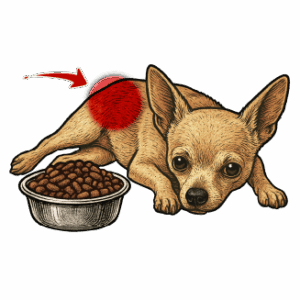
Is My Dog Actually Constipated?
Here’s something most dog owners don’t expect: a dog can poop every single day and still be constipated. Frequency matters, but so does consistency.
Signs Your Dog Is Constipated
Watch for any of these:
- Straining or squatting without producing anything
- Hard, dry, or rock-like stool
- Whimpering or yelping during a bowel movement
- Going more than two days without pooping while still eating normally
- Going through the motions repeatedly with no result
- Reduced stool volume compared to what’s typical for your dog
- Excessive licking or scooting around the rear end
Why Daily Pooping Doesn’t Rule It Out
If your dog poops but the output looks like gravel, that’s still constipation. Healthy dog stool should be firm but moist, easy to pass, and consistent in shape. Pebble-like or crumbling stool is a sign that something in the digestive process isn’t working the way it should, most often a hydration or gut health issue reaching the colon.
Why Do Dogs Get Constipated?
The two biggest drivers of dog constipation are dehydration and poor gut health. But there are several other causes worth knowing.
Dehydration: The Biggest Culprit
Water is essential to digestion. Dogs need roughly one ounce of water per pound of body weight per day. That means a 50-pound dog should be drinking around 6.5 cups of water daily, at a minimum. When a dog doesn’t drink enough, the colon pulls extra moisture out of the stool to compensate, and what’s left becomes hard and difficult to pass.
Other Common Causes
Anal Gland Issues
Swollen or impacted anal glands can make pooping uncomfortable or physically difficult. A vet or groomer can express these manually if needed. Supporting gut health over the long term also helps keep anal gland issues from recurring.
Fur Matting
Long-haired dogs or dogs that groom excessively can develop fur matting around the anal area. This creates a physical barrier that makes it hard to pass stool fully. Keeping the fur around your dog’s rear trimmed is a simple but often overlooked preventive step.
Obstructions and Foreign Objects
Dogs eat things they shouldn’t, consistently and enthusiastically. Pieces of toys, bones, fabric, or other foreign objects can cause partial or full obstructions in the intestinal tract. This type of constipation is more serious and usually requires veterinary attention.
Age, Medications, and Health Conditions
Several other factors can contribute to constipation in dogs:
- Age: Older dogs often experience reduced gut motility, meaning waste moves more slowly through the digestive system.
- Lack of exercise: Physical activity helps stimulate the colon. Less movement often means slower digestion.
- Medications: Many drugs, including those used during surgery or for chronic conditions, list constipation as a side effect.
- Metabolic disease: Hypothyroidism and kidney disease can both slow digestive function.
- Neurological or spinal issues: If a dog can’t physically squat, or the nervous system can’t properly signal the gut, constipation can result.
- Tumors: In some cases, growths near or inside the colon can restrict movement.
How Constipation Actually Happens Inside Your Dog’s Body
Understanding the mechanics makes it easier to see why certain solutions work.
The Peristaltic Wave Process Explained
After your dog eats, the digestive process begins immediately. Digestive enzymes start breaking content down, and it moves from the stomach into the small intestine, then the large intestine (colon). The colon is where water and electrolytes are absorbed back into the body from the fecal mass. This movement is driven by rhythmic muscle contractions called peristaltic waves, essentially the gut pushing everything toward the exit in a coordinated, wave-like sequence.
What Happens When That Process Stalls
When anything disrupts the peristaltic process, whether that’s dehydration, a foreign object, reduced gut bacteria, or a health condition, the fecal matter slows down or stops moving. As it sits in the colon, it keeps losing moisture. The longer it stays, the drier and harder it becomes. In severe cases, this leads to what’s technically called fecal concretion: stool that has hardened to a rock-like consistency and may require manual intervention to remove.
In practice, most constipation doesn’t reach that extreme. But even mild cases, left unaddressed, can cause recurring discomfort and signal broader gut health problems.
What to Give Your Dog for Constipation
If your dog is constipated, a few simple at-home steps can often help get things moving again.
Start With Water
Before reaching for anything else, make sure your dog always has access to fresh water. Dehydration is the single most common and most correctable cause of constipation. If your dog drinks from a single bowl, consider adding a second water source or a fountain-style dispenser, as some dogs drink significantly more when water is circulating.
Exercise
Regular physical activity directly stimulates gut motility. A longer walk or an extra play session can be enough to get a mildly constipated dog moving in the right direction. This is especially worth trying before considering supplements or other interventions.
Gut Health Supplements
A common mistake pet owners make is treating constipation as a one-time event rather than a symptom of ongoing gut imbalance. The data consistently shows that dogs with a well-supported gut microbiome have more regular, comfortable bowel movements over the long term.
That’s the thinking behind Bernie’s Perfect Poop. Rather than targeting symptoms with a laxative or stool softener, the formula supports the entire digestive process from the inside out. It combines:
- Premium fiber blend: Supports moisture retention in stool, helps bulk waste, and keeps transit moving at a healthy pace through the colon.
- XOS (xylooligosaccharides) and inulin: Prebiotics that feed beneficial gut bacteria and support a balanced microbiome.
- Probiotics: Live cultures that reinforce healthy gut bacteria populations and support consistent digestive function.
- Digestive enzymes: Begin breaking down content at the point of eating, improving nutrient absorption and reducing the amount of undigested material passing through the colon.
Perfect Poop is designed to work with your dog’s natural digestive process, not override it. It fits into daily feeding without disrupting routine, and because it supports the full digestive tract rather than just the colon, it helps reduce the likelihood of constipation returning.
When to Call the Vet
Home support and supplements have a place, but they’re not appropriate for every situation. Contact your vet if your dog:
- Has not pooped in more than two to three days
- Is visibly straining without producing any result
- Has a painful or swollen abdomen
- Is vomiting alongside constipation symptoms
- Has blood in their stool
- Shows signs of significant distress or lethargy
These symptoms can indicate a bowel obstruction, impaction, or another condition that requires a physical exam, blood work, or imaging to diagnose properly.
How to Prevent Dog Constipation Long-Term
Most cases of dog constipation are preventable with consistent attention to a few key areas.
Hydration Habits
Fresh water available at all times is the baseline. Beyond that, some dogs benefit from wet bowl refills throughout the day or from flavored hydration supplements designed for pets. Monitor how much your dog drinks, especially in warmer months or after heavy exercise, as dehydration risk rises significantly with heat and activity.
Exercise and Routine
Regular exercise supports gut motility. Dogs that get consistent daily walks tend to have more regular bowel movements. Routine also matters: most dogs poop on a fairly predictable schedule tied to their feeding times, and disruptions to that schedule can sometimes trigger temporary constipation.
Ongoing Gut Support
Think of gut health as maintenance, not crisis management. A quality fiber and probiotic supplement added to daily meals keeps the microbiome balanced and the digestive process running smoothly, so constipation is far less likely to become a recurring issue.
Frequently Asked Questions
What are the most common signs of constipation in dogs?
The clearest signs are straining without producing stool, hard or dry feces, and going more than two days without a bowel movement. You may also notice your dog squatting repeatedly with no result, whining during attempts to poop, or showing visible discomfort around the abdomen. Any of these warrants attention.
How much water does a dog need to avoid constipation?
Dogs generally need about one ounce of water per pound of body weight per day. A 40-pound dog needs roughly five cups of water daily. Insufficient water intake is one of the most common and most easily fixable causes of dog constipation. If your dog drinks from a single bowl, consider adding a second water source or a fountain-style dispenser, as some dogs drink more when water is circulating.
What can I give my dog at home for mild constipation?
Increasing water access and adding more exercise are the two best starting points for mild, occasional constipation. A quality gut health supplement that combines fiber, prebiotics, probiotics, and digestive enzymes can also support more regular bowel movements over time. Avoid harsh laxatives or enemas without veterinary guidance.
When should I take my constipated dog to the vet?
Take your dog to the vet if they haven’t pooped in more than two to three days, if they’re straining without producing anything, if their abdomen is swollen or painful, or if they’re vomiting. These can be signs of a more serious obstruction or impaction that requires professional treatment. Don’t wait if your dog seems to be in significant pain.
Do probiotics and fiber supplements actually help with dog constipation?
Yes, when chosen carefully. Supplements that combine quality fiber, prebiotics, and probiotics support the gut microbiome and the colon’s natural function, making regular and comfortable bowel movements more likely. They work best as part of a consistent daily routine rather than as a one-time fix. Look for supplements with named, research-backed ingredients rather than generic labels.