

My Dog Threw Up! Why?
If your dog throws up, there are several reasons he did so. Most of the time, an upset stomach makes dogs throw up. Maybe he got into the cat box and had one too many Tootsie Rolls. Maybe he found a dead delicacy in the yard when he was checking his pee-mail outside.
At its core, dog vomiting is likely the result of an upset doggy tummy. Often, upset stomachs are the result of eating something poor and poor gut health. Dogs are known for eating things that pet parents consider gross or inedible including foreign objects. They will throw up here or there and that’ll be that. It might just be an isolated incident if your pup continues eating with normal bowel movements after throwing up. And there is a difference between throwing up and regurgitating. Be sure you know it!
When you see a dog throwing up undigested food, it is often due to regurgitation, where the food is expelled without being digested and without bile. But vomit is partially digested and has some bile. Your dog will almost always try to eat regurgitated food. If your dog throws up fairly regularly, though, it may be something else. He could be struggling with a gastric obstruction or have a gut condition like inflammatory bowel disease. Something metabolic like liver or kidney health may be off and if he regularly vomits, seems lethargic or not himself, displays other abnormal behavior, has trouble breathing, or your dog’s abdomen looks bloated and is painful, you’ll want to seek medical attention and check with your vet immediately to investigate further.
How Severe Is the Vomiting? When to Pay Closer Attention
Not all vomiting is the same. A single episode after getting into something questionable is usually mild, but some signs suggest a dog may need more immediate care:
- Repeated vomiting over several hours
- Vomiting paired with lethargy, trembling, or hiding
- Vomiting plus diarrhea, which increases dehydration risk
- Vomiting with a swollen or tight abdomen
- Vomiting anything unusual, such as blood or coffee-ground material
If you notice any of these, or if vomiting continues despite withholding food for several hours, it’s best to consult your vet to rule out more serious causes.
How Does Good Dog Gut Health Stop My Dog Throwing Up?
Like we said, unless there is another underlying condition like bacterial infections, gastrointestinal obstruction, toxin exposure, liver or kidney disease, your dog’s vomiting probably because his gut is imbalanced. Your dog’s gut is a thriving microbiome full of bacteria. Just like in humans, there’s good bacteria that comes in the form of healthy and beneficial probiotics and there are harmful bacteria that if left unchecked, can grow out of control and throw your dog into Dysbiosis. If your dog’s gut is imbalanced, he’s probably not getting enough nutrients out of the food you’re feeding him. This imbalanced microbiome is irritated by something the dog ate–grass, mulch, that delicious tissue you left in your bathroom trash can. This irritation is why he throws up–so he can get rid of what’s irritating him. Good gut health is the key to helping stop your dog’s vomiting episodes.
What to Feed Dog After Vomiting?
If your dog threw up because his tummy was upset, you may want to give his stomach the opportunity to settle.
Withholding food for a short period can be especially important if your dog vomits multiple times in a row or vomits immediately after eating. In these cases, giving the stomach a brief break helps reduce irritation and prevents the cycle of eat, vomit, repeat. Most dogs handle a few hours without food just fine, but if vomiting continues past that point or your dog refuses food once reintroduced, that may signal something more serious and worth discussing with your vet.
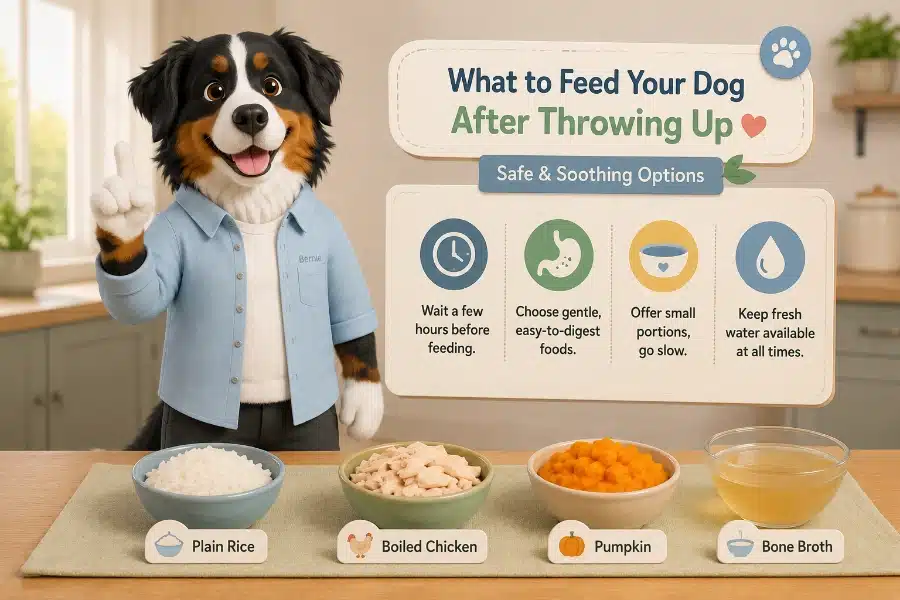
There are plenty of things you can gently feed to let their stomach and digestive system have some recovery time. You will probably want to withhold food for a few hours after the dog’s vomiting incident before you feed him just to give his stomach some recovery time.
A popular recommendation from many vets is to offer them small amounts of bland foods such as boiled chicken, cooked white rice, or boiled potatoes. You’ll want to make sure you boil skinless chicken and do not add any salt or other seasonings–you’re going for bland food that won’t irritate their tummies anymore. If they do well with that, you can continue to offer their regular food mixed with chicken and rice. Gradually wean him from the chicken and rice in smaller and smaller servings until he’s back to his full serving of regular food and not vomiting any more. Sometimes “What to feed dog after vomiting?” is best answered with no food after all. Withholding food and simply offering them some bone broth to replenish their fluids and offer gut-healing help can be all you need to do for a few meals before you get back to your dog’s normal food. You can also consider limiting the amount of water as excessive drinking can cause more vomiting. However, you will also want to keep your pup hydrated. To prevent dehydration, you can offer some ice cubes to slurp on which will prevent drinking water too much or too fast while keeping him hydrated.
Watch for Dehydration
Vomiting causes the body to lose fluids quickly, so keeping an eye on hydration is essential. Signs your dog may be getting dehydrated include:
- Dry, sticky gums
- Sunken-looking eyes
- Thick, stringy saliva
- Lethargy or unusual tiredness
- Skin that does not bounce back quickly when gently lifted
If you notice these signs, or if your dog cannot keep down even small amounts of water or ice chips, it’s time to call your vet. Severe dehydration can develop quickly and may require professional care.
One of our favorite broths for dogs is Brutus Bone Broth. Bone broth is soothing on your dog’s stomach and even without an appetite, they’re likely to be enticed by the delicious smell while their digestive tract can recover and stop your dog vomiting.
How Can I Prevent My Dog from Throwing Up?
As we said, the most common reason you see your dog vomits is that his stomach is irritated. If your dog’s gut is healthy, he’s less likely to throw up because of stomach irritation. And the best way to keep his gut healthy is to give him Bernie’s Perfect Poop.
Perfect Poop has high-quality fiber that helps your dog’s food go through his intestines at the perfect speed for optimal nutrient absorption. That fiber and optimal nutrient absorption can help ease diarrhea or constipation (which sometimes can cause an upset stomach) and avoid serious illness. Perfect Poop also has prebiotics and probiotics that will help his imbalanced gut get healthy and reduce dogs vomit. A balanced gut is what will help keep your dog from vomiting if he eats something that doesn’t agree with him. Inulin is the main prebiotic and it acts like a fertilizer to keep the good bacteria in your dog’s gut growing, healthy and happy.
Probiotics reduce the inflammation and irritation in your dog’s gut and that reduces the need for your dog to wake you up with that retching sound and finding dog vomits all over the floor. The best news is that feeding your dog Bernie’s Perfect Poop every day doesn’t just help stop them from vomiting. It also helps ensure they have maximum nutrition and fuel, and it keeps their guts as healthy as they can be. Good dog gut health is where your dog’s good overall health starts and it’s as easy as sprinkling Bernie’s delicious Miscanthus grass bits on your dog’s food each meal. So if you’re wondering what to feed your vomiting dog, consider feeding Bernie’s Perfect Poop BEFORE they start vomiting. Unless you really like that “Gluck, gluck, gluck,” sound waking you up in the middle of the night.