

This guide breaks down what to look for, how tapeworms affect your dog’s digestive system, and the steps you can take to support their gut health moving forward.Because keeping your dog healthy starts with understanding what’s happening inside their body.
What Are Tapeworms in Dogs?
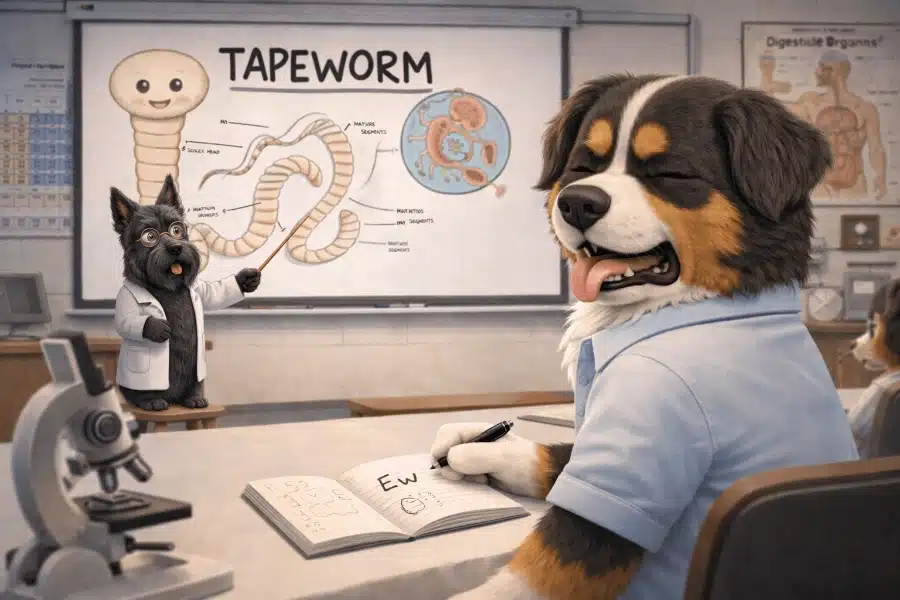
Tapeworms are intestinal parasites that can affect dogs of all ages and breeds. These flat, segmented worms live in your dog’s small intestine, where they attach to the intestinal wall and absorb nutrients.
Adult tapeworms can grow surprisingly long inside your dog’s digestive tract, but you usually won’t see the entire worm. What dog parents see are the shed segments.
What Do Tapeworm Eggs Actually Look Like?
You can’t actually see tapeworm eggs with the naked eye. The eggs themselves are microscopic and contained inside tapeworm segments called proglottids. These segments are what you’ll spot in your dog’s poop or around their rear end.
Fresh tapeworm segments look like small grains of white rice or flat, white rectangles. They’re usually about the size of a sesame seed. When they’re fresh, these segments can actually move and may appear to crawl or wiggle.
After the segments dry out, they turn golden or tan and look more like dried sesame seeds. You might find these dried segments stuck to your dog’s fur around their tail area, on their bedding, or in the spots where they like to rest.
The segments eventually break open and release the microscopic eggs into the environment, but by that point, they’re too small to see without a microscope.
Other Signs Your Dog Might Have Tapeworms
Beyond spotting segments in their stool, other clues may suggest your dog has tapeworms:
- Scooting their rear end across the floor (though this can also indicate anal gland issues)
- Excessive licking or biting around their tail area
- Visible segments in their fur near the tail
- Weight loss despite eating normally
- A dull or rough coat
- Mild digestive upset or changes in appetite
Some dogs with tapeworms don’t show obvious symptoms, which is why regular vet checkups and fecal tests are so important.
How Do Dogs Get Tapeworms?
The most common way dogs pick up tapeworms is by swallowing an infected flea. When your dog grooms themselves or bites at their skin, they can accidentally ingest a flea that’s carrying tapeworm larvae. Once inside your dog’s digestive system, the larvae develop into adult tapeworms.
Less commonly, dogs can get tapeworms by eating infected rodents, rabbits, or raw meat that contains tapeworm cysts.
This is why flea prevention is so critical. Keeping your dog protected from fleas doesn’t just stop the itching; it also helps prevent tapeworm infections.
What Should You Do If You Spot Tapeworm Segments?
If you see what looks like tapeworm segments in your dog’s poop or around their rear, don’t panic. Tapeworms are treatable, and most dogs respond well to deworming medication.
Contact Your Veterinarian
Schedule an appointment with your vet as soon as you can. Bring a fresh stool sample or even take a photo of the segments you found. This can help your vet confirm the diagnosis and recommend the right treatment.
Follow the Treatment Plan
Your vet will likely prescribe a deworming medication that targets tapeworms specifically. These medications are generally safe and effective. Make sure to follow the dosing instructions carefully and complete the full course of treatment.
Address the Flea Problem
Since fleas are the main source of tapeworm infections, you’ll need to treat your dog and your home for fleas. This might include topical or oral flea prevention, washing bedding in hot water, and vacuuming thoroughly.
Support Their Digestive Wellness
A healthy gut helps your dog maintain overall wellness. Quality nutrition and digestive support can help keep their system balanced and functioning well.
How to Prevent Tapeworms in the Future
Preventing tapeworms is easier than treating them, and both conventional and holistic approaches can help. Managing fleas, through year-round preventives, natural repellents, or environmental strategies, is one of the most effective ways to reduce risk. Limiting your dog’s access to rodents and wildlife, practicing good hygiene after outdoor time, and keeping up with routine vet visits and fecal exams all add important layers of protection. For a broader look at holistic prevention and natural treatments for parasites in dogs, understanding your options can help you build a plan tailored to your dog’s lifestyle. A well-rounded prevention plan helps support your dog’s long-term parasite health.
Supporting Your Dog’s Digestive Health
Whether your dog is recovering from a health issue or you simply want to keep their digestion running smoothly, gut health matters. A balanced digestive system supports nutrient absorption, firm stools, and overall comfort.
Adding a gut health supplement can help maintain balance. That’s why many dog parents include daily digestive support as part of routine care.
When Digestive Issues Go Beyond Parasites
Sometimes, digestive troubles aren’t just about worms. If your dog continues to have loose stools, changes in appetite, or other gut-related symptoms even after treatment, it’s worth exploring other causes with your vet.
Keep Your Pup’s Gut Happy and Healthy
Spotting tapeworm segments in your dog’s poop can be alarming, but it’s easily treatable with the right care. By staying on top of flea prevention, keeping up with vet visits, and supporting your dog’s digestive health, you can help keep them feeling their best from the inside out.
At Bernie’s Best, we’re here to help you navigate every stage of your dog’s health journey. From digestive support to joint care, we believe every pup deserves to thrive. If you’re looking for a way to give your dog’s gut the support it needs, check out Bernie’s Perfect Poop and see the difference a healthy digestive system can make.\
Frequently Asked Questions
Can I see tapeworm eggs in my dog’s poop without a microscope?
No, tapeworm eggs are microscopic and can’t be seen with the naked eye. What you’ll actually see are tapeworm segments, which look like small grains of rice or sesame seeds. These segments contain the eggs inside them.
Are tapeworms dangerous to my dog?
Most dogs with tapeworms don’t experience serious health problems, but heavy infestations can lead to weight loss, digestive upset, and nutrient deficiencies. It’s important to treat tapeworms promptly to keep your dog healthy and comfortable.
Can humans get tapeworms from dogs?
Yes, but dogs pose very little risk. The tapeworm (Dipylidium caninum), which is typically carried by dogs, infects humans only if an infected flea is accidentally swallowed.
How long does it take for tapeworm treatment to work?
Most deworming medications work effectively, though the timeline can vary. Your vet can give you specific guidance on what to expect during treatment and when to schedule a follow-up.
How can I support my dog’s digestion after tapeworm treatment?
Focusing on overall digestive health through quality nutrition and supplements that support gut balance may help maintain your dog’s wellness. Talk with your vet about the best approach for your individual dog.


